

Raising Children
A Mother’s Journey of Love, Loss and Faith Raising a Child With Cerebral Palsy
Chani Kozlowski shares the moving story of her daughter Tzipi, the “princess” whose short life transformed her family and inspired a mission to help parents of children with special needs
- Eti Dor-Nahum
- | Updated
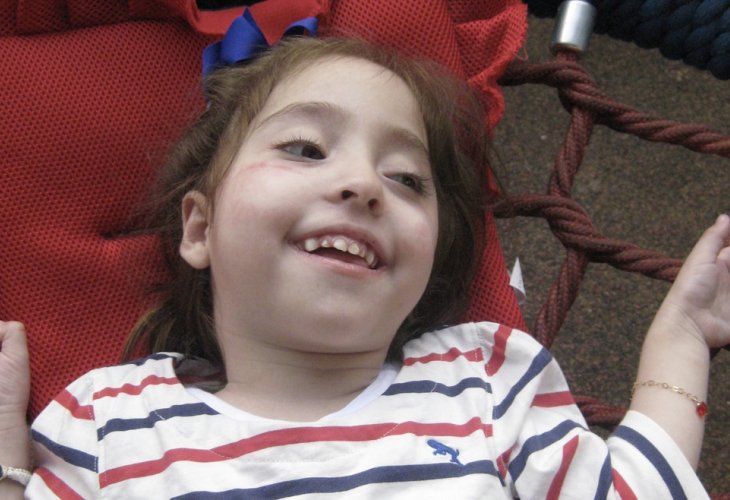 Tzipi Kozlovsky (Photo: private album)
“We had a princess on a throne, and her throne was her wheelchair,” says Chani Kozlowski, her voice filled with pain, longing, and joy. Her daughter, Tzipi, of blessed memory, was born with cerebral palsy and passed away suddenly in her sleep. “Everyone did everything they could for her,” Chani shares. “Through Tzipi’s life, we came to know many parents of children with special needs. We discovered that many parents struggle simply because they don’t know what rights they are entitled to or how to go about receiving them.”
Being the parent of a child with special needs is no simple task. The exhausting bureaucracy and the need to navigate multiple government agencies in order to receive the services and benefits a child is entitled to can leave parents overwhelmed and drained.
Chani knows this reality firsthand. When her eldest daughter, Tzipi, was born with cerebral palsy, Chani and her husband devoted themselves to caring for her, doing everything in their power to give their daughter the best life possible and, as they saw it, to make her a true princess.
Today, Chani has transformed that experience into a mission to help other families. “I accompany parents who need our help through a personal and attentive process. We help them obtain the rights they are entitled to, listen to them and guide them through difficult decisions, and stand beside them when they face bureaucratic obstacles.”
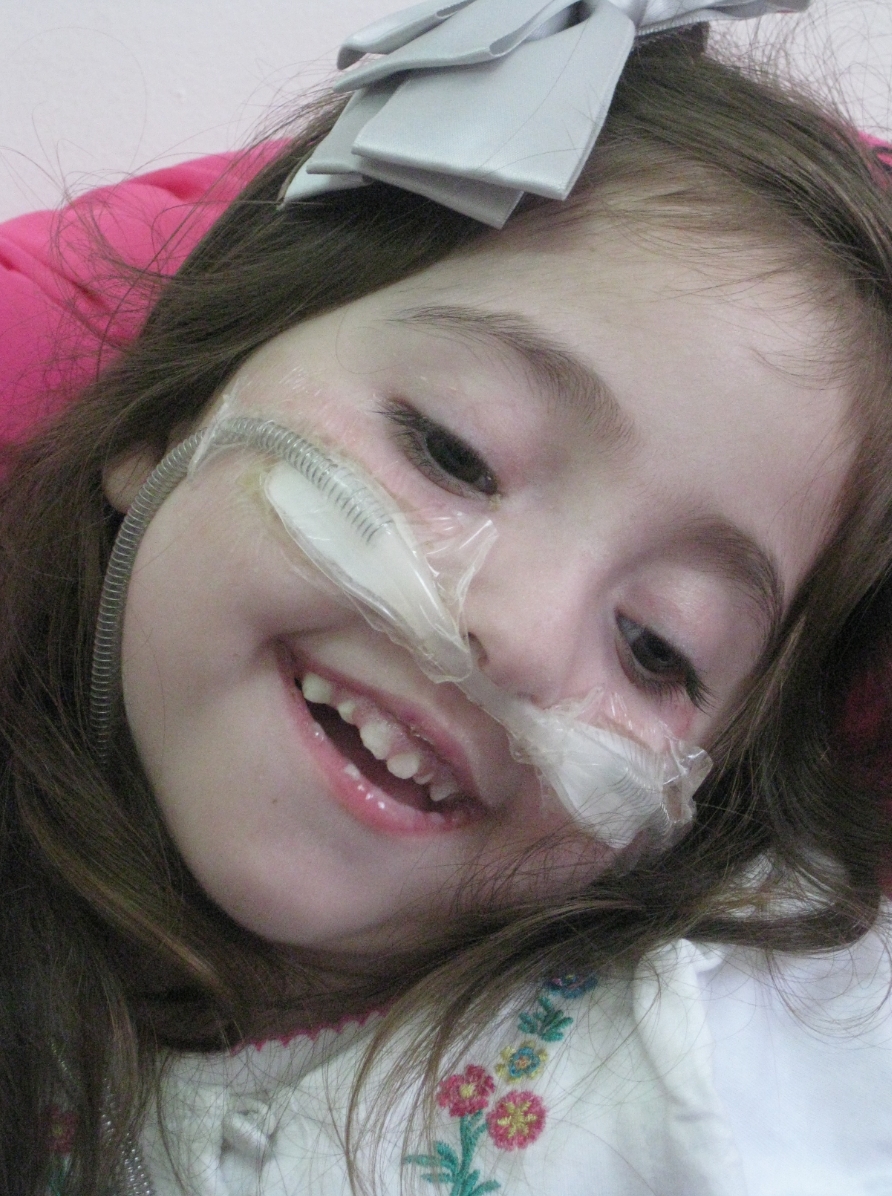
“What a Sweet Baby”: A Journey of Pride and Love
The Kozlowskis, a Haredi family belonging to the Ger Hasidic community, live in Petah Tikva.
When Chani was 21, she became a mother for the first time. Her pregnancy had been completely normal, with no indication that anything was wrong. But Tzipi was born without signs of life.
“We didn’t really understand what the doctors were telling us,” Chani recalls. “When I recovered somewhat from the birth, during those first few hours, they explained that if Tzipi managed to survive the next few days, she would have severe disabilities.”
The first time Chani saw her daughter in the neonatal intensive care unit, she could barely see the tiny baby beneath all the medical equipment. “I mostly saw tubes. You couldn’t really see a baby. She was bandaged and covered in tubes. You could see only a few fingers, a small part of her leg, and tiny parts of her face.”
Yet when Chani and her husband stood beside their newborn daughter, what they saw was something entirely different. “My husband and I stood in front of her and thought, ‘What a sweet baby.’ Relatives looked at me as though I were strange. For me, that was the beginning of the journey of pride and love that accompanied Tzipi from the day she was born until the end of her life. Yes, she was a child with severe disabilities, but who decides who is impaired and who isn’t? Our daughter wasn’t like everyone else. Why should that be a tragedy?”
Tzipi had the most severe form of cerebral palsy, with paralysis affecting her entire body. She could not hold up her head or sit, let alone stand or walk, and her health gradually deteriorated. But her parents refused to define her by her limitations.
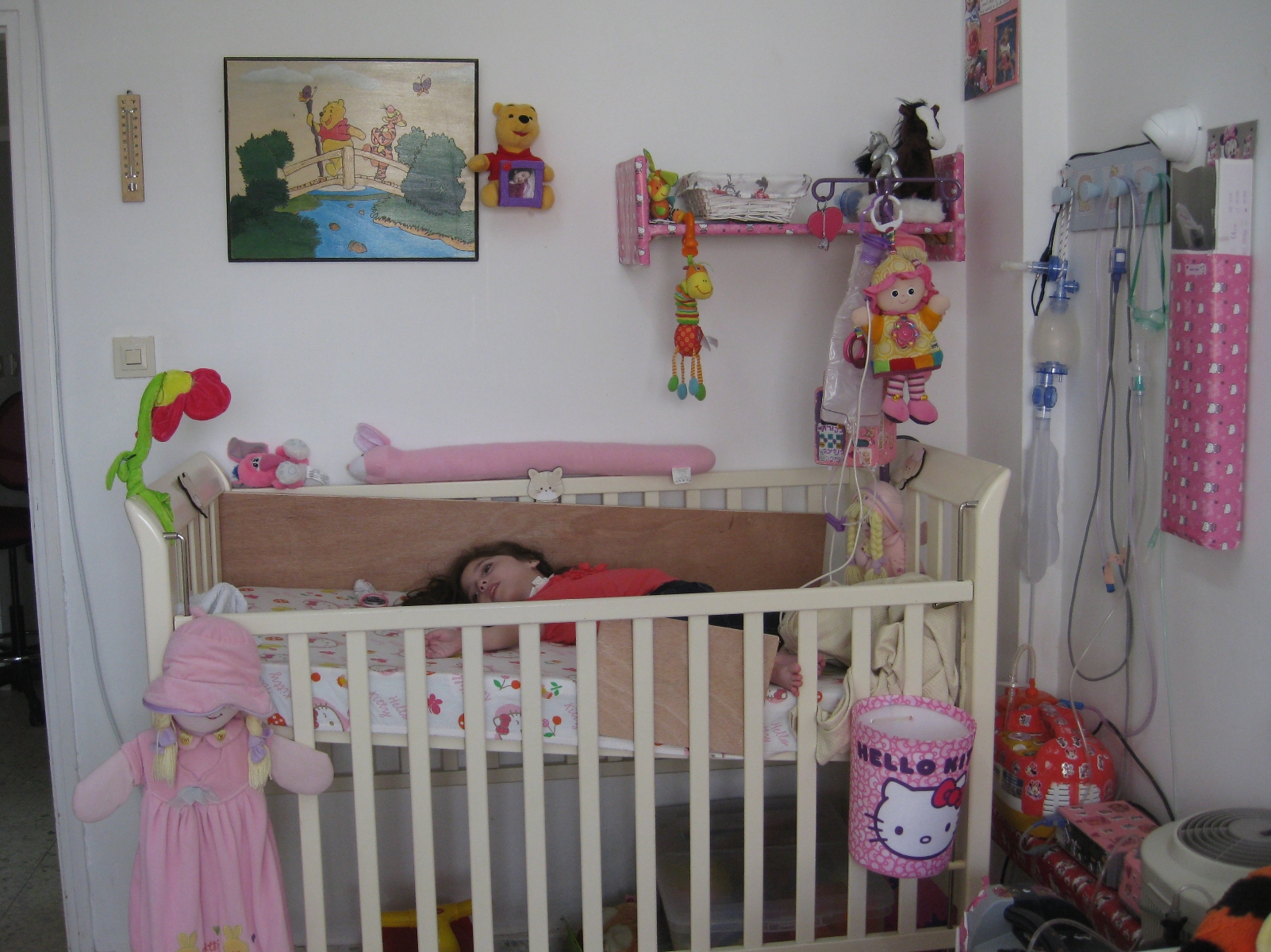
“We called her our princess,” Chani says. “We had a princess on a throne, and her throne was her wheelchair. Everyone did everything for her.”
As a new mother, you must have imagined motherhood very differently.
“At first, it really was extremely difficult. The first breaking point came in the doctor’s office when he explained that our daughter was severely disabled. When he finished speaking, and we were crying in front of him, I told him that I appreciated what they were saying, but I refused to accept the reality. I thought we would invest in her and that little by little she would catch up. It took me time to understand.
“The second breaking point came when she arrived home and we saw that nothing was normal. She wasn’t eating or sleeping, and we started running from doctor to doctor. At six months old, she wasn’t trying to lift her head, wasn’t making eye contact, and wasn’t smiling. That was the third and most difficult breaking point. She wasn’t doing anything. She vomited and cried all day, so she wasn’t gaining weight either.
“When we asked whether she would ever be able to walk, the optimistic prediction was that she might begin crawling at two and a half. But by that age, she could barely hold up her head.”
While Tzipi was alive, two younger siblings were born, and after her passing, additional children joined the family. “When I was sent for tests during a later pregnancy, I announced in advance that I wasn’t being tested in order to discover whether the baby had a disability. Beyond the sanctity of life, which prohibits abortion, on a personal level I’m not afraid of raising a child with a disability. A child is a gift. It isn’t a tragedy.
“At the same time, we’ve become much more conscious of praying for a healthy child and appreciating what we have. We’ve learned to admire and even fall in love with the chocolate milk that gets spilled.”
Her Final Year: “She Passed Away Peacefully in Her Sleep”
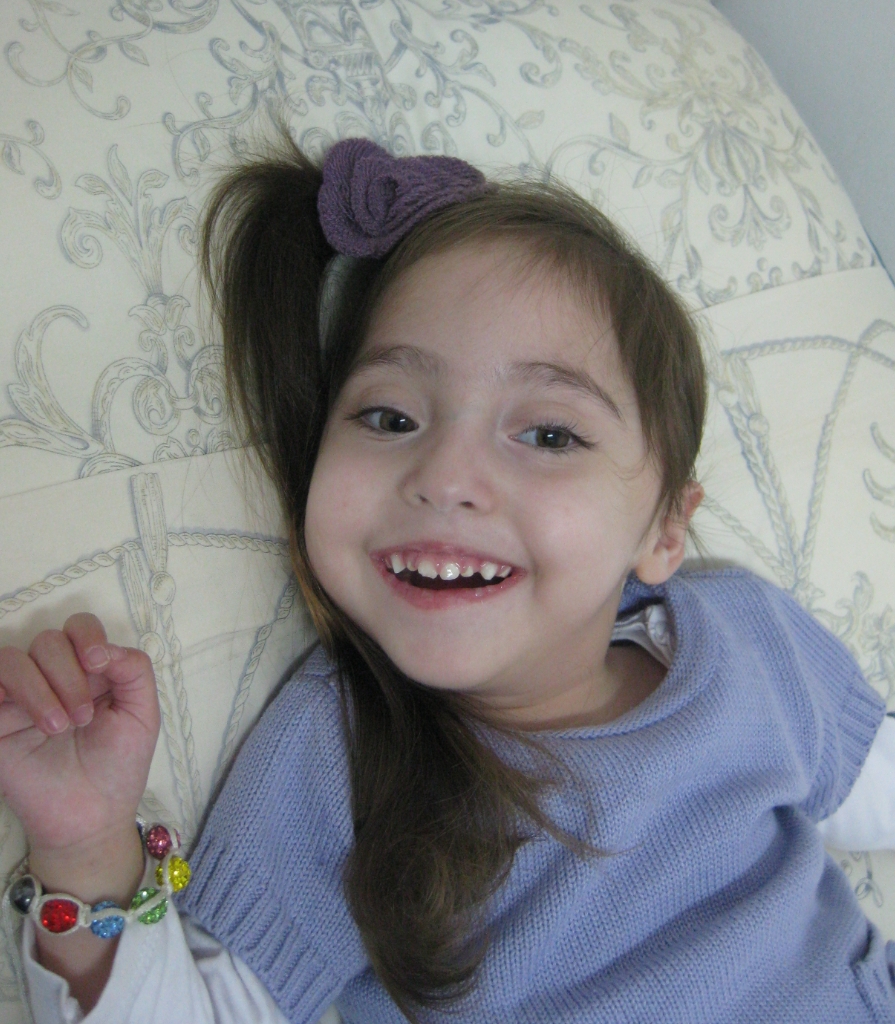
Tzipi communicated with her parents primarily through facial expressions. “She had smiles that could melt you,” Chani recalls. “And when something didn’t go the way she wanted, she would show her disappointment through her expressions and have us running around like crazy. She was unbelievably loved.”
Her family delighted in dressing her beautifully. “We accessorized her and dressed her up. She had 28 pairs of shoes, even though she couldn’t walk at all. She had everything: Shabbat shoes, sandals, clothes, jewelry, earrings, and bracelets. She was always dressed as beautifully as possible. It was very important to us to dress and accessorize her from head to toe. Even the teddy bear in her stroller matched.”
What kind of child was she?
“She was absolutely amazing. You couldn’t tell anything from looking at her face. Her eyes were bright and mischievous. She was incredibly smart and understood everything. When someone said goodbye to her, she would start crying.
“Yes, she had an intellectual disability, but she understood everything. During one of my visits to a center for children with special needs, the psychologist asked me to assess the degree of her intellectual disability. Without hesitation, I said, ‘My daughter isn’t intellectually disabled. There’s nothing wrong with her.’
“She tried to explain that Tzipi wasn’t within the norm, and I explained that I was completely aware of her condition. But we had adopted a different way of looking at her disability. From my perspective, my daughter was at the top. She had reached her own maximum potential.
“The psychologist understood that this wasn’t coming from a lack of awareness. We had simply created a different reality for her, one that wasn’t defined by suffering, but by being a princess. She experienced physical suffering in her life, so it was very important to us that her life also be happy. Tzipi was a true winner.”
What was Tzipi’s everyday life like?
“She was on a ventilator about half the time. We knew how we started the day, but never how it would end. Her medical condition was never stable. Even an ordinary fever could make her very ill and send us rushing to intensive care. Exposure to an illness like the flu could cause a serious deterioration because her immune system had so little resistance.
“At one year old, she began attending preschool. We brought her home every day at 1:00 p.m. From age four to four and a half, she attended preschool until 2:30 p.m. When she was home, every day involved something different: physiotherapy, sensory treatments, and occupational therapy.
“At first, we paid for everything ourselves. Later, after working with our health fund, we began receiving reimbursements. Whenever everyone else had given up on obtaining a particular device or useful piece of equipment, we somehow managed to find a way to get it for Tzipi.”
Faith, Chani says, became one of the most important tools that helped her cope with the reality of raising Tzipi. “At first, it was very difficult for me, and I cried all day. I felt as though the world owed me something. My older brother, an amazing person, took me to the neonatal intensive care unit and said, ‘Everyone feels sorry for you, and that’s understandable. You’re young, and you’ll have more children. Decide what kind of home you want to have.’
“I took his advice and began looking at the positive things. After a difficult day in the NICU, I would go down to the nearby mall and buy things for her. Every bit of progress was a blessing. We found an apartment near my parents. We learned to stop wishing for a healthy daughter and decided instead to make her a princess.
“We convinced ourselves that this was how we wanted her. At first, it wasn’t genuine, but over time it became genuine. We believed that before a soul comes down into this world, it chooses its own path. Tzipi’s soul chose to be special, and our souls chose to raise her as our eldest daughter. We believed that it was ultimately for the good. During her lifetime, she became a brand of her own. We called her Tziporitush.”
Ironically, the final year of Tzipi’s life was significantly easier in terms of her health.
“We didn’t think about death at all,” Chani says. Until the age of three, Tzipi struggled to gain weight, but a medical procedure made feeding easier and she began eating better. Around age three and a half, she underwent surgery that allowed her to breathe independently, significantly improving both her quality of life and that of her family. She still required hospitalization, but much less frequently.
Purim was always a special occasion. “We always dressed her up. One year she was Winnie the Pooh, another year a little bunny because she loved the song, and in her third year she dressed as a gift, and my sisters wrote her a song. At age four, during the final year of her life, Tzipi dressed up as a medical clown.”
“This child was the highlight of our lives,” Chani says. “We never wanted anyone to look at her and say, ‘Poor thing.’ Wherever we went, we incorporated her medical equipment into her costume. Throughout the entire journey, we received tremendous support from our family. They surrounded us with endless love. Everyone loved her so much and wanted to be close to her.”
On the final night of her life, Tzipi went to sleep peacefully.
“After her surgery, she had lost her voice, which gradually began to return. We installed a camera with a sensor that detected even the slightest movement so we could monitor her during the night. We put her to bed after cuddling and pampering her, as we always did.
“In the morning, she didn’t wake up. She passed away peacefully in her sleep. Hashem came down during the night and took her soul. Usually, we woke up many times for her, but that night we didn’t wake very often. At around four in the morning, I woke up to feed the baby. I looked at the monitor and saw that she was peaceful.
“I didn’t go over to her because she was a light sleeper and I didn’t want to wake her. I don’t know whether she was still alive at that point. In the morning, her two and a half year old sister woke us. When I went into the room and saw Tzipi, I understood that she was no longer alive.
“I started screaming. I performed CPR on her and cried. I didn’t fully comprehend that she had died until the end of the shivah. It seemed impossible.
“I sat beside her and stroked her after she passed away. My husband asked her forgiveness in case we had ever failed to treat her properly. He said to her, ‘Know that Hashem sent you down as a test. Little by little, you stopped being a test because we loved you and accepted you. You fulfilled your purpose in the most perfect way possible. There is nothing more for you to do here if you can enjoy yourself in Gan Eden.’”
The Greatest Burden on Parents: Exhausting Bureaucracy
After Tzipi passed away, the emptiness of her absence was felt at every moment. “Suddenly, technically, life was easier, and that was so terribly difficult,” Chani shares.
The family decided to memorialize Tzipi with what Chani calls “the book of eternity,” a Sefer Torah. “Even if it is physically burned or its letters are erased, those letters fly into the air and exist forever. Just as Tzipi was called to the Heavenly yeshivah because that was what the Creator wanted, her legacy and magical smile remain with us forever.”
Two years after Tzipi’s passing, the family held a celebration to dedicate the Torah scroll in her memory. “Thousands of Jews, acquaintances, and relatives arrived dressed in festive clothing. There was electricity in the air, laughter and tears mixed together. My husband and I felt that in this way we had merited to bring Tzipi to her chuppah, to the eternal chuppah of the Jewish people with the holy Torah.
“I could feel that Tzipi was happy. It was an extraordinary and elevated occasion. A heavenly entourage together with the Jewish people, everyone dancing with tremendous joy in honor of the Torah. A magnificent procession filled with people danced in honor of the Sefer Torah dedicated to our Tzipi.
“The seudat mitzvah was large and beautiful, like a real wedding. We felt that we had merited to bring her to her purpose and memorialize her in the most fitting way possible.”
Living alongside Tzipi taught Chani a lesson that has remained with her ever since. “I learned that every test can eventually stop feeling like a test. Anything we receive from Hashem can, through the power of our thoughts, be transformed into something good. The power of thought, when grounded in faith and Jewish sources, is incredibly strong. When you are determined, people recognize it, you succeed, and there is siyata d’Shmaya, Divine assistance.”
Tzipi’s passing also deepened Chani’s awareness that life in this world is only temporary. “We need to invest in what and whom we have here. Until now, we fulfilled His will with joy and happiness because of the privilege and pleasure of raising Tzipi. Now we fulfill His will through absence and pain, longing and heartache, but still with joy.
“How? Only Jews can do that. Today, we remember Tzipi with sweetness and longing. We know that she is well and happy, and yes, we are happy too. The Creator commands us to rejoice, and He also gives us the strength to do so. We are a happy and joyful family that is also waiting with all our hearts for the coming of Mashiach.”
Today, Chani accompanies families through the process of obtaining their rights and provides guidance and support in raising and rehabilitating children with special needs when necessary. Her own experience taught her that one of the heaviest burdens these families face is not necessarily the medical care itself, but the bureaucracy surrounding it. “The heaviest burden involved in raising a child with special needs is the bureaucracy,” she says. “It is discouraging and exhausting. It pushes people away and leaves them feeling incapable of dealing with it.
“We have to work with several different government ministries. A disabled parking permit comes through the Ministry of Transportation. An aide comes through the Ministry of Education. Equipment and medication approvals come through the Ministry of Health. Benefits come through the National Insurance Institute. Then you open a file with the Welfare Ministry so you can access a rehabilitation daycare center.
“It wears parents down. They are caring for their children around the clock. How much energy can they possibly have left for paperwork? The process is usually complicated, officials are not always available, and parents are sent from one place to another.”
“Most parents don’t know what they’re entitled to. What happens in practice is that people eventually stop believing they really have rights they can claim. They give up and simply go along with the situation because they no longer have the strength to fight for what they need.
“Through Tzipi’s life, we came to know many parents. Today, I accompany parents who need our help through a personal and attentive process. We help them obtain the rights they are entitled to, listen to them and guide them through their dilemmas, and stand beside them against every bureaucratic obstacle.”

