

Rosh Hashanah
The God Who Remembers
On 9/11, Rosh Hashana, and the comfort of knowing that God does not forget
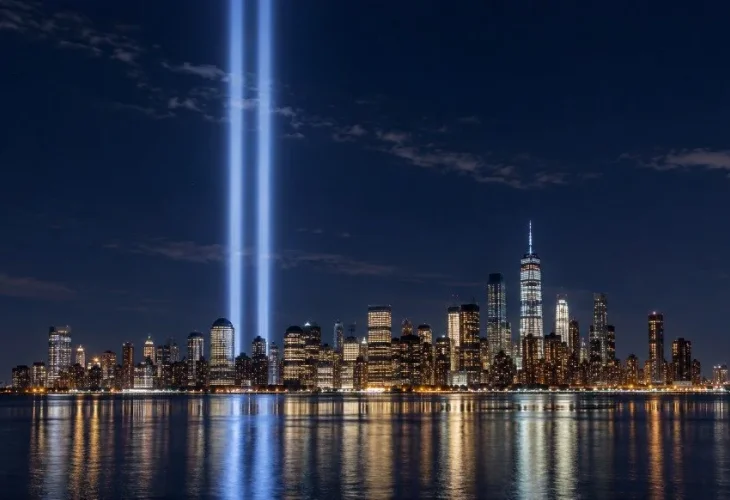
September 11, 2001. It is America’s twenty-first century “date which will live in infamy,” the day in which everyone who lived through it remembers exactly when and where they heard the awful news. And it is very hard to believe that it’s been a full twenty five years since then.
There are so many stories of people who were miraculously saved that morning. The man who forgot his tefillin at home, so he had to go back to get them and he missed his regular bus. The one who never missed his morning alarm but for some reason that morning he slept straight through it. Someone I know personally had been working at the World Trade Center until earlier that year, when his company was taken over by new management which promptly fired all the Jews at the firm.
But there were plenty of people who went about their regular routine that fateful morning, having escaped the flames of antisemitism only to be caught up in the inferno that is civilizational hatred. There were the first responders who risked their lives running towards the falling—and fallen—towers, even as everyone else ran away. Many of those same first responders later suffered from devastating illnesses.
In 2001, the first night of Rosh Hashana was less than a week later. This year, as we commemorate twenty five years, the eleventh is on erev chag, and we will light the candles to usher in a new year as we close out the day. I have often remarked that there are no coincidences in the Jewish calendar, and I think this alignment is no exception.
The musaf prayer on Rosh Hashana is composed of three central blessings in which we highlight the themes of the day. In the first section, malkhiyot, we acknowledge that God is the Creator and that the world is His dominion, and then we re-accept Him as our King. In the third section, shofarot, we re-accept the Torah—as though we are standing again at Sinai, with the blasts of the shofar—and we pray for the future redemption, which will be ushered in with the triumphal call of the shofar. If Rosh Hashana is the divine equivalent of coronation day, these two sections make a lot of sense to form our prayers. We begin with God as Creator of the world at large and we, as Jews, reaffirm our roles as His “kingdom of priests and holy nation” (Exodus 19:6).
It is the second section, zikhronot, which seems a little bit out of place. Rabbi Eliyahu Ki-tov, in Sefer Hatoda’ah, explains the purpose of this second central blessing: “In the section zikhronot, we acknowledge and declare our belief in God as the Creator, that He takes regular account of all of His creations, that He remembers everything that mankind does—from beginning to end—and that He repays them according to their dues.” Outside of the fact that there are a lot of different components included in this description, we seem to be moving away from our central theme of coronating God as King, which greatly interrupts the flow that we might have otherwise developed with malkhiyot and shofarot.
The opening words of this section illuminate for us that this section is actually a clear bridge between God-as-Creator of malkhiyot and our re-acceptance of the yoke of heaven of shofarot. We turn to God and we declare, “You remember the deeds of the world and You take account of all creations from the beginning. Revealed before You is everything hidden, and the multitudes of secrets since creation. There is no such thing as forgetting before Your holy throne, and there is nothing hidden from Your eyes.”
I imagine what it might have been like to go into Rosh Hashana in 2001. I was young and don’t remember much, but I think about the people who did not know the fates of their loved ones as they went into the new year. I think about the incredible people who were spending their days sifting through literal mountains of rubble, who saw death and destruction up close and carried that into their prayers. I think about the people who were not directly affected but still had to grapple with the horrific tragedy of thousands of lives lost, even as the numbers were still climbing. And I cannot imagine how difficult it must have been that year to accept God as King, as though it were just another year, when the world seemed so cruel and cold.
And now, twenty five years later, the world is struggling to respond to the fact that there are all too many people who question the events of that day. There is a sharp rise in people who would sooner believe—gleefully, I might add—that Israel and/or the United States orchestrated the events of that day rather than it being the terror attack that it was. A full generation has been born since then, and an alarming number of that generation simply refuse to accept the truth of that morning.
I think that is where zikhronot shows its strength. A world in which the Creator takes no interest in His creations, a world in which God is removed and impersonal, is not a world I would want to live in. It’s not a world in which I would be able to accept Him as my King, and it’s not a world in which I would willingly choose to accept His Torah. What zikhronot gives us is the strength to look at the world at large, the one that God finished creating 5,787 years ago, and find within it the God Who cares deeply about you and me and everyone else, which then gives us the strength from within to live as best we can according to the laws that He set for us at Sinai.
And it gives us the comfort, within that personal relationship, that God will not forget. We will continue to tell the truth of 9/11, because we must honor the memories of the people who perished and because we will continue to stand for truth. But no matter how many lies the world tells, and how loud those lies become, God, Whose seal is Truth, will always remember.
And that is the God Whom I will gladly crown as my King.
Best wishes for a healthy, happy, and peaceful New Year.

