

Raising Children
When Kids Fight at the Holiday Table: How Parents Can Keep the Peace
Learn how to calm conflicts, set healthy boundaries, and help children make peace without ruining the evening
- Tehila Cohen
- | Updated
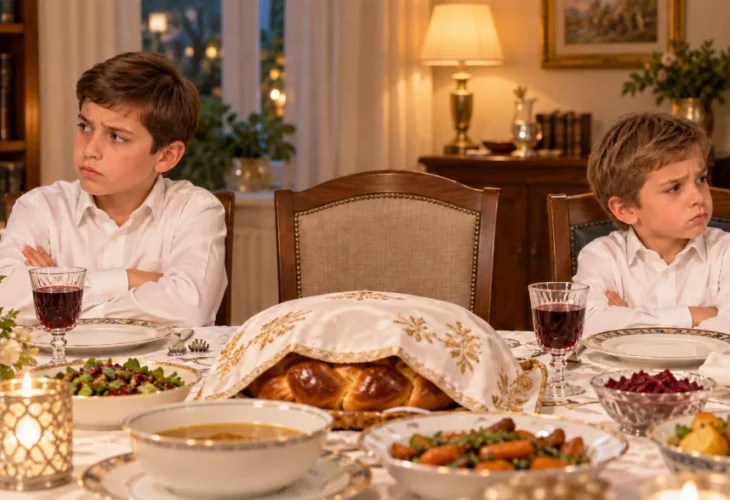
After spending hours preparing for the holiday, you look forward to a warm and enjoyable evening with the family. So when the children start fighting at the table, the disappointment can be especially frustrating. It can feel as though all the preparation and hard work will be overshadowed by an argument over a seat, a toy, or a piece of challah.
And yet, children do not stop being children when the holiday begins. Excitement, fatigue, hunger, festive clothing, a house full of people, and a change in routine can all make it harder for them to regulate their emotions and behavior. The following strategies can help you handle those difficult moments without allowing them to take over the entire evening.
Don't Try to Resolve the Entire Conflict in Front of Everyone
When an argument breaks out, there is no need to immediately investigate who started it, who took what, or who was right.
A lengthy interrogation in front of guests can embarrass the children, encourage accusations, and turn a relatively minor disagreement into the focus of the evening. Instead, address the immediate behavior with a few calm words: “We don't shout at the table. We're going to calm down now, and we'll talk about what happened later.”
If necessary, separate the children or change their seats. There is no need for a lecture or a public discussion.
Calm Them Down Before Trying to Teach a Lesson
A child in the middle of an emotional storm is usually not ready to listen to a lesson about respect, sibling relationships, or the importance of maintaining a pleasant holiday atmosphere.
Instead, take the child somewhere quiet for a few minutes, offer a drink of water, and give him or her a chance to settle down. Once the tension has eased, you can briefly ask what happened and discuss how to return to the table.
Sometimes, all a child really needs is a short break from the noise and stimulation.
Don't Make the Holiday Itself a Threat
Statements such as “You ruined the holiday for everyone” or “After everything I did for you” often come from genuine frustration. But they also place an enormous burden on children by making them feel responsible for the emotional well-being of the entire family.
It is better to focus on the specific behavior: “The shouting is disturbing everyone, so it needs to stop.” This gives the child a clear boundary without sending the message that he or she has ruined the entire evening.
Separate Children Before the Argument Begins
If you already know that two siblings tend to provoke each other, there is no reason for them to sit next to one another.
A little planning, or even a quick change in the seating arrangement, can prevent an argument before it starts. You can also give each child a small responsibility, such as handing out napkins, bringing drinks, helping serve a dish, or assisting a younger sibling.
Having a role can give children a sense of responsibility and belonging while directing their energy toward something positive.
Adjust Your Expectations for a Long Evening
Young children often find it difficult to sit at a table for hours. When we expect them to behave like adults throughout a long holiday meal, restlessness and conflict become much more likely.
Prepare a space in advance with books or activities appropriate for the holiday. Once the main family portion of the meal is over, consider allowing younger children to leave the table and play.
The goal does not need to be perfect behavior for the entire evening. A more realistic expectation can make the experience easier for both parents and children.
Don't Demand an Immediate Apology
An apology muttered angrily simply to satisfy an adult does not necessarily teach a child how to repair a relationship. Instead, stop the hurtful behavior and say something like, “For now, you're going to separate and calm down. Later, we'll think about how to make this right.”
Once everyone is calmer, you can help the child understand how the sibling was affected and encourage a meaningful act of repair. That might mean offering a sincere apology, returning a toy that was taken, giving back a seat, or making another thoughtful gesture appropriate to the situation.
The aim is not simply to make a child say the word “sorry” but to teach children that when they hurt someone or cross a boundary, there is a way to take responsibility, repair the damage, and reconnect.
A family holiday does not need to be completely free of arguments to be meaningful and enjoyable. Children may become tired, overwhelmed, or frustrated, and siblings may clash. What matters is how those moments are handled.
By staying calm, setting clear limits, lowering unrealistic expectations, and giving children time to regulate before addressing the conflict, parents can keep one difficult moment from defining the entire evening.

