

Yom Kippur
10 Powerful Yom Kippur Practices and Their Deeper Meaning
What makes Yom Kippur so spiritually powerful? Discover 10 fascinating teachings and practices connected to prayer, fasting, teshuvah, and atonement.
- יונתן הלוי
- | Updated
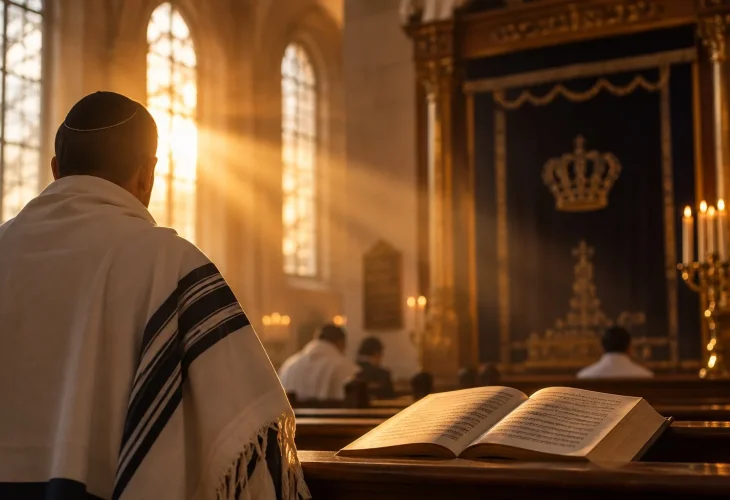
Yom Kippur is the holiest day of the Jewish year, a day of fasting, prayer, teshuvah, and extraordinary closeness to Hashem. Jewish sources also reveal customs and spiritual practices connected to the day, from lighting candles before the fast to the final moments of Ne’ilah. Here are 10 teachings and practices that offer a deeper look at the spiritual power of Yom Kippur.
1. Lighting Candles on the Eve of Yom Kippur Can Quiet Accusations
On the eve of Yom Kippur, candles are lit at home and in the synagogue. Lighting candles in the synagogue alludes to the heavenly illumination added to the Shechinah, which is our strength.
When lighting one’s candle, it is good to have in mind the desire to illuminate the higher worlds through an awakening from below that brings about an awakening from above.
The Zohar (Bamidbar 282) teaches that the candles of Yom Kippur correspond to the shofar of Rosh Hashanah: they quiet accusations and awaken mercy.
2. A Practice for Having Your Prayers Accepted
One practice associated with having one’s prayers accepted on Yom Kippur is to recite the following verses upon entering the synagogue:
“But as for me, through Your abundant kindness I will enter Your house; I will bow toward Your holy sanctuary in awe of You. For to You, Hashem, are my eyes; in You I take refuge. Do not expose my soul. Guard me from the trap they have set for me and from the snares of evildoers. Let the wicked fall into their own nets together, while I pass by.”
These verses are considered especially conducive to prayer, and the name expressing the holiness of the day is hinted within them.
3. A Teaching From the Holy Ari About Protecting Children
During the Torah reading on Yom Kippur, it is considered meaningful to shed tears when reading about the deaths of Aaron’s two sons and to reflect upon the grief their father experienced.
According to a teaching attributed to the holy Ari, one who sheds a tear, or at least genuinely feels sorrow over the passing of these righteous men, merits protection for their children during their lifetime.
4. A Practice From the Ben Ish Chai for Blessing and Success
The Priestly Blessing contains 15 words. It is fitting to count the words of the blessing using the joints of the hand: two on the thumb, three on each of the other fingers, with the 15th corresponding to the palm.
The Ben Ish Chai teaches the practice of counting the words in this way, with the prayer that the Creator bless all the work of our hands.
5. Kedushah During the Cantor’s Repetition Can Bring Spiritual Elevation
During Kedushah in the cantor’s repetition, we say, “Holy, holy, holy is Hashem of Hosts; the whole earth is filled with His glory,” while lifting the feet slightly with each recitation of “holy.”
According to the mystical teachings, through these words a person rises spiritually from the World of Action to the World of Formation and then to the World of Creation. In this way, the individual rises to a higher spiritual level, and the world is elevated along with them.
The holy Ari also teaches that when one recites the words, “Where is the place of His glory?” one can merit crown, wisdom, and understanding, which are alluded to within the letters of the word “where,” thereby drawing into the soul the spiritual powers associated with Yom Kippur.
6. A Spark of Teshuvah During Ne’ilah Can Bring Atonement
Rabbi Meir Simcha HaKohen of Dvinsk, author of the Meshech Chochmah, explains that at the time of Ne’ilah, the hour of sealing, Hashem in His abundant goodness responds to the tremendous outpouring of tears and regret, even in the case of the grave sin of desecrating His Name.
This is why the authors of the prayers included the words, “Why should you die, House of Israel?” (Ezekiel 33), as well as, “For I do not desire the death of the dead... return and live” (Ezekiel 18).
In other words, even if a person has not yet reached complete teshuvah as the gates are closing, there is still hope. If deep within the heart there is a genuine spark of repentance, that person can merit the atonement of Yom Kippur. Hashem sees what is in the heart, and at the time of sealing, He judges and seals a person for a good life and peace.
7. The Fast Can Atone for Days Lived Without Torah and Mitzvot
Our sages teach that a day that passes without Torah and good deeds is not truly counted among a person’s days. Fasting is described as a powerful spiritual remedy capable of reviving what is considered “dead.”
In this sense, fasting can awaken even those days that passed in spiritual darkness or were consumed by the distractions of this world. Yom Kippur encompasses all the days of the year, and the fast on this holy day can bring atonement even for those days that were spiritually wasted.
8. Yom Kippur Was Given to the World as a Day of Atonement
Sefer HaChinuch, mitzvah 185, describes the immense spiritual power embedded within Yom Kippur:
“It was among the kindnesses of Hashem to His creations that He established for them one day each year for atonement for sins, together with the repentance they would undertake. For if the sins of people accumulated year after year, their measure would be filled after two or three years, or more, and the world would be liable to destruction. Therefore, in His wisdom, Hashem saw fit, for the world’s continued existence, to establish one day each year for the atonement of sins for those who return, and from the beginning of creation He designated and sanctified it for this. And once the Creator designated it as a day of atonement, the day became holy and received from Him, may He be blessed, the power of merit, such that it assists in atonement.”
Yom Kippur itself, then, is presented as an extraordinary expression of Hashem’s kindness: a day built into creation to give people the opportunity to return, repair, and begin again.
9. Yom Kippur Is Also a Time for Joy
The gates of teshuvah remain open throughout the year. During the Ten Days of Repentance, however, repentance is described as especially accepted, as the verse says, “Seek Hashem when He may be found.”
This reaches its peak on Yom Kippur, a unique time of teshuvah for both the individual and the community and the culmination of forgiveness for the Jewish people.
Although Yom Kippur is a solemn day, there is also profound joy within it. Hashem gives us the opportunity to return to Him, and on this extraordinary day, His hand is extended to help us draw close once again.
10. A Practice for Gaining More Advocates in Your Favor
Holy books emphasize the importance of fulfilling one’s vows. They explain that when a person vows to perform a mitzvah, an angel is created, but its existence is not completed until the vow is fulfilled. Once the person carries out the commitment, that angel becomes an advocate on their behalf, reflecting the teaching that “one who performs a single mitzvah acquires one advocate.”
For this reason, some communities developed the custom of settling outstanding pledges to the synagogue before Yom Kippur. By fulfilling the commitments they had made, people entered the holiest day of the year having completed their obligations and, according to this teaching, gained favorable advocates on their behalf.
From the candles lit before the fast to the final moments of Ne’ilah, Yom Kippur offers countless opportunities to awaken mercy, deepen our prayers, and strengthen our teshuvah. These teachings remind us that the day is not only about looking back at what went wrong. It is also about recognizing the extraordinary gift of being able to return to Hashem, repair what we can, and begin again.

