

Raising Children
Should Every Child Get Something New for the Holidays?
One child needs new clothes or shoes, while their siblings don’t. Should you buy something for everyone? A parent educator explains why equal doesn’t always mean fair.
- Noa Harel
- | Updated
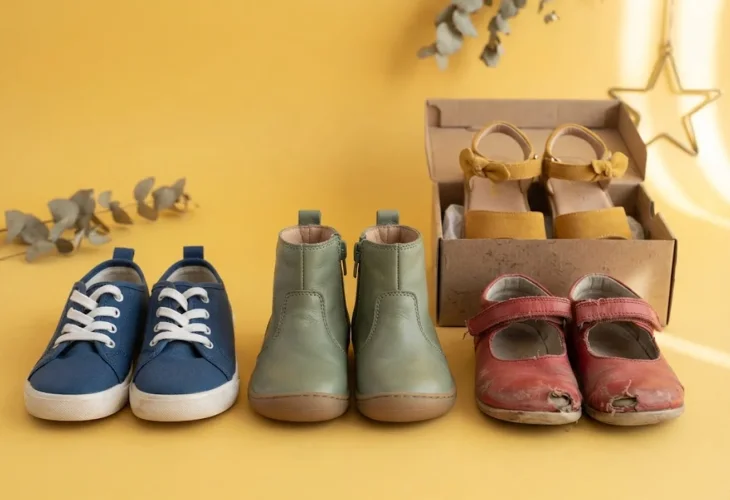
The Tishrei holiday season is already underway, and for many families, that means buying new clothes, shoes, or other things the children need. But what happens when one child genuinely needs something new and their sibling doesn’t? Should parents buy something for everyone just to prevent jealousy or hurt feelings?
Do All Children Need to Receive the Same Thing?
There is little parents want more than to give to their children. It is such a natural instinct that we barely stop to think about it.
But sometimes that instinct makes a perfectly ordinary decision surprisingly difficult. One child genuinely needs new shoes, clothes, or a backpack, while a sibling has something that still fits and is in perfectly good condition.
Under normal circumstances, we would not even consider replacing it. But once we are buying something new for one child, especially during the holiday season, the thought immediately arises: “What about the others?”
It is worth considering where the instinct to give everyone the same thing comes from. Sometimes, it reflects an assumption that a child will not be able to cope with the disappointment of seeing a sibling receive something they did not.
But part of our role as parents is to prepare children for life as it really is. And in life, things are not always equal at every moment.
A person who struggles whenever someone else has something they do not may experience many unnecessary feelings of frustration and lack. Learning from a young age that different people have different needs can therefore be an important lesson.
Equal Does Not Always Mean Fair
Parents are the adults responsible for making decisions in the home.
If it is important to you that every child receive something new for the holiday, and you genuinely want to buy something for everyone, that is perfectly fine.
But if one child needs something and the others do not, you do not have to make unnecessary purchases simply to prevent disappointment.
Trust your judgment.
By doing so, you may actually be giving your children something more valuable than another new item: an opportunity to understand that each member of the family can receive what they need without everyone receiving exactly the same thing at exactly the same time.
Your Child’s Reaction Does Not Determine Whether You Were Right
Parents sometimes judge whether they made the right decision based on how their children respond to it.
If the child is happy, perhaps we made the right choice. If they are disappointed, jealous, or angry, perhaps we did something wrong.
But a child’s reaction does not necessarily tell us whether a parenting decision was correct.
Children naturally see situations from their own limited perspective. Parents have a broader view. We know what each child needs, what the family can afford, and where it makes sense to spend money.
When parents are confident in their decisions and do not become unsettled by every expression of disappointment, jealousy, or frustration, children receive an important message: Mom and Dad know what they are doing. I can trust them.
That sense of confidence can give children stability and security, even when they do not particularly like the decision.
It’s Also an Opportunity to Teach Children About Money
There is another valuable lesson here: not everything that we can buy needs to be bought.
With the cost of living high and many families carefully managing their expenses, children can benefit from learning to distinguish between wanting something and actually needing it.
A child who learns to stop and ask, “Do I really need this?” is developing judgment and self-control that can serve them throughout life.
So if one child needs new shoes for the holidays and another already has a perfectly good pair, there is no need to feel guilty about buying for only one of them.
Giving children everything equally may prevent a few minutes of disappointment. But teaching them that different people have different needs, that money should be spent thoughtfully, and that they can cope when someone else receives something they do not may ultimately give them something far more valuable.
Wishing you a gmar chatimah tovah and a joyful holiday season.
Noa Harel is a parent educator, couples counselor, and consultant in personal awareness and relationships.

