

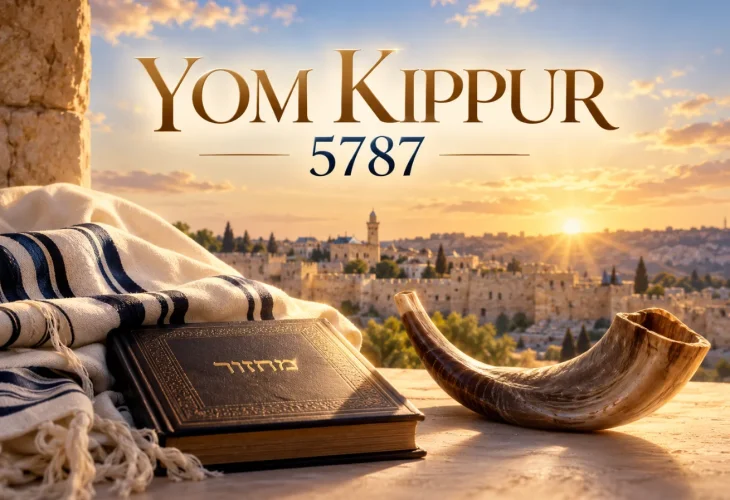
Yom Kippur is an extraordinary gift from Hashem—a day set aside to cleanse us from our sins and wrongdoings, draw us back to Him, and give us the chance to begin again. On this holy day, the Yetzer Hara has no power over us; itis a precious opportunity to let go of the past, grow into better versions of ourselves, and renew our relationship with Hashem. What an incredible gift this day truly is!
Before Yom Kippur
1. Kapparot –
Today, a common way to perform kapparot is with money. Take approximately $18 per person, circle the money over your head while reciting the below three times, and then donate that amount to a Tzedakah or Jewish organization, for example by Zelle.
Before giving the money to charity, recite the following:
בְּנֵי אָדָם יֹשְׁבֵי חֹשֶׁךְ וְצַלְמָוֶת, אֲסִירֵי עֳנִי וּבַרְזֶל: יוֹצִיאֵם מֵחֹשֶׁךְ וְצַלְמָוֶת, וּמוֹסְרוֹתֵיהֶם יְנַתֵּק: אֱוִילִים מִדֶּרֶךְ פִּשְׁעָם, וּמֵעֲווֹנוֹתֵיהֶם יִתְעַנּוּ: כָּל אֹכֶל תְּתַעֵב נַפְשָׁם, וַיַּגִּיעוּ עַד שַׁעֲרֵי מָוֶת: וַיִּזְעֲקוּ אֶל אֲ־דֹנָי בַּצַּר לָהֶם, מִמְּצֻקוֹתֵיהֶם יוֹשִׁיעֵם: יִשְׁלַח דְּבָרוֹ וְיִרְפָּאֵם, וִימַלֵּט מִשְּׁחִיתוֹתָם: יוֹדוּ לַא־דֹנָי חַסְדּוֹ וְנִפְלְאוֹתָיו לִבְנֵי אָדָם: אִם יֵשׁ עָלָיו | מַלְאָךְ מֵלִיץ, אֶחָד מִנִּי אָלֶף, לְהַגִּיד לְאָדָם יָשְׁרוֹ: וַיְחֻנֶּנּוּ, וַיֹּאמֶר, פְּדָעֵהוּ מֵרֶדֶת שַׁחַת, מָצָאתִי כֹפֶר:
:Then say three times
זֶה חֲלִיפָתִי, זֶה תְּמוּרָתִי, זֶה כַּפָּרָתִי. זֶה הַכֶּסֶף יֵלֵךְ לִצְדָקָה , וַאֲנִי אֵלֵךְ לְחַיִּים טוֹבִים אֲרֻכִּים וּלְשָׁלוֹם:
2. Pidyon Nefesh3. Ask for forgiveness – from family, friends, and anyone you may have hurt.
4. Hatarat Nedarim
Optional but Meaningful
1. Prepare a personal Viduy
Take some time to honestly admit before Hashem the things you regret and want to change. The list may be longer than you expect.
Think about areas such as honesty, kindness, generosity, trust, lashon hara, and how you treat others.
Write down the things you genuinely regret and want to do teshuva for.
You can then take this paper with you and read it during Yom Kippur to confess to Hashem and do Teshuva.
2. Selichot
Pour your heart out to Hashem, regret and admit your sins, leave them, and express your genuine desire to get closer to Hashem
3. Did you take money or services that didn't belong to you?
Maybe you entered somewhere without permission, took something small without paying, or were not completely accurate with work hours. If you cannot identify the person you owe, consider giving a meaningful amount of tzedakah toward zikuy harabim, with the intention that the merit benefit anyone you may have wronged.
Teshuva, Tefillah, and Tzedakah — Ma’avirin Et Roa HaGezeirah.
Erev Yom Kippur
1. Eat well – Eating on Erev Yom Kippur is a mitzvah! Have nourishing meals during the day, including a proper Seudat Hamafseket.
2. Candle lighting – Light Yom Kippur candles and recite Shehecheyanu. Once the Shehecheyanu blessing is recited, the inuyim of Yom Kippur have been accepted, which means eating, drinking, wearing leather shoes, and all the other inuyim are no longer permitted.
Yom Kippur
The five main restrictions include:
1. No eating or drinking
2. No leather shoes
3. No perfume, lotions, oils, or creams
4. No bathing or washing for pleasure
5. No physical touch with spouse
The goal is not simply to “get through” the fast, but to use the day for sincere teshuva, prayer, reflection, and a real decision to move forward differently.
Have an easy and meaningful fast, Be'ezrat Hashem!
-----------------------------------------------------------------------------------------------------
Yom Kippur Halachot & Customs, explained
Erev Yom Kippur
A: On Erev Yom Kippur, one should especially ask forgiveness from parents, one’s spouse, children, and those around them, and resolve not to hurt anyone again. One who stole or caused damage must also pay for the loss.
B: If the person who was hurt does not forgive, one should try to appease them at least two more times and enlist three friends to help. If forgiveness is still not granted after three attempts, one is no longer obligated to continue asking.
C: One who has offended his rabbi must continue asking forgiveness even more than three times, until forgiven.
D: When possible, it is preferable to apologize directly rather than through a letter or messenger.
E: If you have been hurt, you should forgive readily and joyfully, no matter how difficult it is, and Hashem will forgive your sins readily and joyfully, measure for measure.
The Custom of Kapparot
A: On Erev Yom Kippur, it is customary to perform kapparot: a rooster for a male and a hen for a female.
B: Today, kapparot are commonly performed with money for several reasons. The suggested amount is approximately 30 shekels per person, or $18.
How Is Kapparot Done?
The money is circled over the head while saying:
“This is your exchange, this is your substitute, this is your atonement. This money will go to charity, and I/you will enter into a good and peaceful life.”
This is done three times.
Preparations for Yom Kippur
A: Men immerse in a mikveh. Care should be taken that nothing obstructs the immersion. No blessing is recited.
B: It is forbidden to fast on Erev Yom Kippur, and there is a mitzvah to eat more on that day, even for someone who will be exempt from fasting on Yom Kippur.
C: One wears clean, respectable clothing on Yom Kippur, and some have the custom to wear only white clothing.
The Pre-Fast Meal
A: Mincha is prayed before the pre-fast meal, and Viduy is recited during Minchah.
B: It is customary to avoid eggs and dairy foods at the pre-fast meal.
Yom Kippur
Candle Lighting on Erev Yom Kippur
A: Candles are lit with the blessing: “...to kindle the light of Yom Kippur.”
B: Memorial candles are also lit for deceased relatives, as well as an additional candle to use for Havdalah after Yom Kippur.
General Activities Forbidden on Yom Kippur
A: On Yom Kippur, unlike other festivals, cooking and everything else forbidden on Shabbat are prohibited.
B: In addition, Yom Kippur includes the mitzvah of self-affliction. From the beginning of Yom Kippur until it ends, it is forbidden to eat, drink, wash the body or any part of it, apply oils or creams, wear leather shoes, and engage in marital relations.
C: Even children who are exempt from fasting should not wear leather shoes, and parents should not wash or apply oils or creams to them.
Washing
A: Bathing is forbidden on Yom Kippur, whether with hot or cold water. However, dirt may be washed off any part of the body, provided only the soiled area is washed.
B: After sleeping at night and after using the restroom, only the fingers are washed.
C: The face is not washed. The eyes may be cleaned using slightly damp fingers from the hand washing.
D: A sick person who eats bread on Yom Kippur washes hands for the meal and may wash with mayim acharonim as usual, because this washing is not for pleasure.
E: Kohanim who ascend for Birkat Kohanim wash their entire hands according to some opinions. Others say only the fingers should be washed.
F: Levi’im who wash the hands of the Kohanim wash only their own fingers.
G: Brushing teeth is not allowed on Yom Kippur.
H: One does not immerse in a mikveh on Yom Kippur, whether men or women.
I: Food, such as fruits and vegetables, may be washed for someone who is exempt from fasting.
Washing for Medical Reasons
A: A sick person and a woman who has given birth may wash parts of the body when medically necessary.
B: A person suffering severe pain from hemorrhoids may sit in water to relieve the pain.
C: A sick person who eats bread on Yom Kippur may wash hands for the meal and use mayim acharonim as usual, because this is not washing for pleasure.
D: Doctors may wash and disinfect their hands when moving from one patient to another, as they would during the rest of the year.
E: A mohel performing a brit milah on Yom Kippur may wash and disinfect his hands before and after the brit.
Leather Shoes and Marital Relations
A: Leather shoes may not be worn from the beginning of Yom Kippur until it ends. Fabric or rubber shoes should be worn instead.
B: Soldiers involved in operational activity may wear leather shoes.
C: Someone who arrives at synagogue wearing leather shoes should remove them outside and leave them in a hidden place until prayers are over.
D: In the morning blessings, She’asah Li Kol Tzorki is still recited.
E: Marital relations are forbidden on Yom Kippur, and the usual restrictions observed during niddah are followed.
Children Fasting on Yom Kippur
A: Children should gradually be trained to fast on Yom Kippur as follows:
1. Children under age nine should not be allowed to fast even for part of the day.
2. Children from age nine through eleven fast for part of the day, according to their ability.
3. Healthy children who have reached age eleven and are capable of fasting should fast the entire day. Those who cannot should fast only until midday. There is no difference between boys and girls in this regard.
4. Boys from age thirteen and girls from age twelve are obligated to fast the entire fast.
Pregnant and Nursing Women on Yom Kippur
A: Pregnant and nursing women are required to fast.
B: Women with high-risk pregnancies should ask a rabbi after receiving medical guidance from a doctor regarding how to fast.
C: A nursing woman who is concerned that she will not have enough milk to nurse on Yom Kippur should pump milk before Yom Kippur and save it for the fast, or use formula during the fast.
D: A nursing woman who has insufficient milk and cannot pump or use formula should ask a rabbi how to proceed with the fast.
E: It is advisable to prepare properly for the fast, especially for pregnant or nursing women:
✓ Before the fast, drink 4–5 liters of fluids gradually (about one cup every half hour, not all at once).
✓ On Erev Yom Kippur and at the pre-fast meal, eat foods that contain plenty of fluids, such as grapes and watermelon.
✓ Avoid strenuous activity during the fast, especially being outdoors during hot hours.
✓ Stay in a cool place during the fast, preferably in an air-conditioned room.
Most important: Completing the fast is more important than praying in the synagogue. It is preferable for someone who is unwell to stay in bed and complete the fast rather than exert themselves by going to synagogue and risk dehydration or physical strain that could force them to break the fast.
A Woman Who Has Given Birth on Yom Kippur
A: A woman who has given birth, or who has suffered a miscarriage, G-d forbid, is exempt from fasting for 72 hours after delivery.
B: From 72 hours after delivery until seven days have passed, her obligation to fast depends on her medical condition. She should fast unless a doctor forbids it because of a concern for danger.
C: After seven days, she must fast like everyone else unless she has a specific medical condition and her doctor instructs her not to fast. (Orach Chaim)
Feeding a Sick Person on Yom Kippur
A: A sick person who is forbidden to fast because of possible danger may not be stringent with himself. If he fasts and endangers himself, the verse “But your blood, for your lives, I will demand” applies to him.
B: A sick person who does not need to eat a large amount at one time should eat as follows: eat a slice weighing up to 30 grams including the spread. The amount should be prepared and weighed before Yom Kippur. Wait ten minutes, then eat another portion of the same size, continuing until the necessary amount has been eaten. (this is known as eating “less than the prescribed measure.”)
C: When eating in this manner, one washes hands without a blessing.
D: If a doctor instructs the patient to eat normally because of a possible danger to life, the patient may eat and drink larger amounts without time restrictions. Consult your rabbi as well to see if this applies to you before assuming it does.
E: A sick person who eats normally should recite the blessing over washing hands if eating at least 54 grams of bread, the amount of a kebeitza.
F: Anyone who takes medication regularly should ask the treating physician whether fasting is permitted and how to take the medication, and then bring the doctor’s instructions to a rabbi.
G: A sick person who says that he is unable to fast should be given food even if a doctor claims that fasting will not harm him. Consult a rabbi as well regarding this
How a Sick Person Should Drink
A: A sick person who drinks small amounts should do so as follows: drink less than 40 grams, wait at least five minutes, then drink up to another 40 grams, continuing until he has consumed the necessary amount.
The 40-gram amount should be measured before Yom Kippur. If it was not measured before the holiday, it may be measured using a mechanical scale, and permitted food quantities may also be measured during the holiday.
B: There is no need to wait between eating and drinking.
After Yom Kippur
A: The holiday and fast end at the emergence of 3 stars. Those who follow Rabbeinu Tam wait until then.
B: Some hold that pregnant and nursing women, people who are ill but not dangerously so, and weak individuals do not need to extend the fast until Rabbeinu Tam’s time, even if they normally observe that time after Shabbat.
C: In Maariv after Yom Kippur, Atah Chonantanu is added.
D: Havdalah is made over wine, but no blessing is recited over spices.
E: The blessing Borei Me’orei Ha’esh is recited only over a flame that was burning from before Yom Kippur.
F: It is customary to recite Kiddush Levanah after Yom Kippur. It is preferable to eat something first.
G: It is customary to begin building the sukkah immediately after Yom Kippur.

