

Parashat Bereshit
Are You Waiting for Your Life to Begin? A Lesson From Bereishit
The first trees did not grow exactly as Hashem commanded. Discover the deeper meaning behind Rashi’s surprising teaching and what it reveals about the way we live today.
- Rabbi Moshe Sheinfeld
- | Updated
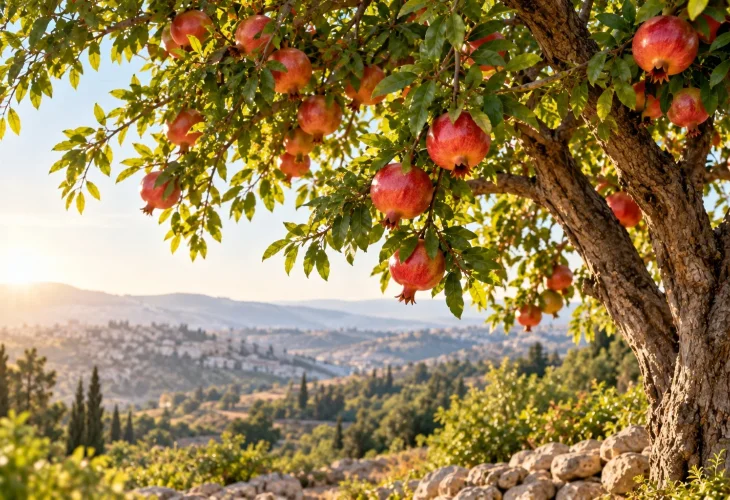
On the third day of Creation, Hashem created the plants and trees. But if we look closely at the Torah’s description, there is a subtle difference between what Hashem commanded and what actually appeared.
Hashem said: “Let the earth bring forth vegetation, seed-bearing plants, fruit trees producing fruit according to their kind” (Genesis 1:11).
Yet in the next verse, the Torah tells us: “And the earth brought forth vegetation, seed-bearing plants according to their kind, and trees producing fruit whose seed is within them according to their kind” (Genesis 1:12).
What happened to the “fruit tree”?
Rashi explains that Hashem intended for the tree itself to taste like its fruit. Instead, the earth produced the trees we know today: trees whose fruit is sweet, but whose wood does not share that taste.
Rashi adds that when the earth was later cursed following Adam’s sin, it was also held accountable for this departure from Hashem’s original command.
But this raises an obvious question. The earth has no free choice. It has no yetzer hara and no ability to consciously rebel against its Creator. So what does this strange episode mean?
The Maharal, in Gur Aryeh, reveals a profound lesson hidden within it.
The Tree and the Fruit
Look at a fruit tree. Beneath the ground is an intricate system of roots. Above it are the trunk, branches, and leaves. Every part works together toward one apparent purpose: producing the fruit.
The tree is the process. The fruit is the result.
And that distinction reflects much of human life.
We set a goal, then spend months or years working toward it. We study to earn a degree. We work to build a career. We save to buy a home. We date hoping to build a family. Parents devote years to raising and educating their children.
The fruit may be sweet, but getting there can be difficult.
As Tehillim says, “Those who sow in tears will reap in joy. He goes along weeping, carrying the measure of seed; he will surely return in joy, carrying his sheaves” (Psalms 126:5–6).
Much of life is spent sowing rather than reaping.
And that can create a dangerous way of thinking: My real life hasn’t started yet.
As children, we imagine life will begin when we finish school. Then perhaps it will begin after high school. After that, once we have a degree. Then once we find the right job. Get married. Have children. Earn enough money. Buy a home. Reach the next milestone.
There is always another destination.
And if we are not careful, we can spend our entire lives preparing to live.
What If the Journey Is Also the Destination?
This is the deeper meaning behind Hashem’s command that the tree itself should taste like the fruit.
From the Divine perspective, the process is not merely something we endure until we reach the goal. The process itself has purpose.
The Maharal explains that the earth did not consciously disobey Hashem. Rather, the difference between the command and what emerged reflects the limitations of the physical world. From an earthly perspective, there is a natural distinction between the means and the end, between the work and the reward, between the tree and its fruit.
We tend to value the destination more than the road that takes us there.
Hashem’s perspective is different.
The most important day of your life is not necessarily the day when you finally reach some future milestone. It is also today. The most important moment is not waiting somewhere several years down the road. It is also the moment you are living now.
That does not mean we should stop setting goals or striving for more. Quite the opposite. We should plant, nurture, work, and build.
But we should not make the mistake of thinking that everything before the harvest is merely preparation.
The years spent studying are life. The years spent building a career are life. The years of raising children, struggling, learning, waiting, changing, and growing are life.
The tree matters too.
One Day, We Will Understand the Whole Journey
The Midrash teaches that in the future, the tree itself will once again taste like its fruit (Yalkut Shimoni).
Perhaps then we will finally understand how the stages of life that seemed like nothing more than roads toward somewhere else were destinations in their own right.
The prophet Amos describes the future: “Behold, days are coming, declares Hashem, when the plowman will meet the reaper, and the one who treads grapes the one who draws out the seed” (Amos 9:13).
Plowing and sowing represent the process. Reaping and harvesting represent its fulfillment. In the future, the distance between them will disappear.
We will see how every stage of the journey had meaning.
Hashem leads each person along a unique path. There may be stretches when we cannot understand why we are where we are or why reaching the destination is taking so long. But that does not make those years empty.
Every part of the road contains its own purpose.
So much frustration comes from treating the present as nothing more than a waiting room for the future. We tell ourselves that we will be happy when something changes, that we will begin living when the next milestone arrives.
But life is already happening.
The challenge is to learn to see it from a higher perspective: to keep working toward the fruit while discovering the sweetness Hashem has placed in the tree itself.

