

Torah Personalities
Rabbi David Batzri’s Son Reveals His Father’s Final Message
Just days after Rabbi David Batzri z”l passed away on the eve of Sukkot, his son shares remarkable stories about his father’s life, final moments, and lasting legacy.
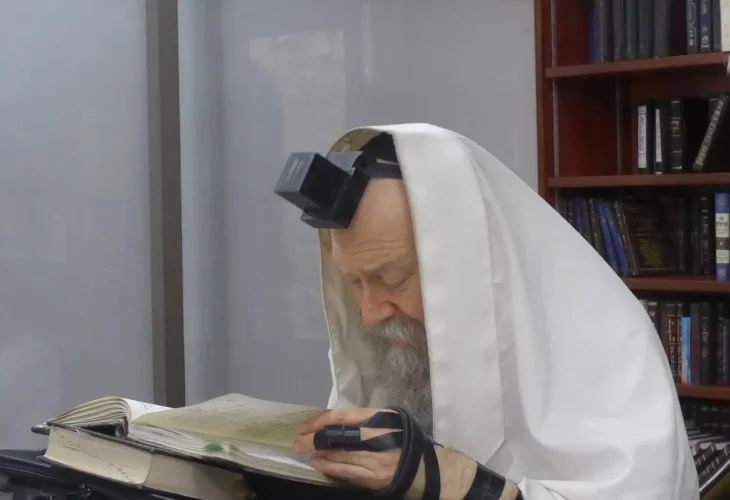 Rabbi David Batzri
“Rabbi David Batzri was not only a great kabbalist. In a way, he was also the ‘father’ of my son, Yahli,” says Liran Malka.
“Yahli is now in 10th grade. When my wife was pregnant with him, we went for a nuchal translucency scan late one Thursday night. At the end, the doctor told us that, in his opinion, there was a 50% chance of Down syndrome and recommended that we go to the hospital to terminate the pregnancy.
“We came home in tears. I told my wife, ‘Let’s go to Jerusalem, to Rabbi David Batzri.’
“On Sunday, we traveled to Jerusalem and told the rabbi why we had come. He listened and said, ‘Do not terminate the pregnancy. He will be mentally healthy. He will need a small operation when he is born, and that will be the end of it.’
“And that is exactly what happened. We will never forget the moment we came to the rabbi filled with fear and left with strength and hope.”
Malka is far from the only person with a story about Rabbi David Batzri z”l.
Since the passing of the revered kabbalist on the eve of Sukkot, stories have continued to emerge from people who sought his blessings and guidance over the years. They speak of couples worried about unborn children, people seeking a shidduch, healing, livelihood, fertility, or peace in the home, and those who came to him for pidyon nefesh and other spiritual practices.
His son, Rabbi Yitzhak Batzri, head of Yeshivat HaShalom, is now sharing another side of his father: the extraordinary discipline, simplicity, Torah learning, and love for others that shaped his private life.
“Because the holiday began, we were unable to mourn and cry properly over his passing,” Rabbi Yitzhak says. “But of course, we constantly recall him, both to strengthen ourselves and the entire Jewish people, and simply to learn from him as much as we can.”
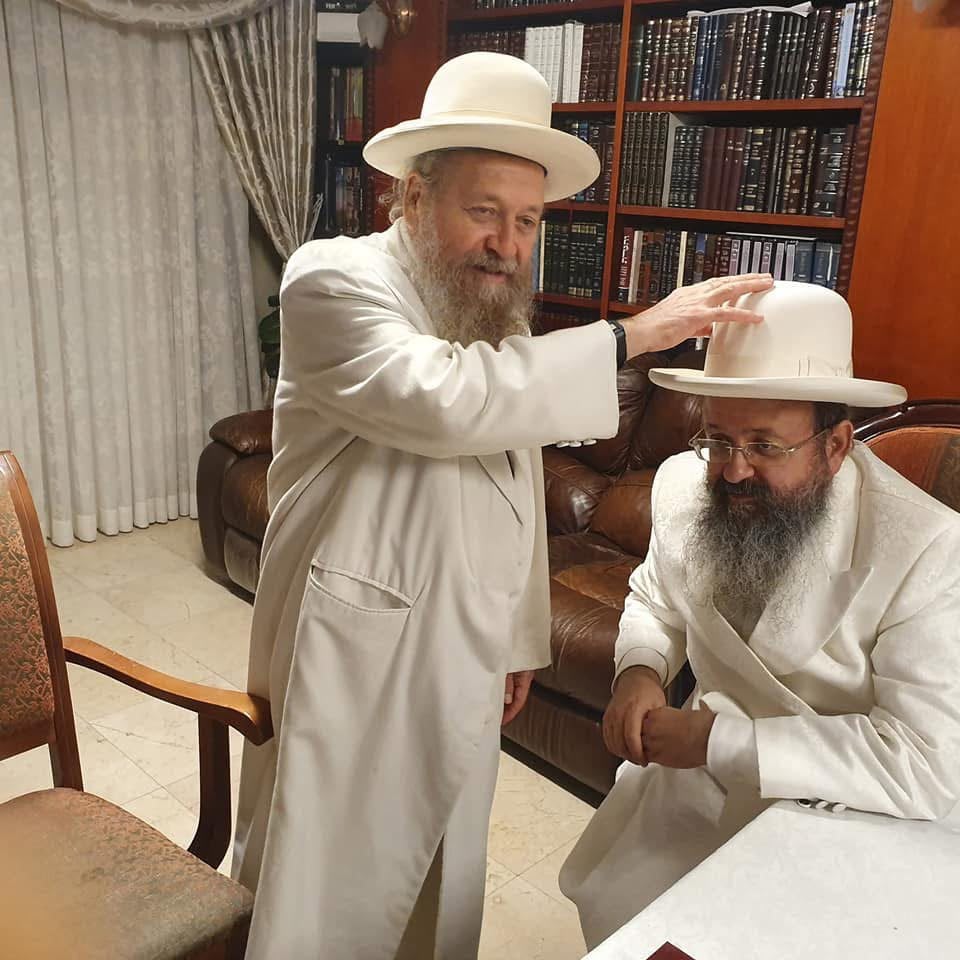 Rabbi David Batzri blessing his son, Rabbi Yitzhak
A Son Standing Before His Father
What was truly your father’s secret? How did he become so admired across so many different communities?
“My father was holy, ascetic, and pure,” Rabbi Yitzhak says. “From the age of nine, he never missed immersing in the mikveh each morning, not even once.
“He once told me, ‘After the tragedy involving Cain and Abel, Adam taught his son Seth to immerse in the mikveh every morning, and my father told me that I, too, should immerse from the age of nine.’
“On his 80th birthday, he came to me and said, ‘Listen, Yitzhak. I have never violated a Torah prohibition or a rabbinic prohibition. Because of that, I am certain that I will leave this world clean.’
“One of the grandchildren heard this and asked him, ‘How is it possible not to commit any sin?’
“My father answered with complete simplicity, ‘Why does a person need to sin? Why commit sins?’”
Rabbi Yitzhak describes a life of extraordinary dedication to Torah that began when his father was still very young.
“My father studied with tremendous diligence at Porat Yosef Yeshiva under Rabbi Yehuda Tzedaka and Rabbi Ezra Attiya. While the other students finished learning at five in the afternoon, my father would sometimes study for 48 hours straight before returning home to eat and rest.
“His learning was already legendary. While still young, he completed the entire Talmud and received yoreh yoreh rabbinic ordination from Rabbi Ezra Attiya at the age of 22.”
Many of his fellow students went on to become city rabbis. Rabbi David Batzri, however, continued immersing himself in Torah study.
After his marriage, he studied in the study hall of Chief Rabbi Yitzhak Nissim alongside his cousin, Rabbi Mordechai Eliyahu, who would later become Sephardic Chief Rabbi of Israel. Both received rabbinical court ordination.
Rabbi David Batzri then turned his attention to Kabbalah, studying under his father-in-law, the renowned kabbalist Rabbi Salman Mutzafi.
“My father-in-law told him, ‘You have filled yourself with the Talmud and the Jewish legal authorities. You may now begin studying Kabbalah, despite your young age.’
“My father was very particular about this,” Rabbi Yitzhak explains. “He would not agree to teach someone Kabbalah at a young age, at least not until two years after marriage.”
Rabbi David went on to study the entire Zohar, the writings and eight gates of the Ari, and the intentions of the Rashash.
“One day, my father escorted his father-in-law home. My grandfather then said to his daughter, my mother, Rebbetzin Tzipora of blessed memory, ‘We have a precious pearl. He is the greatest kabbalist of our generation. Guard this pearl so that no one interferes with his learning.’
“He added, ‘He will yet establish yeshivas for kabbalists throughout the country.’”
Rabbi Salman Mutzafi later asked his son-in-law to establish the Ahavat Shalom Yeshiva for kabbalists, which Rabbi David Batzri led for 20 years. He subsequently taught Kabbalah throughout Israel, with rabbinical judges, yeshiva heads, and other scholars attending his classes.
Yet according to his son, his scholarship cannot be separated from the intensity of his prayer.
“Three times a day, he prayed the Amidah with the intentions of the Rashash. Each Amidah lasted approximately an hour and a half. It was obvious that he felt like a son standing before his father.
“He had a depiction of the Holy Temple painted on the eastern wall, including its chambers and the route taken by the High Priest into the Holy of Holies. Before beginning the Amidah, he would focus on how the prayers correspond to the offerings.
“He emphasized that a person must feel that he is standing and praying before Hashem, not merely understand it intellectually.”
One of his grandchildren once asked him, “Grandfather, how can you pray for an hour and a half without your mind wandering?”
His answer was simple.
“When you are speaking with the Creator of the World, can you think about anything else?”
At one point, Rabbi David Batzri even applied the Rashash’s intentions to Asher Yatzar and blessings over food.
Eventually, he joked to his son: “If I continue concentrating this way, by the time I finish Asher Yatzar, I will need to say it again. And by the time I finish the blessing over food, I will not have time to eat. I will fast my entire life.”
His personal habits were similarly austere. Rabbi Yitzhak says his father avoided meat throughout his life because of his concerns over kosher standards and, in his later decades, stopped eating chicken as well. He ate a little fish on Shabbat, while his weekday diet consisted largely of porridge and fruit.
Yet when Rabbi Yitzhak married, his father gave him very different instructions.
“He told me, ‘I decree that you eat meat. Your father-in-law is a Torah scholar, and he may be hurt if you refuse to eat in his home, as though you question his kosher standards. It is forbidden to hurt a Torah scholar.’
“My father was a man of extraordinary character. He personally took me to the store and bought me meat.”
That sensitivity, his son says, extended to the countless people who arrived at his door seeking help.
“He received people at every hour of the day and night. He welcomed them warmly, blessed them, and advised them. Since his passing, hundreds of stories have reached me from people who say he encouraged them not to give up on pregnancies and who later welcomed healthy children.”
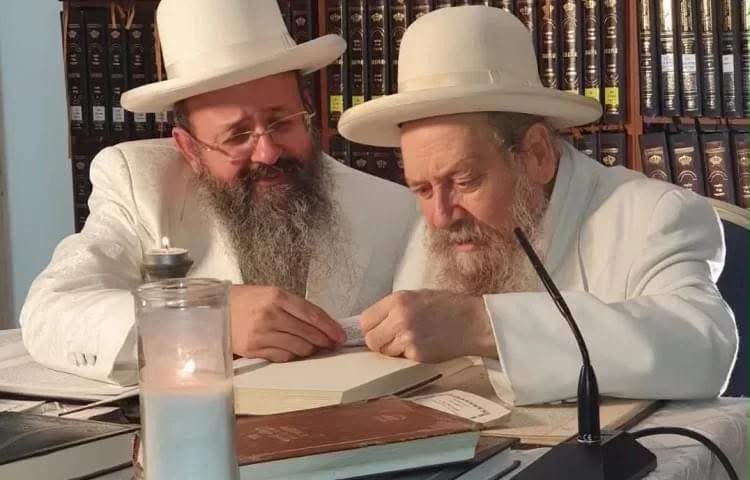 Rabbi David Batzri z”l (right) with his son, Rabbi Yitzhak Batzri
“The Righteous Are Here in the Room”
In his later years, Rabbi David Batzri’s health deteriorated significantly.
“Because of so many years of fasting and self-denial, my father eventually became unable to eat solid food,” Rabbi Yitzhak recalls. “He survived on soup, pureed fruit, and water, and even those were difficult for him.”
He underwent repeated hospital procedures to widen his esophagus. During one procedure, Rabbi Yitzhak says, his father suffered a tear in the esophagus and doctors feared it could not be repaired.
According to the family’s account, Professor Avi Rivkind proposed an unusual treatment to close the tear, and the procedure succeeded.
Even as his health weakened, Rabbi David continued to fast.
“I once asked him, ‘How can you fast so much?’
“He answered, ‘You also fast for half the day. You simply fast at night, while I fast during the day.’
“That was his simplicity. He never considered himself different from anyone else.”
Eventually, however, his condition forced him to slow down. About three years before his passing, he asked his son to assume full responsibility for leading the yeshiva.
His instructions were striking.
“He asked me to receive people and, above all, to love them. He told me, ‘Love all of the Jewish people, without exception. Never rebuke anyone. Always love everyone.’”
Rabbi David continued guiding his son and the yeshiva behind the scenes until the end of his life. Father and son studied together twice a week.
“Even from his sickbed, he studied constantly,” Rabbi Yitzhak says. “Doctors would come in the morning to examine him or draw blood and were amazed because they could hardly interrupt him. He was always praying or learning.”
His material needs, meanwhile, remained minimal.
“He lived in a simple three-room apartment in Kiryat Sanz. He slept on an old-fashioned iron bed, and the cabinets in his home were made of iron. He needed absolutely nothing from this world.”
When did you speak with him for the last time?
“On Thursday afternoon, I was still studying Mishnah Yoma with him. A week earlier, we were studying Zohar with tremendous diligence.
“My father learned until his final moments. Even when he was taken to the hospital, he was wearing tefillin, and his lips were murmuring in prayer.”
Was there anything different about that final study session?
“In the middle of our last study session, he suddenly seemed to disconnect from his surroundings, as though he were somewhere else.
“When I stood up, one of the children showed him a picture they had prepared for the sukkah, featuring the Ben Ish Chai and Rabbi Salman Mutzafi.
“My father looked at it and said, ‘They and their wives are all here now. All the righteous have come to us and are beside me. There is no need for his picture. Everyone is here beside me. The room is full.’
“Then he dozed off again.”
Later, a granddaughter who had recently married entered the room with her husband.
“My father got up and joyfully danced with the groom. He blessed them with children and sang wedding songs in their honor.
“There was tremendous, overwhelming joy, and none of us understood what it meant. We never imagined he would leave us so soon, especially on the eve of the holiday.”
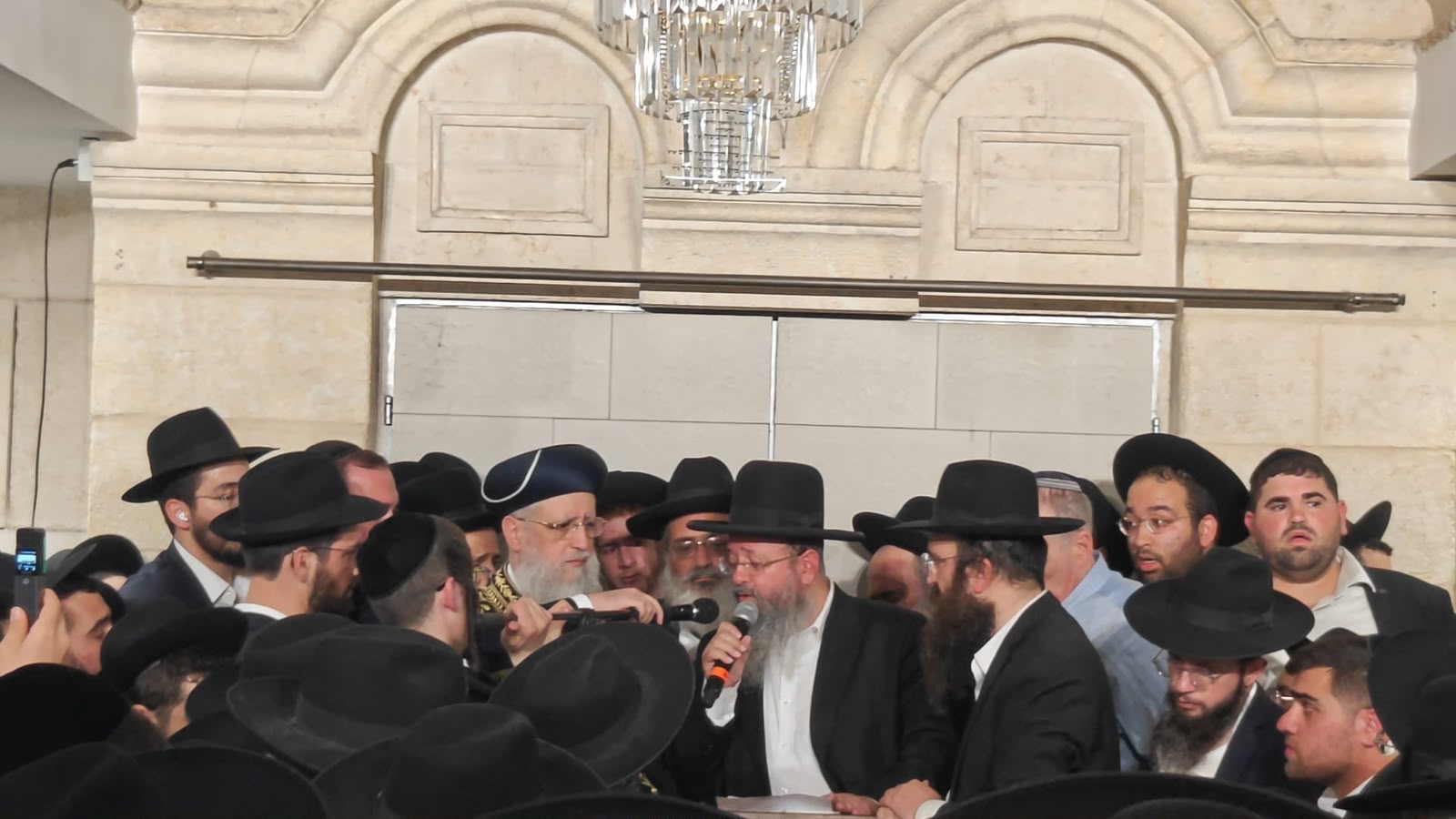 Rabbi Yitzhak Batzri eulogizes his father, Rabbi David Batzri z”l
Carrying On His Legacy
On Friday morning, the eve of Sukkot, Rabbi David Batzri passed away.
His funeral took place just hours before the holiday, with large crowds accompanying him on his final journey. His family observed shiva for only a short time before the onset of Yom Tov brought the formal mourning period to an end.
Sephardic Chief Rabbi David Yosef spoke of the deep relationship between Rabbi Batzri and his father, Rabbi Ovadia Yosef z”l.
“A special and deep bond existed between him and my father, our teacher Rabbi Ovadia Yosef of blessed memory, who greatly valued him and recognized the depth of his greatness, both in the revealed and hidden dimensions of Torah,” Rabbi Yosef said.
“My father was very fond of him and valued his Torah greatness and extraordinary humility. He even told me that I should go and study Kabbalah with him, an instruction that testifies to the tremendous esteem in which he held him.
“A remnant has left us from a generation of Torah scholars whose entire lives were one continuous tractate of Torah, holiness, and service of Hashem.”
Rabbi Yitzhak notes that Rabbi Zamir Cohen was also particularly close to his father. During the brief period before Sukkot began, rabbis and public figures from across the Jewish community contacted the family to offer their condolences.
For Rabbi Yitzhak, the timing of his father’s passing also brought back a powerful memory.
About six years earlier, his mother, Rebbetzin Tzipora Batzri, passed away shortly before Passover.
“That day, my father saw me sitting sadly and told me, ‘Go and be happy with your children, because one must rejoice on the holiday.’
“My father did not shed a tear throughout Passover. We actually began to worry that something had happened to him. He refused to take condolence calls because he was afraid they would cause him to break down during the holiday.
“Only after the seventh day of Passover ended did he finally break down and cry for 24 hours.”
Now, Rabbi Yitzhak says, he finds himself facing the same challenge his father once faced.
“That is the message I received from my father,” he says, his voice catching. “I am not as strong as he was, and unfortunately I cannot stop myself from crying.
“But at the same time, it is clear to me that I have to continue. I have to build, grow, and carry this tremendous Kabbalah enterprise forward, because that was my father’s final instruction.”

