

Israel News
Three Years After October 7: IDF Details 31,000 Launches, 970 Fallen Soldiers and 100,000 Strikes
Three years after the massacre, the IDF is revealing the scale of the fighting and the heavy price paid by its forces. The report also outlines changes to intelligence warnings, border defense, readiness and the reserve system.
 (Photo: IDF Spokesperson)
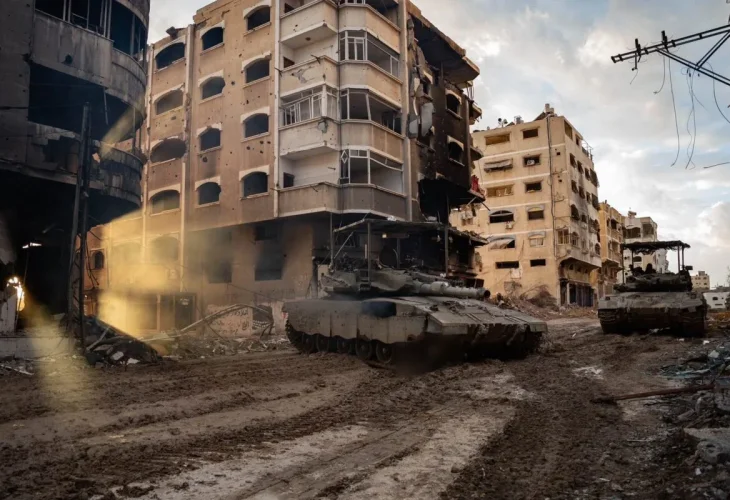
Three years after the October 7 massacre and the outbreak of the war, the scope of IDF operations across the various fronts is coming into view, along with the changes made within the military following the failures exposed that day. Data from the IDF and additional information released today (Wednesday) paint a broad picture of the transformation: from the intelligence branch's approach to early warning, to the expansion of reserve forces and readiness levels, to the establishment of new outposts and a revised approach to border defense.
Since the war began, approximately 100,000 targets have been struck. Most of the activity took place in the Gaza Strip, where approximately 65,000 targets were struck. Some 28,000 targets were struck in Lebanon and Syria, 4,500 in Iran and 80 in Yemen.
During the same period, Israel faced extensive fire from every front: approximately 10,200 munitions were launched from the Gaza Strip, approximately 20,000 from Lebanon, approximately 1,200 from Iran, approximately 90 from Yemen and approximately 50 from Syria, for a total of approximately 31,540 launches.
Alongside the operational activity, the numbers also reflect the heavy price paid by the IDF. Since the start of the war, 970 service members have fallen in operational circumstances. More than 70% of the soldiers wounded during the war returned to service.
Additional figures point to the damage inflicted on Hamas's chain of command. During the war, four branch chiefs, 17 brigade commanders, approximately 60 battalion commanders and approximately 300 company commanders were eliminated. The activity was carried out jointly by Southern Command, the Intelligence Directorate, the Operations Directorate and the Air Force.
Among the senior Hamas figures eliminated were Yahya Sinwar, Mohammed Deif, Ismail Haniyeh, Saleh al-Arouri, Mohammed Sinwar, Marwan Issa, Izz al-Din al-Haddad, Rawhi Mushtaha and Mohammed Odeh. Among the Hezbollah figures eliminated were Hassan Nasrallah, Hashem Safieddine, Fuad Shukr, Nabil Qaouk, Ali Karaki, Ibrahim Aqil and Haytham Ali Tabatabai. A number of senior figures were also eliminated on the Iranian front.
In Judea and Samaria, meanwhile, approximately 45,000 wanted suspects have been arrested since the beginning of the war, including terror operatives, terror supporters and suspects who were planning attacks in the immediate future. More than 3,800 weapons were seized, along with more than 46 million shekels intended for terror activity.
 (צילום: דובר צה״ל)
One of the most significant changes since the outbreak of the war has come in the reserve system, whose manpower has grown by approximately 36%. New frameworks were established and staffed, including the Shomer Brigade, David Brigades, Division 38 and additional units in armor, intelligence gathering, community defense, air defense, policing and detention, and Home Front Command.
In August 2024, a call-up order was activated under which approximately 22,000 service members who had been exempted were brought back. In 2025, more than 15,000 reservists were placed in active units through assessment days, and in 2026 more than 8,000 additional reservists were assigned. At the same time, there was an increase of approximately 38% in the number of recently discharged compulsory-service soldiers assigned directly to reserve units.
Another big change took place in the Intelligence Directorate. Following October 7, the task of warning of war and hostile activity was placed at the top of Military Intelligence's priorities. Its early-warning approach was updated, existing models were reassessed, warning operations rooms were strengthened, and a multi-front, multidisciplinary Military Intelligence operations room was established.
At the heart of the change is reducing the weight given to assessments of the enemy's intentions and increasing attention to its capabilities and changes in its readiness. At the same time, the need for self-doubt, professional debate and identifying "signals from reality", pieces of information that do not align with existing assessments, was emphasized.
The training of intelligence personnel has also changed. Programs focused on Islam and intelligence research were established in collaboration with experts from academia and the intelligence community. In addition, the review department was reestablished in an expanded format, and the training of intelligence commanders was strengthened.
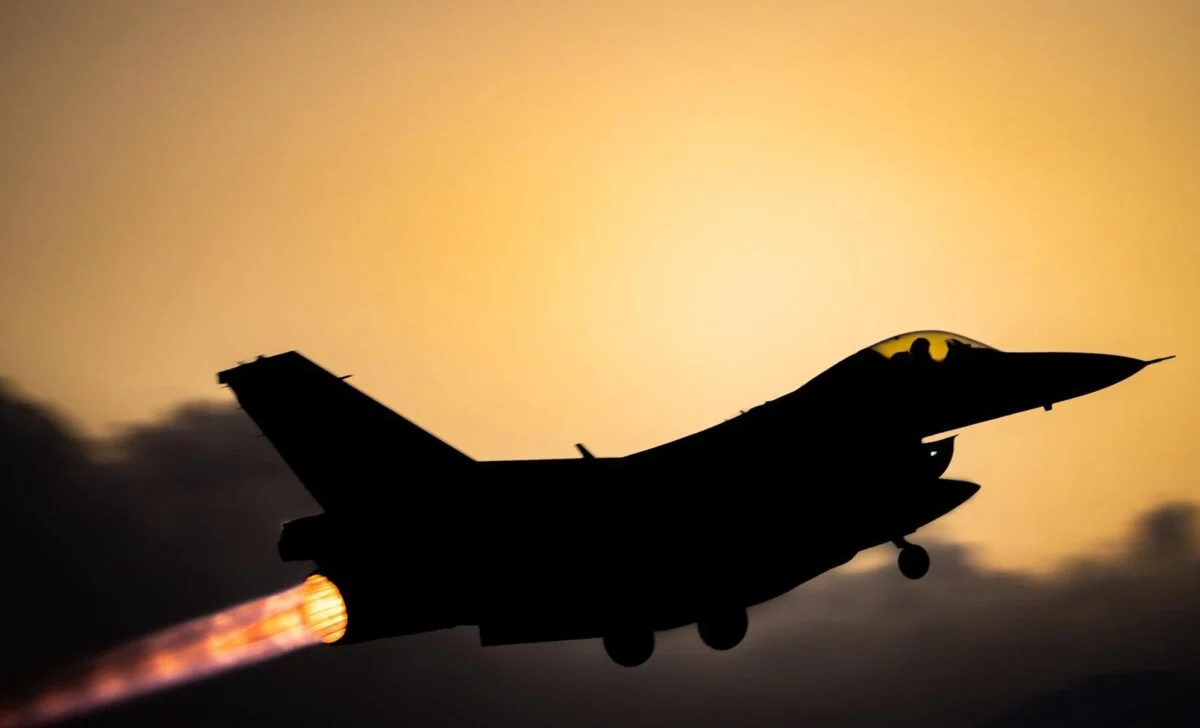
In the Air Force, the number of forces on standby has increased by as much as four times compared with the eve of the war, and by as much as six times in certain units. Orders were developed for dealing with a broad and surprise war, the authority of field-level commanders was expanded, and the defensive and offensive posture was changed. Combat Helicopter Squadron 190, "Magic Touch," was moved to Ramat David to shorten response times to the border sectors, while the deployment of hundreds of radars and detection systems against drones and UAVs was expanded.
 (צילום: דובר צה״ל)
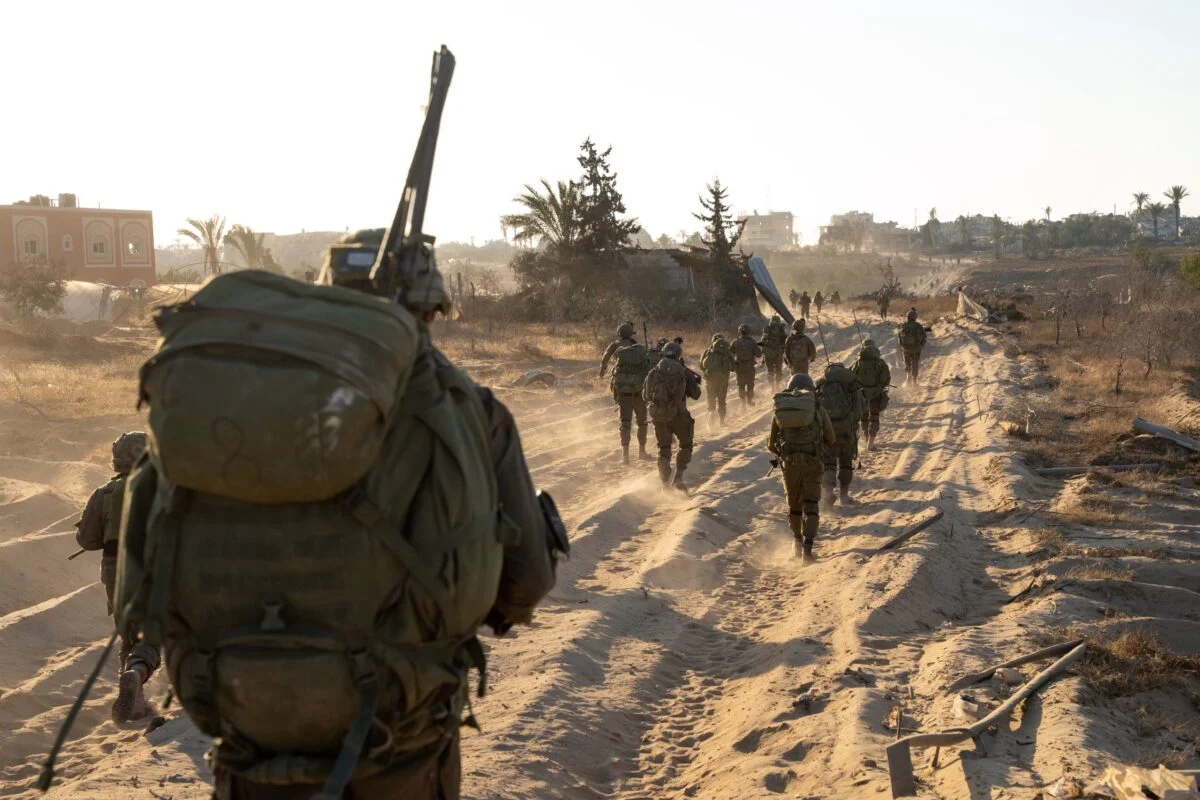
In Southern Command, defensive measures around the communities near Gaza were upgraded, including fences, security roads, gates, lighting, radars and fortified positions. Approximately 40 new outposts were established on strategically elevated ground in accordance with possible Hamas attack routes. The border barrier was reinforced, and since the ceasefire last October, more than 4,000 systematic drillings have been carried out to locate tunnels.
In the north, a new approach was developed under the principle of "military before civilians." It is based on deploying forces in a way that prevents the enemy from establishing itself in areas from which it can threaten the home front. Divisions 91 and 36 operated along the first line of villages in southern Lebanon to strike infrastructure and create a deep security zone.
After the fall of the Assad regime, forces from Division 210 entered Syrian territory within approximately 12 hours and began establishing a forward security zone, where 10 outposts were built. At the same time, the number of local-defense platoons in northern communities tripled, and the "Pere" and "Dvora" units were established, based on fighters who live in the area.
Lessons were also implemented along the eastern border. Central Command established Division 96, "Gilad," intended to strengthen defense against threats from the east. The "Waterline" outposts were renewed, while five "David Brigades" were established, territorial rapid-response brigades designed to provide a trained and swift force during sudden events.
In the Operations Directorate, the number of standby forces and reserves across all sectors was more than doubled, and a new order was written for dealing with a broad, multi-front surprise attack. In the Ground Forces, the approach to border defense was changed so that protecting communities no longer begins at the line of the homes: the IDF seeks to create depth and a security zone, and to act against the threat before it reaches civilians.
The changes also reached Home Front Command, where hundreds of shelters were renovated and thousands of portable bomb shelters were deployed, and the Technology and Logistics Directorate, where the "Acceleration" program was established to restore forces to readiness. In the Navy, security zones were reorganized and the "Nets" unit was established for forward combat intelligence gathering.

