

Raising Children
Salt Painting for Kids: Easy and Colorful Watercolor Craft
This fun and easy craft for kids encourages creativity, sensory exploration, and hands-on learning while producing colorful, textured artwork
- Tehila Cohen
- | Updated
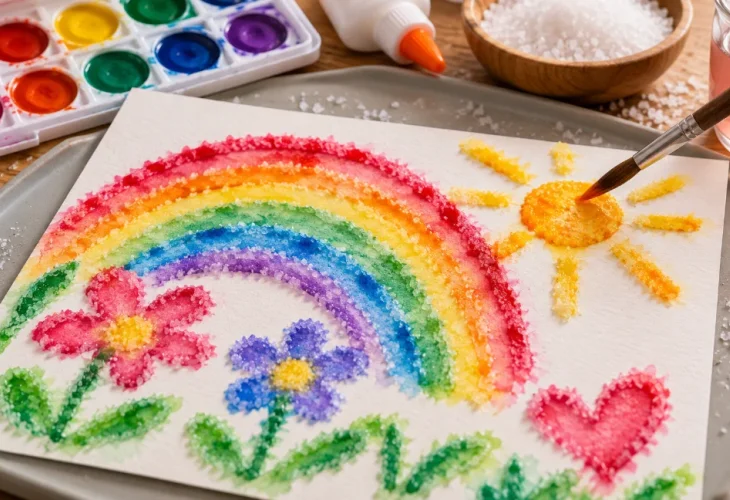
If you’re looking for a creative activity that’s simple to prepare and exciting for kids, salt painting is a fun way to turn an ordinary drawing into a colorful, textured work of art. Instead of painting directly onto paper, children use glue and salt to create raised designs, then watch in amazement as watercolor paints spread through the salt crystals.
The result is a vibrant, sparkling picture with a unique texture. Best of all, the activity combines creativity, sensory exploration, and a little science, making it both entertaining and educational.
What You'll Need
Thick paper or cardstock
White craft glue
Coarse salt or regular table salt
Watercolor paints
A fine paintbrush or dropper
A tray or protective surface to keep the table clean
Step 1: Create Your Design
Begin by placing a sheet of thick paper or cardstock on a tray. Using white craft glue, draw a simple design directly onto the paper. Flowers, butterflies, rainbows, hearts, and suns are all great choices, but children can also let their imaginations run wild and create their own patterns.
For the best results, make sure the glue lines are thick enough to hold the salt and remain continuous throughout the design. Avoid spreading the glue too thinly, as this can make it difficult for the salt to adhere.
Step 2: Sprinkle on the Salt
While the glue is still wet, generously sprinkle salt over the entire design. Make sure all the glue lines are thoroughly covered. There's no need to be precise, so children can enjoy covering the whole picture with salt.
After a moment, carefully lift the paper and gently shake off the excess salt into the tray. The salt that has adhered to the glue will stay in place, forming raised, textured outlines.
Your salt painting is now ready for its most exciting transformation.
Step 3: Watch the Colors Come to Life
Prepare the watercolor paints using a small amount of water to create relatively concentrated colors.
Rather than brushing the paint back and forth across the salt, gently touch the raised lines with a paintbrush dipped in watercolor. Alternatively, use a dropper to place a small drop of color directly onto the salt.
Watch as the salt absorbs the liquid and the color begins to travel along the crystals, spreading through the design almost like magic.
For an even more beautiful effect, try adding a different color nearby. Children will love watching the shades meet, blend, and create unexpected combinations.
Every drop produces a slightly different result, making each piece of artwork truly one of a kind.
Step 4: Let Your Masterpiece Dry
When working with salt and watercolors, a little water goes a long way. Too much liquid can dissolve the salt or cause the glue and paint to spread beyond the intended design. Encourage children to begin with just a small amount of paint and gradually add more as needed.
Once the painting is complete, place it on a flat surface and allow it to dry thoroughly. Avoid touching or moving the artwork while it dries so that the raised salt design remains intact.
Make It a Fun Science Experiment
Salt painting is more than just a creative activity. It's also a wonderful opportunity to encourage children's curiosity and observation skills.
Before adding the first drop of paint, invite children to predict what will happen. Will the color stay in one place, or will it spread? Will different colors travel through the salt in the same way? What happens when two colors meet?
As they experiment, encourage them to describe what they see and try different color combinations. They'll discover how the salt absorbs the liquid and how the paint moves through the crystals, all while creating something beautiful.
With just a handful of everyday materials, this easy art project offers plenty of room for imagination, experimentation, and discovery. Whether you're looking for an afternoon activity at home, a classroom craft, or a creative project for a rainy day, salt painting is a wonderful way to keep children engaged while encouraging them to explore their artistic side.

