

Health and Nutrition
Scientists Discover That Certain Mushrooms Can Make Food Taste Saltier
Studies suggest that compounds found in edible mushrooms can increase the perception of saltiness, offering a promising approach to healthier foods.
- שירה דאבוש
- | Updated
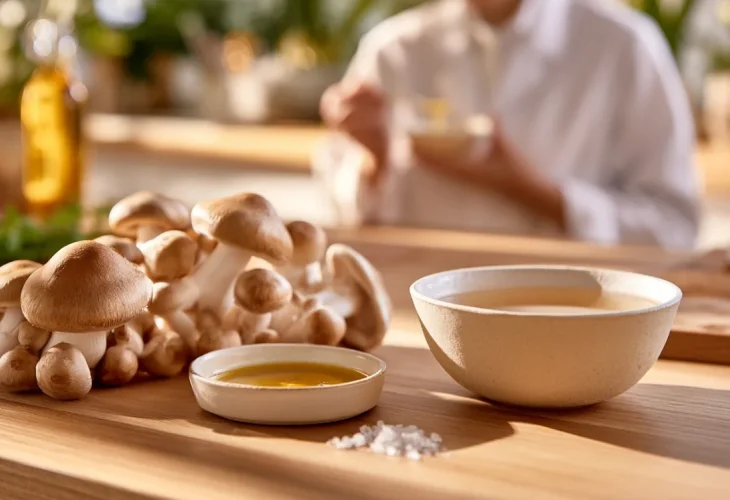
Researchers have discovered that an edible mushroom known as the “antler fungus” may enhance the perception of saltiness in food without adding extra salt. The findings suggest that certain mushrooms could eventually help reduce sodium levels in everyday foods while preserving the flavors people enjoy.
Imagine being able to enjoy a flavorful sauce or savory dish with the same satisfying salty taste but significantly less sodium. Excessive salt consumption has been linked to high blood pressure and an increased risk of cardiovascular disease, making sodium reduction an important goal for food researchers.
The antler fungus has shown particular promise because of compounds found in extracts produced through enzymatic processing. These substances may enhance the perception of saltiness, even when the actual salt content is reduced. And it turns out that this potential is not limited to one unusual mushroom. Other, more familiar varieties may offer similar benefits.
What Is the Antler Fungus, and What Did Researchers Discover?
A study published in 2022 in the scientific journal Food Chemistry examined the flavor-enhancing properties of nine edible mushroom varieties. Researchers Fan Yang, Shi Lv, Ye Liu, Shuang Bi, and Yu Zhang, from Beijing Technology and Business University in China, investigated which compounds contribute to the mushrooms' rich flavors and whether they could intensify the perception of saltiness.
The researchers found that the antler fungus had the highest umami intensity among the mushrooms tested.
Umami, often described as the fifth basic taste, is associated with the rich, savory flavors found in foods such as mushrooms, soups, and protein-rich dishes.
The team examined amino acids and nucleotides, naturally occurring compounds that contribute to umami flavor. Their findings indicated that certain components could enhance the perception of saltiness even when the actual salt concentration was lower.
This suggests that mushroom-derived ingredients may eventually help food manufacturers maintain appealing flavors while reducing the amount of salt added to their products.
It's Not Just Taste: Smell May Play a Role Too
Another study, published in 2023 in the journal Foods, investigated a different mushroom called Schizophyllum commune, commonly known as the split gill mushroom. This species typically grows on dead wood and has distinctive folds on the underside of its cap.
Researchers at Kasetsart University in Thailand prepared an extract from the mushroom and examined its effect on the perceived saltiness of salt solutions and clear chicken soup.
In a tasting experiment involving 64 consumers, soups containing the mushroom extract and 20% to 31.25% less salt were perceived as being just as salty as regular soup.
Interestingly, researchers have also found that aroma may influence how salty food tastes. A study published in 2025 showed that several aromatic compounds released from fried button mushrooms could enhance the perception of saltiness in foods.
These findings suggest that both the flavor compounds and aromas naturally present in mushrooms may play a role in making lower-sodium foods taste more satisfying.
Could Mushrooms Help Reduce Salt in Everyday Foods?
The research offers a promising direction for the food industry, particularly as excessive sodium consumption remains a concern for public health.
While salt is an essential part of the diet, consuming too much sodium can contribute to high blood pressure and increase the risk of heart disease and stroke.
If researchers can successfully develop mushroom-based ingredients that enhance saltiness, manufacturers may be able to produce soups, sauces, seasonings, and other foods with lower sodium levels without significantly compromising their flavor.
However, further research is needed to determine how effectively these extracts work in different foods, as well as their suitability for large-scale production.
For now, the findings highlight an intriguing possibility: some of the ingredients that could help us reduce our salt intake may already be growing naturally in the form of mushrooms.

