

Personal Stories
From Childhood Trauma to Healing: Elinor Malayev's Inspiring Journey
After growing up with loneliness, family breakdown, and feelings of worthlessness, Elinor discovered the power of faith, self-worth, and personal growth. Today, she helps others overcome their past and build a better future.
- Miri Ben-David Levy
- | Updated
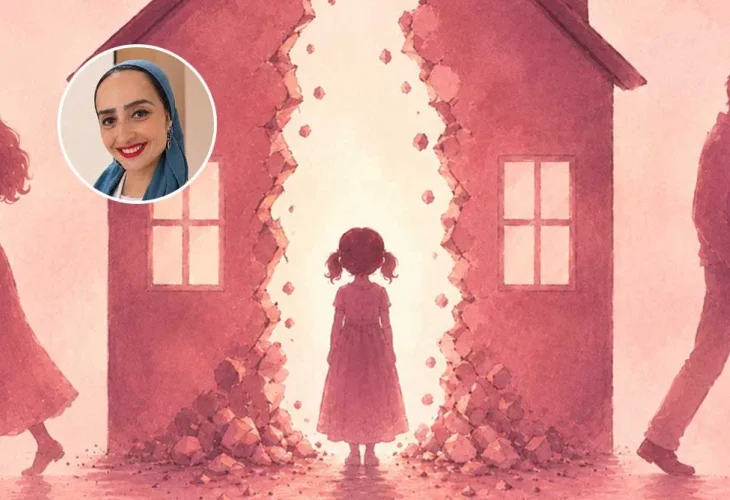
Elinor Malayev has few memories of life in Bukhara. She was very young when her parents decided to pack up their belongings and immigrate to Israel. Yet certain images from those early years remain vividly etched in her mind.
"I still have flashes of memories, and there are some things you simply never forget," she recalls. "Certain streets, my grandmother's house, a little bag of sunflower seeds sold in rolled-up newspaper. I also remember the moment my mother landed in Israel, several months after my father had arrived and called for us to join him. I remember it as though it happened yesterday. What stands out most is that no one came to meet us at the airport. That was when we realized we were on our own."
Her mother, Lilia, who adopted the Hebrew name Leah after arriving in Israel, had left behind a financially secure family and an entire life in Bukhara. She believed she was coming to Israel to begin a new chapter. Instead, she discovered that the future she had imagined no longer existed.
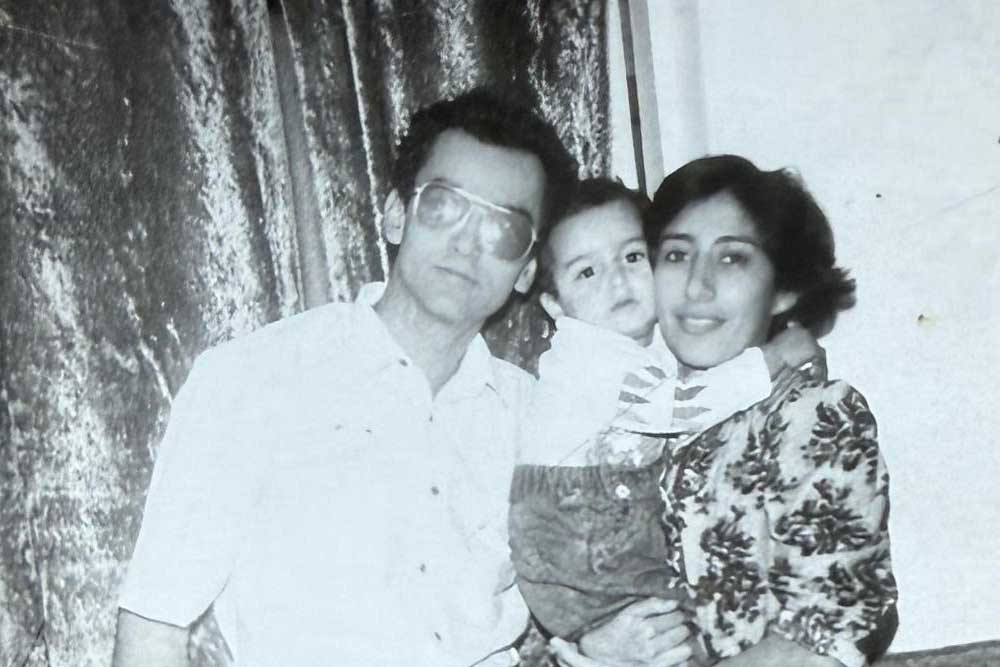 In the only photo with her father and mother in Bukhara
"My father had already begun a new chapter of his own," Elinor explains. "My parents separated from the moment we arrived. Suddenly, we found ourselves in a foreign country without family, a support system, or anyone to lean on."
Yet her mother refused to surrender to the circumstances. "She immediately began working as a beautician, from six in the morning until midnight. People suggested that she clean houses, but she refused. She had a profession, and she was determined to hold on to it. Through sheer hard work, she made sure there was always food on the table and clothing for me. But the price was enormous. I practically raised myself. And of course, I had no siblings."
Today, Elinor lives in Elad with her husband and their four children, all aged 15 and younger. She works as a personal development and mental coach, helping others overcome emotional obstacles and build healthier, more fulfilling lives. Watching her own children grow up has made her increasingly aware of how different their childhood is from hers.
"Every time I look at my children, I feel the contrast," she says. "I used to come home to an empty apartment. Later, I would fall asleep at the salon where my mother worked, waiting for her to finish another exhausting day. From a very young age, I learned not to be a burden, not to ask for things, and not to get in the way. I simply learned to manage on my own."
"Mom, Let's Make Kiddush"
The first major turning point in Elinor's life came not through a deliberate spiritual decision, but through a practical concern. Her mother was looking for an affordable kindergarten close to home.
"There was a kindergarten run by Bukharian Jews, and only afterward did my mother realize it was actually a religious school," Elinor explains. "We had some Jewish traditions at home, but we were far from religious. As a single mother, she was grateful for any suitable childcare arrangement. She just wanted me to be in a good environment."
The kindergarten introduced Elinor to a world of Jewish observance that was largely unfamiliar in her own home. "At kindergarten, we learned to recite blessings, but at home we didn't. I would arrive wearing a sleeveless shirt and shorts, and the staff would help me change into more appropriate clothing. Everything I learned, I brought home with me. I'd say, 'Mom, let's light Shabbat candles,' or 'Let's make Kiddush.'"
For Elinor, these practices were not unusual or foreign. They were simply part of what she was learning about the world. "I believed that whatever my teacher and the kindergarten staff said was true. I would come home with drawings about the weekly Torah portion and the blessings we'd learned. I didn't realize that our family lived differently. To me, this was simply how things were supposed to be."
Her mother did not resist her growing religious interest. "In a way, I think my mother was searching for something stable to hold on to as well. Her life was already so difficult that she didn't have the strength to fight another battle."
Another important influence entered Elinor's life when she attended an evening Torah class taught by the mother of a girl named Miri. "I went to the class with my mother, and Miri and I connected immediately. Her family had come from Vienna. I asked to transfer to the school she attended, and that was when I became much more committed to religious observance. I also influenced my mother."
Eventually, Miri and her family returned to Vienna, but the friendship endured. "We went through other significant stages of life together, and we're still in touch today."
When Elinor was 14, her mother remarried and gave birth to a son. Unfortunately, the second marriage also ended in separation, leaving Elinor to shoulder responsibilities far beyond her years.
"We went through another family breakdown, and I continued being the little mother of the household. I cooked, cleaned, organized everything, and cared for my brother. Bills, errands, household arrangements, everything went through me. My mother worked from morning until night, so I simply stepped into that role."
She smiles as she recalls that her younger brother was sometimes more afraid of her than of their mother. "I wasn't just helping to run the home. I was also the emotional mother of the family."
Becoming the Responsible Adult at Twelve
At the age of twelve, Elinor experienced another devastating upheaval. "I remember getting ready for an overnight school trip when my mother received a phone call. Without any preparation or attempt to soften the news, she simply turned to me and said, 'Your father is in prison.'"
Her father later gave her permission to share their family story, hoping that her experiences might strengthen other women who had endured difficult circumstances.
"I remember the shock. Wasn't it enough that my parents were divorced? Now I also had to live with the knowledge that my father was in prison? At twelve years old, I wasn't interested in why he was there. All I could think about was how I was supposed to live with it."
Her father served a fifteen-year prison sentence, and Elinor visited him every few months. "Those visits were extremely unpleasant. There were security checks and intimidating guards. Every time I traveled to see him, I would say, 'Master of the Universe, I'm not doing this because I want to. I'm doing it to fulfill the mitzvah of honoring my parents.'"
The visits took a heavy emotional toll. Each one forced her to confront a painful reality she desperately wanted to escape. Yet she continued, guided by a conviction that had taken root early in her childhood. "I believed in doing what was right, even when it was difficult. I was so busy being the responsible adult."
A relative of her parents, whose daughters attended the Sanz boarding school in Netanya, eventually recommended that Elinor study there as well. Looking back, she remembers those years with particular warmth.
"For the first time, I felt a sense of belonging. I learned how to live with other girls, develop friendships, and become part of a group. At the same time, my spiritual identity was taking shape. I embraced a fully Haredi lifestyle, and I felt that I was building foundations for myself that I had never had before."
For a young girl who had spent so much of her childhood feeling alone, the experience provided something she had long been missing: community, structure, and a sense of being part of something larger than herself.
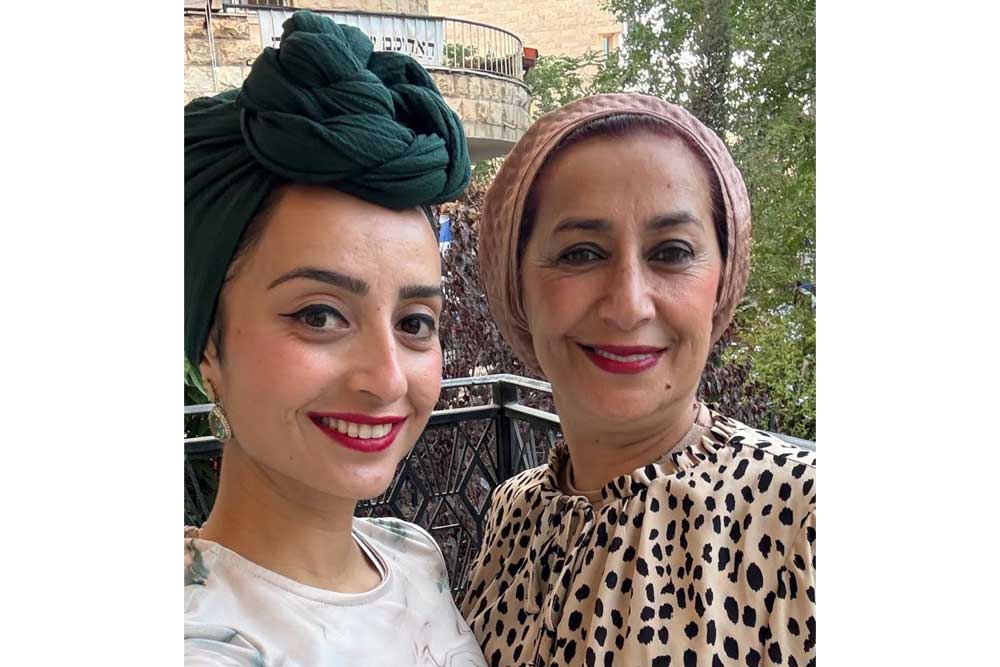 With her mother, today
"Who Would Want Someone With My Background?"
Despite the stability Elinor gradually found in her religious life, the emotional consequences of her childhood continued to affect the way she saw herself. Nowhere did this become more apparent than when she entered the world of shidduchim, the process of finding a marriage partner.
"Because of my family background, I was convinced I didn't really stand a chance," she recalls. "I kept thinking, 'Who would want a girl carrying so much baggage?' Everything that had happened during my childhood had left me without a sense of self-worth."
That belief nearly led her to accept a marriage proposal from someone she knew, deep down, was not right for her. "It wasn't that he was a bad person. Quite the opposite. I simply didn't feel that he was my intended match. But I kept telling myself, 'Who am I to say no? Here's someone who actually wants me. Maybe this is what I deserve.'"
Three days before the planned engagement, her uncle asked to speak with her privately. "He spoke to me honestly about what he was seeing. More than anything, he gave me permission to listen to my own inner voice. I think it may have been the first time in my life that someone had made me feel that my wishes mattered too."
Elinor ultimately decided to end the proposed match. A few months later, she met the man who would become her husband.
"It happened because of Miri's wedding," she explains. "Yisrael saw me there, and someone told him that my uncle was the person to contact about a possible match."
Their connection was immediate. "After our very first meeting, I knew. I said, 'This is the man I'm going to marry.'"
What attracted Elinor most was Yisrael's character. "He had good middot, and that was what I was looking for. I already knew that money doesn't guarantee happiness, and neither does social status. I grew up in a home where we always had enough food, but we lacked stability, security, and peace. Those were the things I wanted. I was looking for someone with whom I could build a real home."
Her longing for a stable marriage was particularly understandable given her family history. "Unfortunately, my grandparents also divorced shortly after immigrating to Israel following us, and some of my aunts and uncles divorced as well. I didn't grow up with a healthy model of marriage."
With Yisrael, Elinor was determined to create something different.
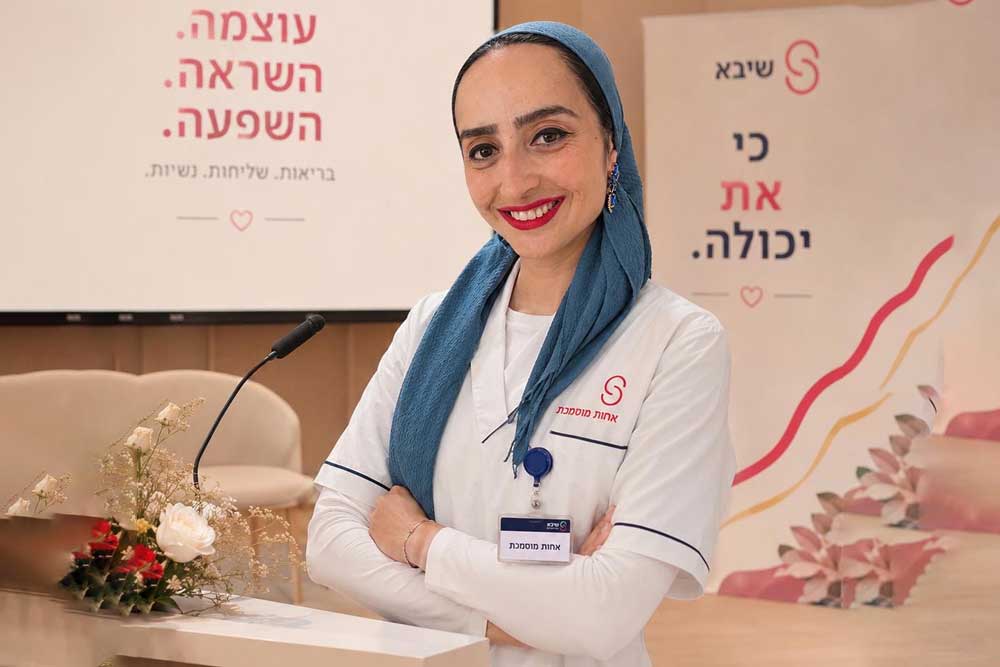
Healing the Past Without Letting It Define the Future
After the birth of her two eldest children, Elinor began to recognize the importance of addressing the emotional wounds she had carried since childhood.
"A woman who doesn't recognize her own worth or take the time to understand what she's been through can easily repeat unhealthy patterns," she explains. "She might become irritable or respond in ways she never intended. It's very easy to fall into those habits."
By that stage, Elinor had earned both bachelor's and master's degrees in nursing and was working as a nurse. Yet she felt drawn to explore personal growth and emotional development more deeply.
"After years of studying nursing and working in the profession, I enrolled in a personal development course. I went through incredible processes that helped bring out the best in me."
She is careful to emphasize that her difficult upbringing had not made her insensitive or incapable of compassion. On the contrary, she had developed a strong ability to understand the struggles of others.
By the time her father was released from prison, her second son had already been born. "My husband and I went together to pick him up from prison. We brought him a small envelope with some money to help him make a fresh start, took him out for a meal, and packed up the leftovers so he'd have something for later."
Despite the pain associated with her father's absence and imprisonment, Elinor had learned to view her parents' actions with compassion. "I genuinely know how to live with empathy. I understand that my parents did what they knew how to do and gave what they were capable of giving."
That understanding has become central to the way she approaches people struggling with difficult life experiences. "When I meet people who carry complicated personal histories, I remind them that our past can explain who we are, but it doesn't have to define who we become."
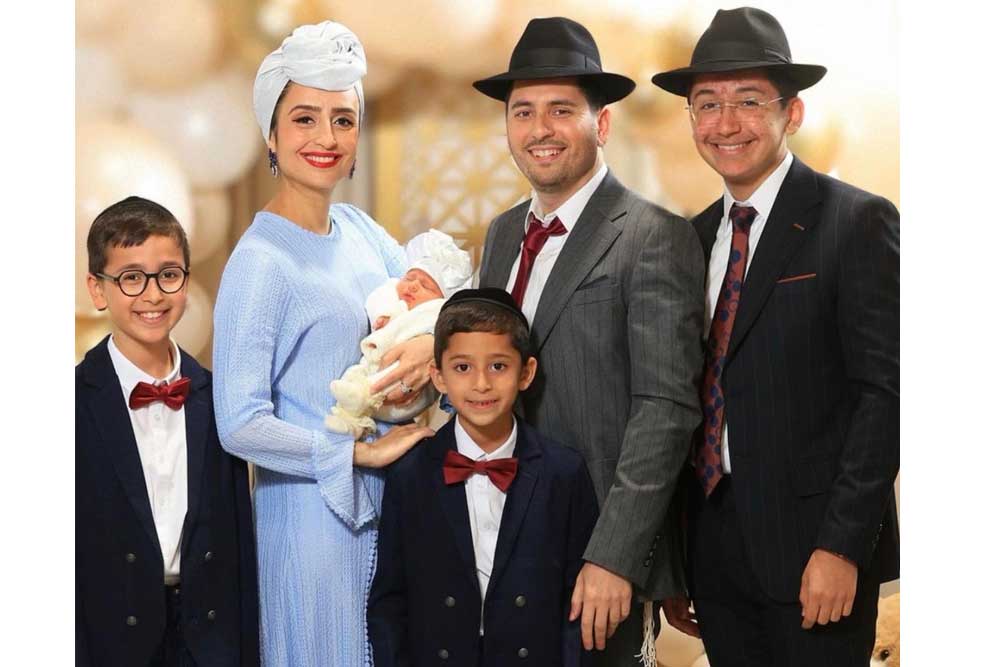 With her husband and children
"I Asked My Husband to Get on the Train With Me"
The home Elinor built with Yisrael was very different from the one in which she had grown up. Yet at a certain point, she realized that even a healthy, loving marriage requires ongoing investment.
"I felt that I was changing, developing, and growing, and I didn't want to wake up twenty years later and discover that my husband and I had been traveling along completely different paths."
She decided to invite him to join her personal development journey. "I asked Yisrael if he was willing to 'get on the train' with me, to go through the process together. He thought about it for a while and understood that my intentions were good. Eventually, we enrolled together in a respected personal development and coaching certification program."
Initially, their decision was motivated primarily by a desire to strengthen their marriage and develop a shared emotional language. "At first, it was mainly a decision we made as a couple. We wanted to build a common language and acquire tools that would help us create a better life together."
But as Elinor progressed through her studies, she began to experience a growing sense of purpose. "The further we went, the more I felt that I was finally arriving at the place toward which all the different stages of my life had been leading me."
During the practical training component of the course, that feeling became a certainty. "By the time I reached the practicum, I knew this was my calling."
Elinor continued into a second year of studies, deepening her knowledge of coaching and therapeutic approaches. What had begun as a personal journey of healing gradually became a professional mission. In recent years, Yisrael has also left the field of education to join her in this work.
"Today, we help individuals and couples who want to build better lives," Elinor explains. Together, they support people seeking to overcome limiting beliefs, strengthen relationships, and create healthier patterns for themselves and their families.
For Elinor, the work is deeply personal. She understands firsthand how childhood experiences can shape a person's sense of worth, relationships, and expectations of life. But she also knows that those patterns can change.
Her own journey, from a lonely little girl in an unfamiliar country to a wife, mother, and professional dedicated to helping others, has taught her that the circumstances of our beginnings do not have to determine the direction of our lives.
"It's important to understand that none of us is sentenced to live according to our past," she says. "Even someone who grew up surrounded by pain, abandonment, or a sense of worthlessness can choose to build a different story."

