

Pregnancy and Birth
From an MS Diagnosis to Surprise Twins: One Mother's Remarkable Story
Diagnosed with MS at 20, Aviya Peled faced years of rejection before finding love. Then an unexpected delivery room surprise changed her family forever.
When Aviya Peled was diagnosed with multiple sclerosis (MS) at just 20 years old, she couldn't have imagined that years later, she would find herself married and raising five young children, including a pair of twins whose arrival surprised everyone.
“The truth is, back then I didn't really understand what multiple sclerosis was,” Aviya admits. “I wasn't experiencing any symptoms, so I simply continued living my life without feeling particularly threatened by it. I didn't even look it up online, because I saw no reason to read about things that weren't affecting me at the time.”
Multiple sclerosis is a chronic condition affecting the central nervous system. Its symptoms and progression vary considerably from person to person, and some people experience long periods with few or no noticeable symptoms.
Today, Aviya works in fashion and runs a business selling modest vintage clothing. She credits her upbringing with shaping the way she approached her diagnosis.
“I grew up in a home where everything was accepted with faith,” she explains. “When I was diagnosed, my feeling was that if Hashem had given me this challenge, then it must somehow be right for me.”
With that belief, she continued her life much as before. It wasn't until she began looking for a husband that she realized how significantly her diagnosis might affect her future.
Six Years of Rejection Before Finding Love
“I met a young man, and things seemed to be progressing well,” Aviya recalls. “But after a short while, he told me, ‘I consulted my rabbi, and he advised me not to continue because it's unclear whether I have the tools to cope with an illness like this.’ That was the first time I really felt that my diagnosis was a problem.”
The experience repeated itself. Aviya met other young men, and the relationships initially seemed promising. But once she told them about her MS, they withdrew.
“I began to understand that this might be my challenge in life,” she says. “I thought I needed to prepare myself for a long period of being single.”
And that was exactly what followed. Six years passed without a relationship progressing toward engagement.
Then Aviya received an unexpected invitation to share her story in a media interview.
“At first glance, it seemed like the worst possible thing for my chances of getting married,” she recalls. “Every time I spoke about my illness, potential matches disappeared. Why would I want to discuss it publicly?”
But Aviya had never wanted to hide her diagnosis. She agreed to the interview and spoke openly about her experiences, her disappointments, and the faith that had helped her through them.
She soon discovered that sharing her story strengthened not only others but also herself.
“I began to understand that not everyone has the ability to deal with what I'm facing, and that's okay,” she explains. “I'm looking for someone who does have that ability. Hashem has given me a way to recognize early on who is right for me. If a young man can't handle my situation, then he's not the person I want to marry either.”
Shortly after the interview, she met the man who would become her husband.
“On our very first date, I told him about my illness,” she says. “I explained that at that stage, I wasn't experiencing any symptoms, and I left it up to him to decide whether he wanted to continue.”
He did.
The relationship progressed, and the couple married. About a year after their wedding, they welcomed their first daughter, followed by two sons. Then, approximately three months ago, Aviya gave birth again, bringing their family to five children, all under the age of four.
But the circumstances surrounding that most recent delivery were anything but ordinary.
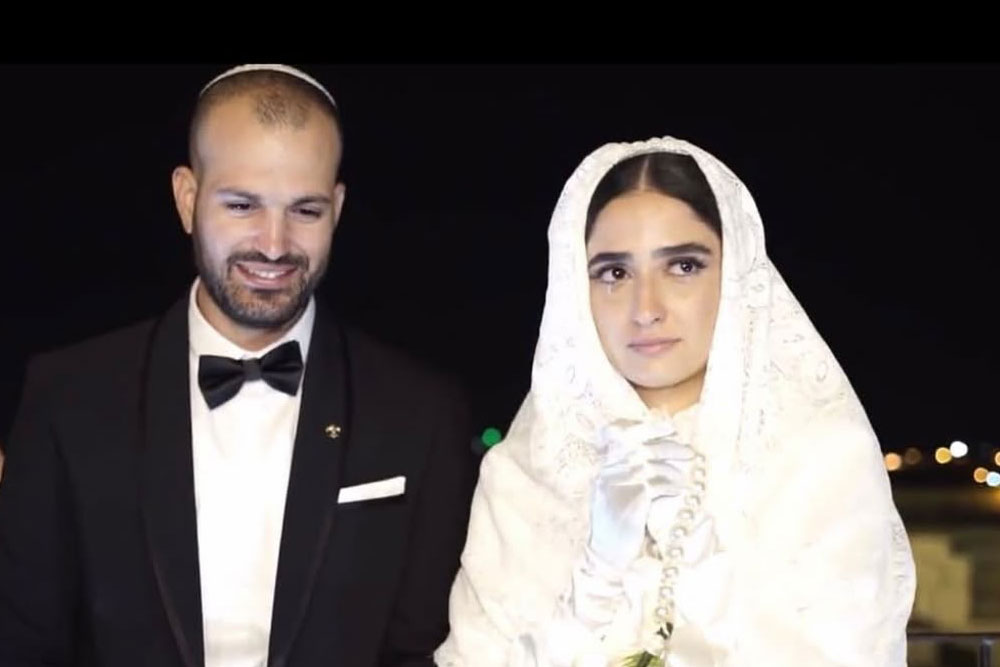 A short time after the interview, I met my husband
The Birth That Surprised Everyone
Perhaps the most astonishing part of Aviya's story is that she didn't know she was expecting twins until she had already delivered her first baby.
Aviya explains that she and her husband follow the guidance of a rabbi who advises against prenatal testing.
“My husband is a devoted follower of one of the leading rabbis of our generation, who recommends not undergoing tests during pregnancy,” she says. “I come from a different background, but when my husband introduced me to this approach before our wedding, I connected with it because of my faith in Hashem. I know there are people who believe differently, but this is the path we've chosen.”
During her latest pregnancy, however, Aviya had a persistent feeling that she might be carrying more than one baby.
“When we arrived at the hospital, the staff wanted to perform an ultrasound to check the baby's position,” she recalls. “My husband asked the midwife, ‘Is there any chance we're having twins?’ She immediately asked whether twins ran in our family. When he said no, she didn't seem concerned. The scan also appeared to show only one baby.”
Labor progressed, and Aviya delivered a healthy baby boy. The couple was overjoyed and immediately sent messages to their relatives announcing the birth.
But then something unexpected happened.
“The midwife said it was time to deliver the placenta, but it wasn't coming out,” Aviya recalls. “She tried again and again, and eventually things began to seem unusual. She called for a doctor, and suddenly they told us there was another baby.”
Just four minutes after their first son was born, Aviya delivered a second boy.
“None of us had known he was there,” she says. “He hadn't been identified on the ultrasound, and nobody had detected his heartbeat.”
The experience left Aviya and her husband stunned.
“To me, these were unmistakable miracles,” she says emotionally.
According to Aviya, hospital staff repeatedly visited her room afterward, fascinated by the unusual circumstances of the delivery.
“They kept telling me how extraordinary everything was,” she recalls. “Twins are often born early, but I carried mine to full term. Both babies were positioned head down, and I was able to deliver them vaginally. And of course, nobody had known there were two babies throughout the pregnancy.”
The first twin weighed 2.9 kilograms (approximately 6 pounds, 6 ounces), while the second weighed 2.3 kilograms (approximately 5 pounds, 1 ounce).
“There is no limit to Hashem's kindness,” Aviya says.
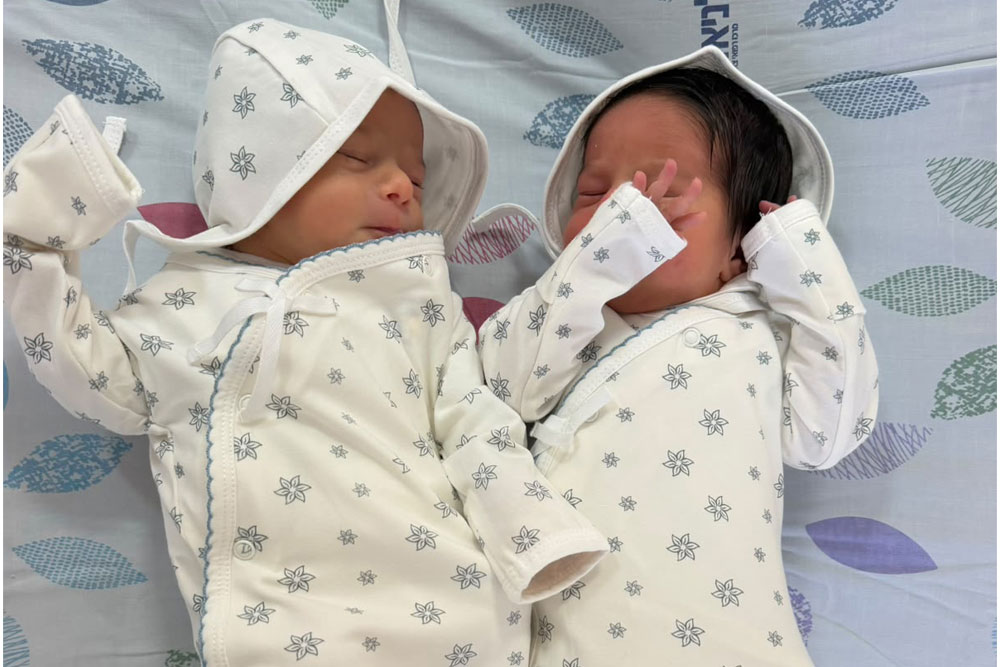 These are absolute, unmistakable miracles
Although Aviya views the experience as a profound expression of Divine kindness, twin pregnancies generally require additional medical monitoring because they carry increased risks for both mother and babies. Prenatal care and ultrasound examinations are important for identifying complications and planning a safe delivery.
How did Aviya cope with the shock of suddenly having two newborns instead of one?
“Honestly, I adjusted very quickly,” she says. “For one thing, I'd had a feeling all along that there might be two. But beyond that, I live with faith in Hashem and believe wholeheartedly that He will continue to show me kindness.”
She sees motherhood itself as a gift.
“These children aren't really mine. They belong to Hashem, and He's the One who has given me the privilege of bringing them into the world.”
Of course, caring for five children under four comes with considerable practical challenges. To make things easier, Aviya and her husband moved closer to their extended family, allowing them to receive more support.
“Thank Hashem, we have a lot of help,” she says. “The children also attend daycare, which allows me to continue working and contributing financially to our home.”
She believes that a mother's personal fulfillment has a meaningful influence on the atmosphere at home.
“When a mother is happy and content with what she's doing, her children feel it too,” she explains. “That helps create a happy, calm, and stable home.”
A Meaningful Connection to Shabbat
Two days after the twins were born, Aviya received an emotional phone call from her sister-in-law.
“She told me that she likes checking which righteous Jewish figures passed away on her children's birthdays,” Aviya recalls. “There's a belief that a child born on a particular date can carry something of the spiritual light associated with a righteous person who passed away that day.”
Her sister-in-law had checked the Hebrew date of the twins' birth and discovered something she knew would be especially meaningful to Aviya.
“She asked me, ‘What have you been especially careful about observing for the past two years?’”
At that moment, Aviya understood what she was referring to.
Her sons had been born on the fifth of Tammuz, the date traditionally associated with the passing of Rabbeinu Tam, the renowned medieval Torah scholar.
For the previous two years, Aviya had followed Rabbeinu Tam's later calculation for the end of Shabbat, waiting longer before performing activities prohibited on Shabbat.
“I began doing this because I believe that adding to Shabbat, which is the source of blessing, brings more blessing into our lives,” she explains. “I believed that Hashem would add goodness and perform miracles for me. And now my sons were born on the very date of Rabbeinu Tam's passing.”
For Aviya, the coincidence felt deeply personal and spiritually significant.
Looking back on her journey, she is reminded of the verse describing Joseph's sudden release from prison: “And they rushed him from the pit” (Genesis 41:14).
“After years of rejection in shidduchim (the Jewish matchmaking process), when I sometimes wondered who would ever want to marry me, I was blessed with such extraordinary gifts,” she says. “Within five years, I had an amazing husband and five children.”
Today, Aviya hopes her experiences will encourage other women facing long periods of uncertainty, particularly those waiting to find a spouse or seeking to strengthen their Shabbat observance.
Her message is one of perseverance and faith.
“We must never give up hope,” she says. “The more we make Hashem part of our lives and recognize Him as King, the more we open ourselves to His blessings. With Hashem's help, those blessings can be endless.”

