

Simchat Torah
Simchat Torah Is Over: But the Message of Mipi El Lives On
Discover the meaning and English translation of Mipi El, a beloved Simchat Torah hymn celebrating Hashem, Moses, the Torah, and the Jewish people's enduring connection to it.
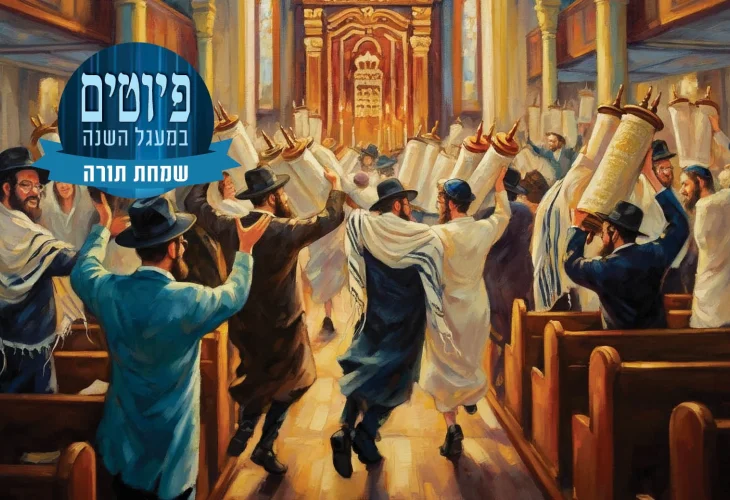 (Illustration: shutterstock)
Simchat Torah may have come and gone, but the joy of the holiday continues to resonate. For many, one of its most memorable moments is the singing that fills synagogues as communities dance with the Torah scrolls. Among the traditional hymns associated with the celebration is Mipi El, a beautiful piyyut (liturgical poem) that expresses the Jewish people's love for Hashem and His Torah.
The hymn's name, Mipi El, means “From the Mouth of God.” Traditionally sung during the Simchat Torah celebrations, it praises Hashem, Moses, the Torah, and the Jewish people through a series of rhythmic, poetic verses. Its words capture the special connection between the Jewish people and the Torah, a bond that continues long after the holiday has ended.
Mipi El: English Translation
From the mouth of God, from the mouth of God: Blessed is Israel.
There is none as mighty as Hashem, and none as blessed as the son of Amram. There is no greatness like the Torah, and none who expounds it like Israel.
There is none as splendid as Hashem, and none as venerable as the son of Amram. There is none as worthy as the Torah, and none who treasures it like Israel.
There is none as pure as Hashem, and none as upright as the son of Amram. There is no honor like the Torah, and none who studies it like Israel.
There is no king like Hashem, and no prophet like the son of Amram. There is nothing as dependable as the Torah, and none who supports it like Israel.
There is no redeemer like Hashem, and no righteous one like the son of Amram. There is no holiness like the Torah, and none who cherishes it like Israel.
There is no guardian like Hashem, and none as complete as the son of Amram. There is nothing as perfect as the Torah, and none who upholds it like Israel.
The Meaning Behind Mipi El
The author of Mipi El is not definitively known, but the hymn has become a familiar part of Simchat Torah celebrations in Jewish communities, including both Ashkenazi and Sephardi traditions. It is associated with the hakafot, the joyful processions in which worshippers carry Torah scrolls around the synagogue while singing and dancing.
One of the most striking features of the hymn is its repeated praise of four central figures: Hashem, Moses, the Torah, and the Jewish people. Each verse highlights a different quality, creating a beautiful progression of praise.
Hashem is praised as the ultimate source of strength, holiness, and redemption. The opening words, “From the mouth of God,” evoke the divine origin of the Torah and remind us that its teachings are not simply human wisdom, but a gift from Hashem.
Moses is referred to throughout as “the son of Amram,” a reference to his father. The verses celebrate his extraordinary qualities, particularly his role as the prophet through whom the Jewish people received the Torah.
The Torah itself is described as a source of greatness, honor, holiness, and truth. Rather than viewing it merely as a collection of laws, the hymn presents the Torah as something precious and irreplaceable, deserving of lifelong study and devotion.
Finally, the Jewish people are praised for their relationship with the Torah. They study it, treasure it, teach it, and uphold its commandments, carrying its teachings from one generation to the next.
The repeated structure gives the hymn its distinctive rhythm, making it especially suited to communal singing. Each verse follows a similar pattern, allowing the congregation to join together in celebrating the same message through different expressions of praise.
Carrying the Joy of Simchat Torah Into the Year Ahead
On Simchat Torah, Jewish communities celebrate completing the annual Torah reading cycle and immediately beginning it again with the opening verses of Genesis. The celebration reminds us that Torah study is never truly finished. Every ending becomes a new beginning, offering another opportunity to learn, grow, and deepen our connection with Hashem.
That same idea is reflected in Mipi El. Its verses don't simply praise the Torah as something given to the Jewish people long ago. They celebrate the ongoing relationship between the Torah and those who continue to study and live by its teachings.
Although the dancing has ended and the Torah scrolls have been returned to the ark, the message of the holiday remains just as relevant. The joy of Simchat Torah is not meant to be confined to a single day. It is something we can carry into our daily lives through Torah study, mitzvot, and the choices we make throughout the year.
And perhaps that is what makes Mipi El so meaningful even after the holiday has passed. Its words remind us that the greatest expression of our love for the Torah is not only the joy with which we celebrate it, but the place we give it in our lives every day.

