

Magazine
Israeli Singer Eli Luzon on Faith, Music, Shabbat, and the Power of Giving
Renowned Israeli singer Eli Luzon shares how his Jewish faith shapes his music, the lessons he learned from his father, his love for Shabbat, and his mission to spread kindness, joy, and inspiration
- Michal Arieli
- | Updated
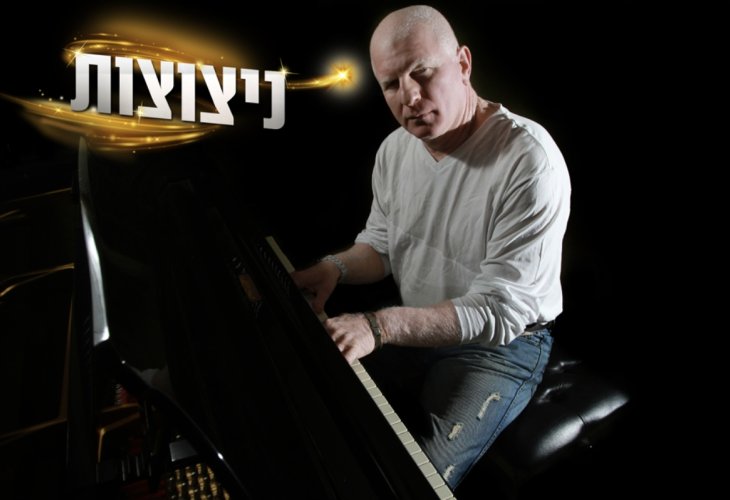 Eli Luzon (Photo: Assaf Friedman)
"My name is Eli Luzon. Anyone who has followed my career since the 1980s knows that I haven't changed very much over the years. I still perform, record music, compose songs, and serve as a cantor. I frequently travel abroad for concerts, performing a wide variety of musical styles, from opera to deep bass vocals."
A Childhood Memory: Singing for an Ice Pop
"When I was six years old, a telephone technician came to our neighborhood to repair a phone line. Some of the neighborhood children told him that I knew how to sing. He turned to me and asked me to perform something for him, but I was terribly shy.
"Then he made me an offer I couldn't refuse: if I sang for him, he would buy me the most expensive ice pop in the grocery store. That changed everything! I hid behind some bushes and began singing. Sure enough, I received the promised ice pop, which felt like an incredible treasure at the time.
"Shortly afterward, my parents decided that I should receive formal musical training. By the age of six, I was already learning to play the drums and guitar. When I turned thirteen, I received my first electronic keyboard. My teacher gave me a few lessons and then announced that he had nothing more to teach me. From that point onward, I continued developing my musical abilities independently."
What Judaism Means to Me
"I feel a deep connection to Judaism. To me, religion is something sacred and pure that inspires me to become a better person.
"There was a time when I was so determined to do good that I performed voluntarily for practically anyone who asked. Eventually, my rabbi told me, 'Listen, you're committing a form of theft.'
"I was astonished. 'Who am I stealing from?' I asked.
"He replied, 'You're stealing from yourself. You need to earn a living, not just volunteer all the time.'
"That conversation taught me an important lesson about knowing when to give and when to establish boundaries. Today, I generally reserve my volunteer performances for situations where my singing can contribute to saving lives.
"To me, that is part of what Judaism teaches us: we should be generous and help others, but we must also recognize our own needs and avoid harming ourselves in the process."
My Greatest Source of Inspiration
"One of my greatest sources of inspiration is Avraham Avinu, Abraham our forefather. His extraordinary hospitality is, to me, one of the most beautiful examples of kindness in human history.
"I wish I could have met him. And I would also love the opportunity to sit with King David. If I could sing together with him, that would be even better!"
The Mitzvah Closest to My Heart
"The mitzvah I feel most connected to is tzedakah, giving charity. I always say that when someone extends a hand asking for help, we should give. Whether that person truly needs the money isn't my main concern. I believe in giving generously to anyone who asks.
"I once heard a story about Rabbi David Abuchatzeira. He would receive visitors while seated, but one day, his father appeared to him in a dream and said, 'Yesterday, Eliyahu HaNavi, Elijah the Prophet, came to visit you, and you didn't stand up in his honor.'
"From that day onward, he began receiving visitors while standing, because who can know where Elijah the Prophet might be hiding?
"That story made a deep impression on me. I try to give charity whenever someone asks because I can never know whether Elijah the Prophet might be standing before me in an unexpected form."
Faith in Everyday Life
"Hashem accompanies me through every step of my life. I never begin writing a song without first writing B'ezrat Hashem, 'With God's help,' at the top of the page.
"I'm also deeply interested in gematria, the numerical values associated with Hebrew letters and words. I believe that beneath the surface of things, there are layers of meaning and significance that we don't always recognize."
My Mission Through Music
"People say that the Jewish people's greatest strength lies in their words, and I believe that deeply. I'm convinced that what comes out of our mouths can be more powerful than the swords of those who fight against us.
"That's why I make a conscious effort to write songs with positive, uplifting messages. I believe that the more optimistic and joyful my music is, the more people will enjoy it and the more deeply that happiness will enter their hearts.
"For me, music isn't simply entertainment. It's an opportunity to bring joy, encouragement, and hope into people's lives."
The Beauty of Shabbat
"I observe Shabbat, and I absolutely love it. If you ask me what I enjoy most, my answer is everything!
"I love the snacks and nuts, the special prayers, the atmosphere, and even Havdalah at the end of Shabbat. My wife prepares especially delicious meals, and I enjoy the genuine rest that Shabbat provides. There's something wonderful about being able to go to sleep and simply rest without the usual demands and interruptions of everyday life.
"On Shabbat, we're given a neshamah yeterah, an additional soul, and I genuinely feel the presence of the Shechinah, the Divine Presence."
Prayer and the Meaning of Tehillim
"I pray three times a day and know all the daily prayers by heart. Because I also work as a cantor, I'm familiar with most of the Selichot prayers, and I know at least half the Book of Tehillim by heart.
"I once heard a beautiful teaching about Tehillim that I'd like to share. There's a tradition that reciting the entire Book of Tehillim twice can bring atonement for a person's sins. But there's an interesting idea hidden in the numbers. Tehillim contains 150 chapters, represented by the Hebrew letters kuf and nun, which spell kan. When you say Tehillim twice, you have kan plus kan, forming the word kankan, meaning a vessel or container.
"This reminds us of the familiar teaching not to judge a vessel by its exterior, but by what it contains. The message is that simply reciting the words isn't enough. We must also pay attention to their meaning and reflect on what the Psalms are teaching us."
Finding Light During Difficult Times
"When I encounter challenges, I try to look for something positive within them. I believe that even in the most difficult circumstances, there is always some light to be found.
"I also recently heard a teaching about the spiritual power of a person who is publicly humiliated. According to this teaching, when someone is embarrassed in front of others and chooses not to retaliate, it is a particularly meaningful moment to pray. I've experienced several situations recently in which people hurt me. When that happens, I try to bite my tongue, avoid responding, and use the moment to pray for the things that truly matter to me.
"Instead of allowing the hurt to overwhelm me, I try to transform it into an opportunity for prayer."
Moments of Spiritual Awakening
"I experience moments of spiritual awakening all the time because faith is such a central part of my life.
"My day begins with Modeh Ani, the prayer of gratitude we say upon waking, and ends after Ma'ariv, the evening prayer. From morning until night, I feel that Hashem is with me. There isn't a moment when I feel completely disconnected from Him."
The Lessons I Learned From My Father
"I have so many memories of my father, of blessed memory. His words continue to accompany me every day, and many of the things he said have become guiding principles in my life.
"One of his favorite expressions was, 'It's better to go with the bad you know than the good you've only heard about.' I find myself remembering that sentence in all kinds of situations.
"My father taught me about music, good manners, wisdom, and how to conduct myself in the world. He was a quiet, reserved man who never spoke unnecessarily. He didn't waste time sitting in cafés or engaging in idle conversation.
"We were nine brothers and sisters, and recently, several people told me something my father used to say about me: 'Eli is my king.' He never complimented me that openly during his lifetime. Hearing those words after he passed away meant so much to me.
"I even wrote a song in his memory. It's arranged as an acrostic, with the opening letters spelling the Hebrew words Abba Sheli, 'My Father.'"
What I Hope to Leave Behind
"My greatest wish is to leave behind a blessed generation of upright descendants, a family that continues in the right path.

