

Magazine
From Rock Musician to Chabad Hasid: Barak Grossberg's Journey of Faith
Growing up in Tel Aviv's secular music scene, Barak Grossberg never imagined becoming religious. Discover how an unexpected encounter with Chabad transformed his life and inspired him to spread Jewish values through rock music.
- Avner Shaki
- | Updated
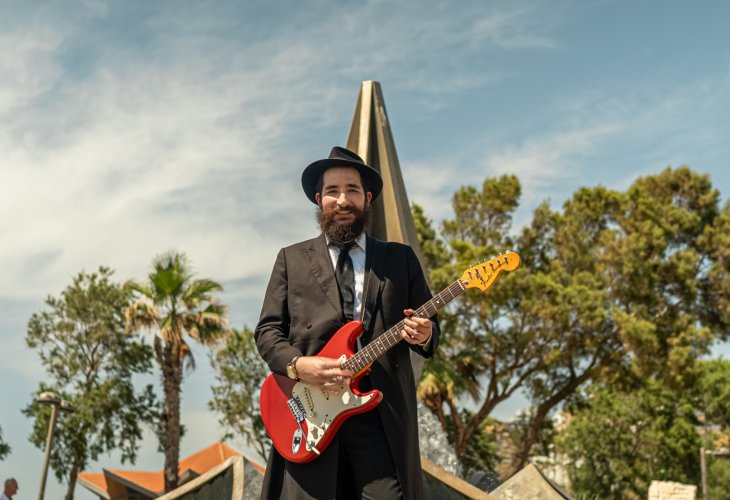 Barak Grossberg (Photo: Yanki Elharar)
"One evening, I was sitting in my parents' home in central Tel Aviv when I suddenly heard beautiful flute music coming through the window," recalls Barak Grossberg, describing the unexpected encounter that set him on the path toward religious observance. "I thought it would be another wasted evening, but that night changed my life. In a way, I was given my life back as a gift."
Grossberg immediately recognized the distinctive sound. The musician was Avi Piamenta, whose performances he knew well because his father had once managed the musical careers of brothers Yossi and Avi Piamenta, before they became religiously observant. "I looked out the window and realized that the music was coming from the courtyard of a synagogue. I'd always known the synagogue was there, but it had never interested me. As someone who absolutely loved music, though, I couldn't resist following the sound."
By the time he reached the courtyard, the performance had ended. But another encounter was about to begin.
An Unexpected Friendship at a Chabad Gathering
"I stood near the entrance, not knowing what to do, when a Chabad Hasid approached me," Grossberg recalls. "Chabadniks have a special ability to notice people who seem lost or uncertain and make them feel welcome."
The synagogue was part of Mima'al Mamash, a Chabad outreach center in the heart of Tel Aviv. After a brief conversation, the Hasid invited Grossberg to stay for a farbrengen, a traditional Hasidic gathering. "There was great food, and Avi Piamenta was speaking, so I decided to stay. I sat beside a Chabad Hasid who started asking me about my life. When I told him I was a musician, he asked what kind of music I played."
Grossberg was immediately skeptical. The man beside him was dressed in the traditional black suit and hat of an Orthodox Jew. What could he possibly know about the rock music Grossberg loved?
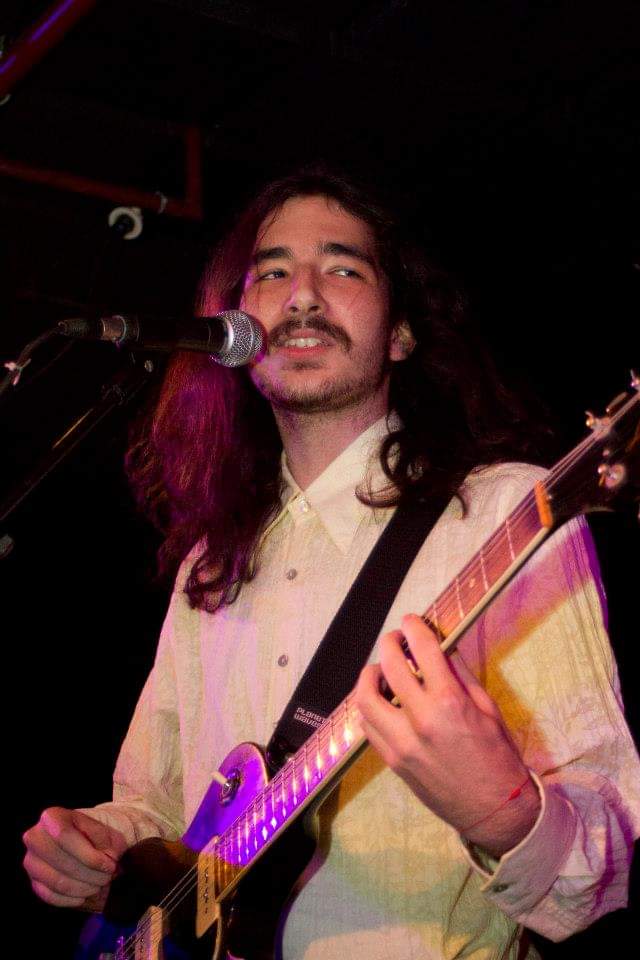 (Photo: Sagiv Cohen)
"I told him I played rock music, and he said he was interested in rock too. Then he asked which guitarists I liked. I mentioned a famous musician, and suddenly we were having an intense conversation about his guitar solos, albums, and instruments."
The conversation continued for nearly two hours. To Grossberg's surprise, the Hasid knew an extraordinary amount about the subject, even introducing him to details he hadn't known himself. "That conversation shattered so many stereotypes I'd carried around for years," Grossberg explains. "I'd grown up hearing that religious Jews weren't friendly, that they didn't accept secular people, and that I wouldn't have anything in common with them. Suddenly, everything I'd believed was falling apart."
More than their shared love of music, what impressed Grossberg was the sincerity of the connection. "Tel Aviv can be a very lonely place. You can have plenty of people around you and still find yourself with nobody to really talk to. Sometimes relationships revolve around personal interests rather than genuine friendship. But that night, I felt I'd discovered something real."
When the gathering ended, he left with a feeling he couldn't quite explain. "I remember thinking that I would probably return someday. The entire experience had been so different from what I'd expected."
Growing Up in the Heart of Tel Aviv's Rock Scene
Grossberg’s connection to the music industry began almost at birth. "I grew up in a completely secular family in central Tel Aviv," he explains. "My father, Shaul Grossberg, was a well-known music producer who was deeply involved in Israel's rock scene. He helped discover artists such as Berry Sakharof and Rami Fortis."
Music was part of everyday life in the Grossberg household. As teenagers, musicians including Aviv Geffen and Hemi Rudner attended screenings of international rock concerts organized by his father. His mother worked in advertising, his sister became a journalist and television producer, and his brother pursued music production and public relations.
"The culture in our home was very international, not even particularly Israeli. Politically, it was a strongly left-wing household. Voting for Meretz was simply the obvious thing to do."
Grossberg attended Ironi Aleph High School, a well-known school in central Tel Aviv, where he excelled academically while developing his musical abilities. "When I was twelve, I decided I wanted to learn guitar. My parents took me to Shlomo Mizrahi, an accomplished guitarist and sought-after teacher. I became completely absorbed in it, and within six months, I was already playing quite well."
By thirteen, Grossberg had formed his first band, performing music he had written himself. At fifteen, he was playing with a more established group and even shared a concert stage with Berry Sakharof. Despite spending much of his time on music, he remained an excellent student, completing advanced-level studies in physics, mathematics, and English.
Yet his talent and opportunities did not guarantee personal fulfillment.
Success, Nightlife, and a Growing Sense of Emptiness
Building a career in Tel Aviv's competitive music scene was challenging. Grossberg eventually moved out of his parents' home into a rented apartment, worked in a music store, and devoted himself to performing and developing his skills. At the same time, he became immersed in the city's nightlife.
"I was completely caught up in the Tel Aviv lifestyle," he recalls. "I'd often wake up in the afternoon, go out at night, spend time with friends, and perform whenever I had the opportunity."
Eventually, the routine began to feel repetitive and meaningless. "I was trapped in a very negative cycle. You spend your time chasing money because the rent is expensive, and whatever time you have left goes toward satisfying your desires."
After approximately two years, he began questioning the direction of his life. "I wasn't miserable, and I wasn't suffering terribly. But I kept thinking, 'Can this really be what life is about?' If this was all there was, I didn't want it. I wanted something deeper."
Looking back, he understands that dissatisfaction as the beginning of a spiritual awakening. "Today, I know it was my soul calling out to me."
![(Photo: Yanki Elharar)]() (Photo: Yanki Elharar)Searching for Spirituality in Unexpected Places
 (Photo: Yanki Elharar)
Grossberg began exploring different spiritual philosophies and practices. Judaism, however, was not among his initial interests. "Because of everything I'd heard about religion growing up, Judaism didn't seem appealing to me at all," he explains. "Many of my friends were interested in Buddhism and Eastern philosophies, so I thought perhaps I'd find answers there."
He attended several courses in Tel Aviv's Florentin neighborhood, where he encountered ideas about universal love, acceptance, and spirituality. "I heard beautiful statements about the Creator accepting everyone and the importance of loving others. I liked the positive atmosphere, but ultimately, those teachings didn't give me the answers I was looking for."
Meanwhile, the experience at the Chabad synagogue continued to occupy his thoughts. He began returning occasionally, drawn by the warmth and sense of belonging he had encountered there.
One Purim, during a lively celebration, a young man named Yaron approached him. "He was wearing a small kippah and didn't have a beard. He asked me, 'Are you coming for Shabbat tomorrow?'" Grossberg was so unfamiliar with Jewish observance that he misunderstood the invitation. "I thought Shabbat was the name of some place," he laughs. "I asked him for the address!"
Yaron explained that he lived in Tel Aviv and was inviting him to a Shabbat meal. Grossberg gave him his phone number but had little intention of participating.
His First Shabbat Experience
The following afternoon, Grossberg woke around two o'clock to a phone call from Yaron. "He asked where I was and reminded me that everyone was waiting for me. I told him I probably wouldn't come, but he insisted there would be other young people there and that I should give it a chance."
Still curious about the spiritual world he had begun exploring, Grossberg finally agreed. He packed a small bag and ordered a taxi. When his parents asked where he was going, he avoided telling them the truth.
"If my parents had known I was going to spend Shabbat with a religious family, they would have tied me to the bed," he jokes. "So I told them I was going to a party, and they didn't ask any more questions."
When he arrived at the apartment building, he found himself in an unfamiliar environment. "I reached the floor Yaron had told me to go to and saw a door standing partly open. I looked inside and saw a Chabad couple with five neatly dressed children, all prepared for Shabbat."
His immediate reaction was panic. "I thought, 'What have I gotten myself into? I don't belong here!'"
He asked where Yaron lived and was relieved to discover that his apartment was across the hall. There, he found several other young men who looked more like him. "I asked Yaron whether he kept Shabbat, and he said yes, but told me I could do whatever I felt comfortable with. I explained that I wanted to respect Shabbat but didn't know how."
Yaron's response was simple. "Just turn off your phone, and everything will be fine. We'll go to synagogue soon and take it from there."
A short while later, the group headed toward the synagogue. "We climbed flight after flight of stairs, and as we approached, I could hear incredibly powerful singing. When we finally entered, there were about a hundred people singing Lecha Dodi with tremendous enthusiasm." The atmosphere captivated him. "Someone handed me a siddur, but I knew so little that I held it upside down! I even started reading passages from the Rosh Hashanah and Yom Kippur prayers."
After the service, Yaron announced that they were going to eat. "I assumed we'd get sushi or perhaps order pizza. Instead, we walked back toward his building, and to my surprise, he entered the Chabad family's apartment."
Inside, Grossberg discovered a beautifully set Shabbat table and an impressive meal. "I remember thinking, 'If this is what Shabbat looks like every week, I should spend more time with Chabad!'"
But the experience offered far more than good food. "The meal was rich both physically and spiritually. The entire Shabbat was wonderful. I realized that if people could experience something like this every week, perhaps I was missing out on something extraordinary by not keeping Shabbat."
At that point, Grossberg was still completely secular. He did not put on tefillin, knew little about blessings over food, and had almost no practical knowledge of Jewish observance. Nevertheless, the experience inspired him to begin changing his life.
"It didn't happen in one Shabbat, or even ten Shabbatot. It was a long process, but eventually, Baruch Hashem, I began keeping Shabbat. That experience opened the door to so many wonderful things that followed."
Discovering Chabad and the Teachings of Tanya
As Grossberg's interest in Judaism deepened, he began visiting the Chabad yeshiva Tomchei Temimim in Ramat Aviv approximately once a month. His spiritual growth was gradual. Initially, he continued spending time with his secular friends on Shabbat, although he stopped carrying his phone and wallet.
Over the following two years, his observance became increasingly consistent. "I eventually began keeping Shabbat fully according to halachah. Little by little, I also made changes in my appearance and daily habits. I began wearing tzitzit, putting on tefillin, keeping kosher, and studying Torah."
One text in particular made a powerful impression on him: the Tanya, the foundational work of Chabad Hasidic philosophy. "The Tanya really spoke to me," he recalls. "It had a profound effect on the way I understood myself and my relationship with Hashem."
Despite his growing commitment, he still hesitated to fully embrace the Chabad lifestyle. Friends at the yeshiva encouraged him to travel to New York and visit 770 Eastern Parkway, the world headquarters of Chabad-Lubavitch. They believed the experience might help him take the next step. Grossberg initially worried that he would have difficulty obtaining a visa to the United States. "I thought the embassy might suspect that I wanted to stay there permanently and refuse my application. But Baruch Hashem, I received the visa."
The visa was issued on Chai Elul, the eighteenth of Elul, a date of special significance in Chabad tradition. "I'm certain that helped," he says with a smile.
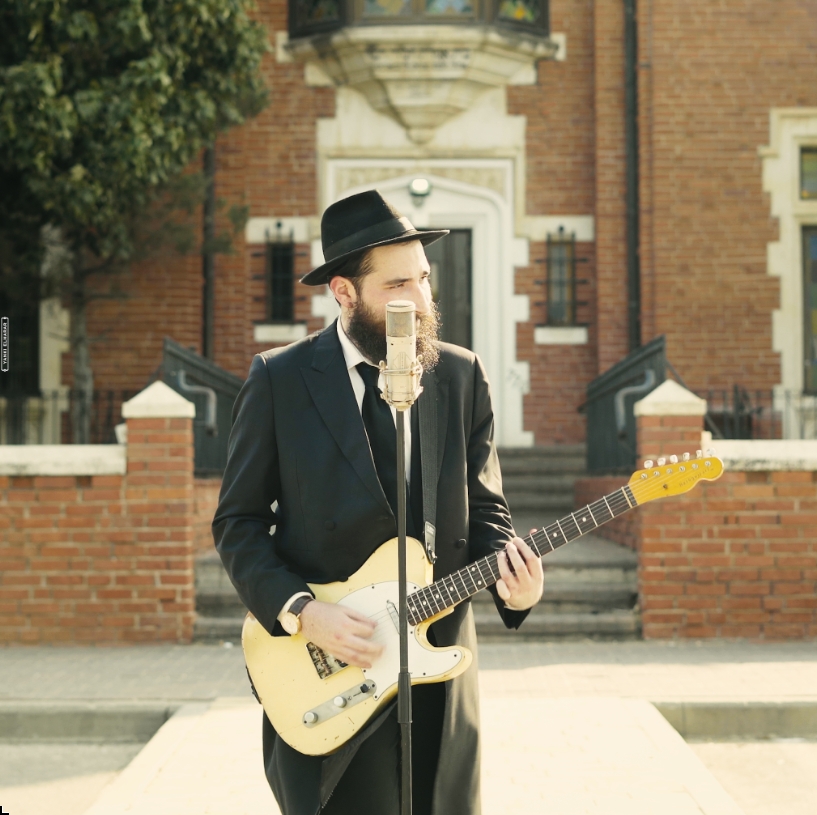 (Photo: Yanki Elharar)
The Visit to 770 That Changed Everything
For Grossberg, arriving at 770 was an unforgettable experience. "Everything I'd heard about Chabad and its incredible influence suddenly became real before my eyes," he recalls.
He was deeply moved by the atmosphere of Torah study, the dedication of Chabad emissaries, and the movement's commitment to reaching Jews around the world. "I saw the tremendous love for every Jew, the self-sacrifice, the energy, and the passion in people's eyes. I realized that I wanted to be part of it."
More importantly, he wanted to make that commitment wholeheartedly. "I didn't want to remain halfway between two worlds. I wanted to be a genuine part of the extraordinary work Chabad is doing throughout the world."
When he returned to Israel, he began wearing the traditional hat and jacket associated with Chabad Hasidim. "I decided it was time to stop hiding who I was becoming."
He enrolled in the yeshiva in Ramat Aviv and began studying Torah more seriously. Later, he met his wife, and the couple married. They named their two sons Menachem Mendel and Shalom Dovber, after two Chabad Rebbes.
Despite his dramatic transformation, Grossberg continued living in Tel Aviv, the city where he grew up. "I'm still here, trying to serve as a positive influence and bring as much goodness as possible to the people around me."
 (Photo: Yanki Elharar)
Bringing Rock Music Into His New Life
One might assume that embracing Orthodox Jewish life would require Grossberg to abandon his previous musical identity. In reality, he found ways to integrate his love of rock music into his spiritual mission.
"Baruch Hashem, it works beautifully," he says. "Jewish music can embrace an enormous variety of styles. More broadly, I believe that almost anything can be used for a positive purpose. Hashem created everything in the world for a reason, and that includes rock music."
Grossberg is particularly interested in reaching audiences beyond the Jewish community. "One of my goals is to communicate with people throughout the world, not only with Jews. That's why most of the songs I've released so far have been in English."
Through his music, he hopes to challenge negative perceptions of Judaism and Israel while promoting messages of unity and peace. "I want people around the world to understand that Judaism seeks to create connection and harmony, even if that isn't always how it's portrayed."
He believes that certain organizations present Judaism and Israel as sources of division and conflict, and he wants to offer an alternative perspective. "It's important to tell the truth and show people what Judaism really stands for."
Music, the Seven Noahide Laws, and Loving Others
Grossberg's desire to reach a wider audience is also reflected in his interest in the Seven Noahide Laws, the universal moral commandments that Jewish tradition teaches were given to humanity. "Hashem gave non-Jews the Seven Noahide Laws, demonstrating that they, too, have a place within the Torah's moral and spiritual vision," he explains. "These commandments represent the spiritual path intended for them."
He even released an English-language song about the Seven Noahide Laws. Another of his songs, The Golden Rule, focuses on the Torah commandment, "Love your fellow as yourself."
The song combines an energetic rock sound with a message of compassion and mutual respect. "I wanted to show that Judaism, and Hasidic teachings in particular, strive to improve the world. We are expected to love other people as we love ourselves, even when they're very different from us."
Grossberg acknowledges that loving someone who shares our values and lifestyle can already be challenging. But he believes the deeper test comes when we encounter people whose beliefs and behavior differ significantly from our own. "It's easier to love someone who thinks and behaves like you. The real challenge is loving someone who is completely different."
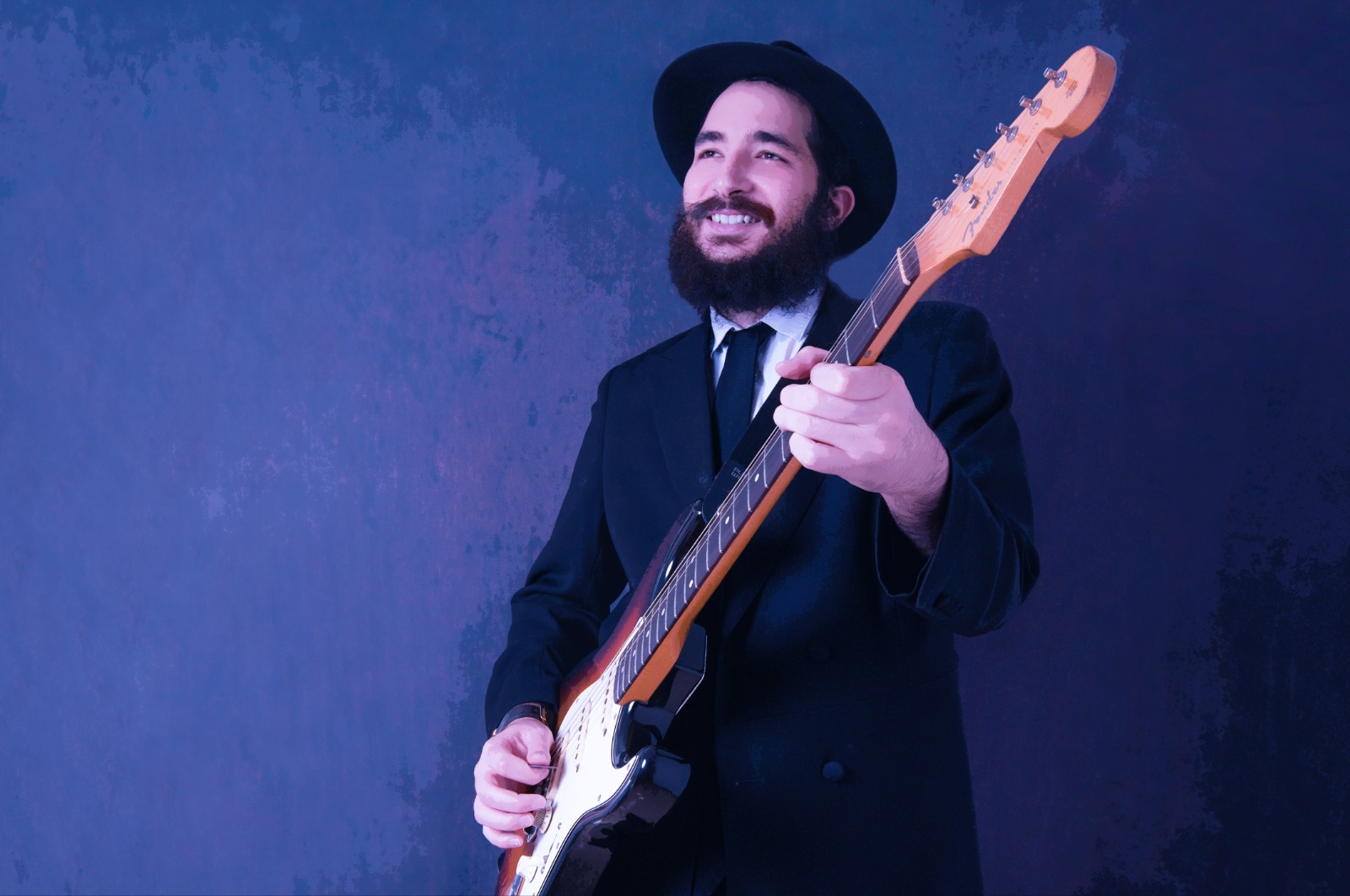 (Photo: Noah Wolf)
Using Music to Bring People Closer
Alongside recording original songs, Grossberg performs regularly at concerts, celebrations, and Jewish outreach events for a wide range of audiences. He frequently appears at Jewish educational centers throughout Israel, where he combines his personal story with Hasidic melodies and original compositions.
"I love sharing my journey through music," he says. "It allows me to connect with people who might not otherwise be interested in hearing about Judaism."
His work also involves navigating the complexities of Jewish outreach, and he relies on the guidance of a respected Chabad rabbi. "Bringing people closer to Judaism can be complicated. Questions arise, and there are situations where I need advice. I'm fortunate to have a rabbi whose guidance helps me make the right decisions."
For Grossberg, the ultimate goal is not simply musical success or recognition. It is to use his talents in a way that reflects his beliefs and contributes something meaningful to the world. "I try to make sure that everything I do is in accordance with Hashem's will."
Looking back, it is remarkable how much his life changed because of a single evening. What began with the sound of a flute drifting through an open window became an unexpected encounter with Chabad, a genuine friendship, and eventually a complete transformation of his spiritual life.
The young musician who once felt trapped in Tel Aviv's endless nightlife discovered a new sense of purpose without abandoning his passion for music. Instead, he found a way to give that passion deeper meaning. Today, Barak Grossberg continues performing, creating, and sharing his message with audiences from different backgrounds, using the musical talent he developed as a child to express the faith that now guides his life.

