

Hot on the Web
Can AI Predict Cancer Survival From a Single Face Photo?
Researchers have developed an AI tool that estimates cancer survival from a single face photo. The results reveal surprising clues about our health.
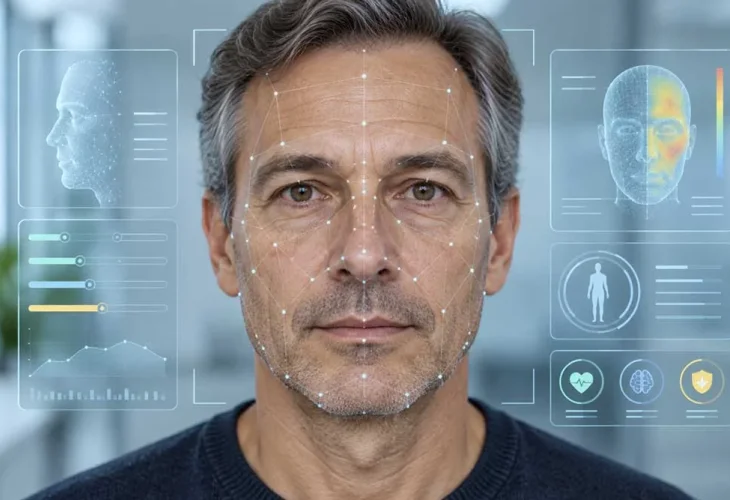
Could a simple photograph of your face reveal something about your health that even you might not know? Researchers at Mass General Brigham, a major hospital network in Boston, have developed an artificial intelligence system that can estimate a cancer patient's likelihood of survival using just a facial photograph. The findings, published in the medical journal The Lancet Digital Health, suggest that subtle facial features may contain valuable information about a person's overall health.
What Can a Face Reveal About Our Health?
To develop the technology, researchers first trained the AI system using more than 40 million facial photographs of people from around the world. They then introduced more than 30,000 photographs of cancer patients, together with information about their subsequent medical outcomes.
By analyzing this data, the system learned to identify patterns connecting facial appearance with health and survival.
The researchers developed two separate tools. The first estimates a person's biological age, which reflects how old the body appears to be compared with a person's actual age. The second attempts to predict a cancer patient's likelihood of survival based on facial features alone.
The results were striking. Among the 10% of patients assigned the highest risk scores, a group of 122 people, half died within three months. By comparison, just 2% of patients in the lowest-risk group died during the same period.
These findings suggest that facial photographs may contain clues about a patient's physical condition that are not immediately apparent to the human eye. However, the results do not mean that a photograph can determine how long any individual patient will live.
The Facial Features AI Pays Attention To
Interestingly, the researchers found that the survival prediction tool focused primarily on the area beneath the eyes and around the bridge of the nose. They do not yet understand exactly why these regions appear to be particularly informative.
The biological age tool, meanwhile, examined different areas of the face, including the forehead, temples, and the lines running from the nose toward the corners of the mouth.
The study also identified connections between certain lifestyle habits and an older facial appearance. Heavy alcohol consumption, drug use, and smoking were all associated with appearing biologically older than one's chronological age, with smoking showing the strongest association.
According to the researchers, the system's age estimates remained relatively consistent even when photographs were taken under different lighting conditions, from different angles, or with different facial expressions.
"This is the first demonstration that an artificial intelligence model can directly predict cancer survival from a simple photo," said Professor Hugo Aerts, one of the study's lead researchers.
Dr. Raymond Mak, an oncologist at the Mass General Brigham Cancer Institute, explained the broader goal: "Our goal is to make health assessment based on a face photo quantitative, consistent, and applicable on a broad scale."
Could This Technology Become Part of Cancer Care?
The potential applications are significant. If further research confirms the findings, facial analysis could eventually offer doctors an additional way to assess a patient's overall condition and identify those who may need closer monitoring or additional support.
However, the technology remains experimental and is not currently used as a routine tool in hospitals. The researchers emphasize that larger studies involving more diverse groups of patients are necessary before it can be considered for clinical use.
Importantly, the system is designed to identify statistical patterns across groups of patients, not to provide a definitive prognosis for any one person. Cancer outcomes depend on many factors, including the type and stage of the disease, available treatments, and an individual's overall health.
For now, the study offers an intriguing glimpse into how artificial intelligence could help doctors recognize subtle signs of health and illness, potentially adding another tool to the future of personalized cancer care.

