

Facts You Didn't Know
The Surprising Art of Candy Creation
Discover how candy makers create intricate designs inside hard candy and lollipops using colorful sugar, precise shaping techniques, and a surprising stretching process
- Tehila Cohen
- | Updated
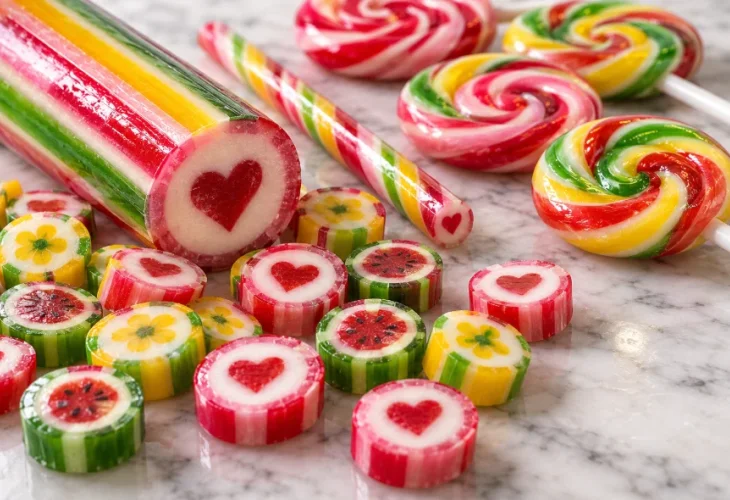
A single piece of candy can feature a beautiful, intricate design, sometimes with incredibly tiny details. Its bright, vibrant colors immediately catch our attention, making it almost impossible to resist. Some packages even contain dozens of candies, each displaying exactly the same picture.
How does the design get inside the candy, and how can every piece look so identical?
To understand the answer, we need to imagine the candy before it becomes a small, colorful treat. At one stage, it was actually a thick cylinder of warm, stretchy sugar, with the entire design already built inside.
How Hard Candy Is Made
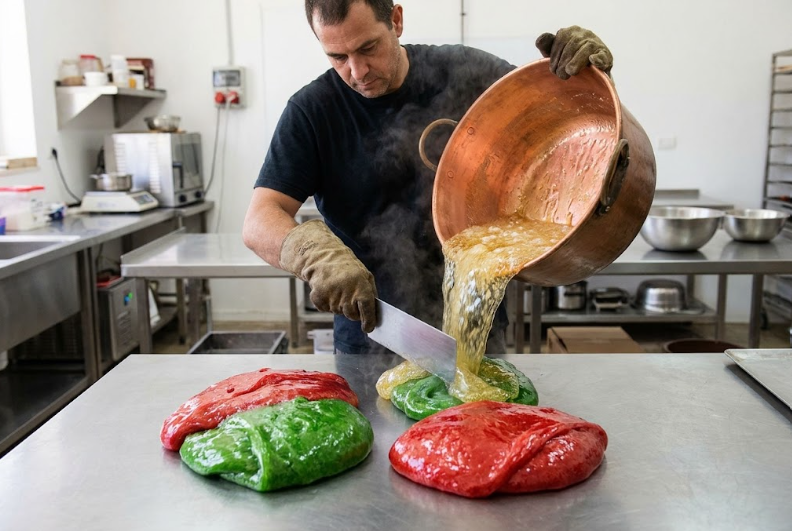
Hard candies are made from a cooked mixture of sugar, water, and glucose syrup or corn syrup. As the mixture heats, the water gradually evaporates, leaving behind a thick, concentrated sugar syrup. To make lollipops and other hard candies, the mixture is typically heated to approximately 149–154°C (300–310°F), reaching what candy makers call the hard-crack stage. At this temperature, the sugar mixture will harden into a firm, brittle candy as it cools.
Once cooking is complete, flavorings and food coloring are added according to the recipe. For molded candies, the hot mixture is poured into specially shaped molds, with sticks inserted before the candy hardens.
Handcrafted candies require a different technique. The hot sugar mixture is allowed to cool until it becomes workable with appropriate equipment. Candy makers then pull, roll, stretch, and shape the sugar into the desired forms. The smooth, glossy, and sometimes transparent appearance of hard candy depends on preventing large sugar crystals from forming. If crystallization occurs, the candy can become grainy and lose its clear, polished appearance.
The Secret Behind the Pictures Inside Candy
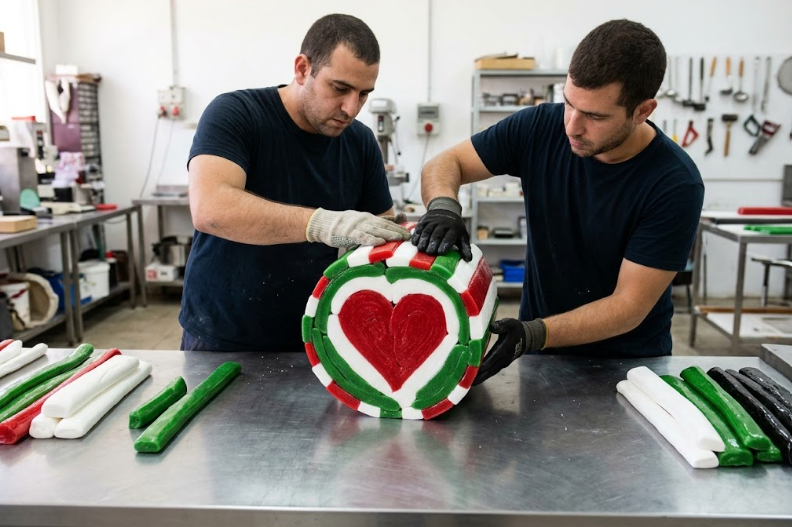
The most fascinating part of the process is creating the picture itself. For candies that feature a design running through their centers, candy makers divide the sugar mixture into separate portions and color each one individually. These portions are then shaped into long strips, cylinders, and other forms, which are carefully assembled according to a predetermined design.
To create a flower, the candy maker arranges colored pieces around a central section to form the petals, then fills the surrounding spaces with sugar in the chosen background color. The important detail is that every colored section extends along the entire length of the cylinder. This means that wherever the cylinder is sliced, the same picture appears.
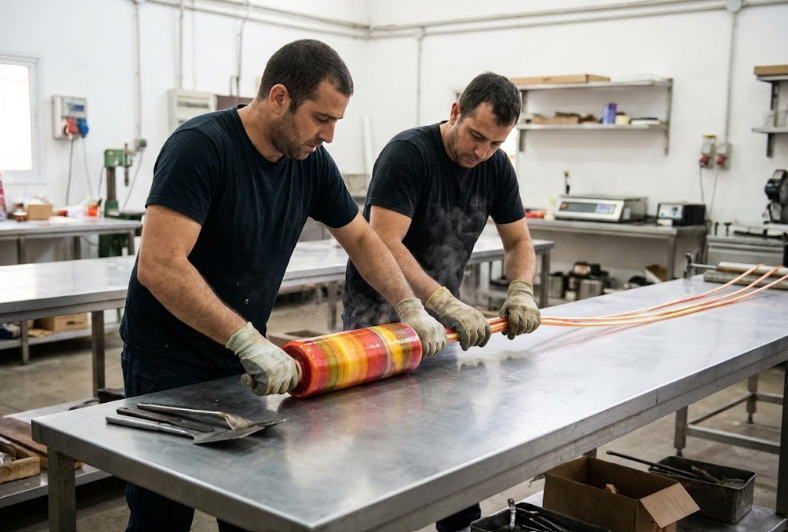
Once the design is assembled, the entire structure is wrapped in an outer layer of sugar that holds the individual sections together. Next comes the truly remarkable part. The thick cylinder is gradually stretched and rolled into a long, thin rod. As it becomes narrower, the picture inside shrinks proportionally, much like reducing the size of an image.
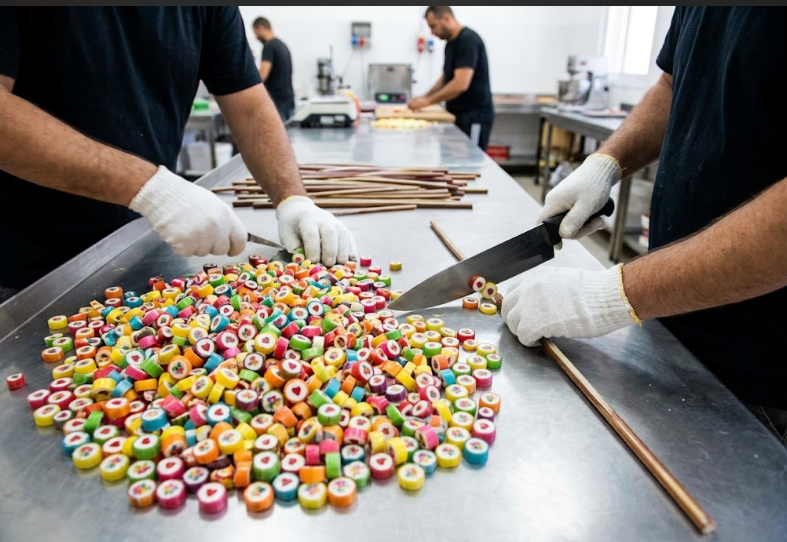
Finally, the candy maker cuts the long rod into small slices. Each slice reveals the same miniature picture, complete with its tiny details and colorful patterns. The precision required is extraordinary. The final result depends on careful planning, the thickness and positioning of each colored section, and maintaining the correct temperature so the sugar remains flexible without allowing the design to become distorted.
How Are Pictures Added to Transparent Lollipops?
Not every decorative candy is made using the same technique. When a picture appears inside a transparent lollipop, candy makers may use an edible printed image that is embedded within the candy. This method allows detailed illustrations to appear inside the clear sugar without having to construct the image from individual colored pieces.
Although the finished candies may look simple, making them requires considerable skill. Working with hot sugar demands specialized equipment and careful handling because the sticky mixture can adhere to skin and cause severe burns. Candy makers must also work quickly and precisely, as the sugar gradually cools, loses its flexibility, and hardens.
The next time you unwrap a colorful candy decorated with a tiny flower, fruit, or intricate pattern, take a closer look. Behind that seemingly ordinary sweet treat lies a fascinating combination of chemistry, craftsmanship, precision, and artistic creativity.

