

Home Styling
Before You Put Your Shoes in the Washing Machine: Read This
Some shoes can go in the washing machine, while others may be ruined. Discover the simple rules for cleaning sneakers, canvas shoes, leather, and suede.
- Tehilla Cohen
- | Updated
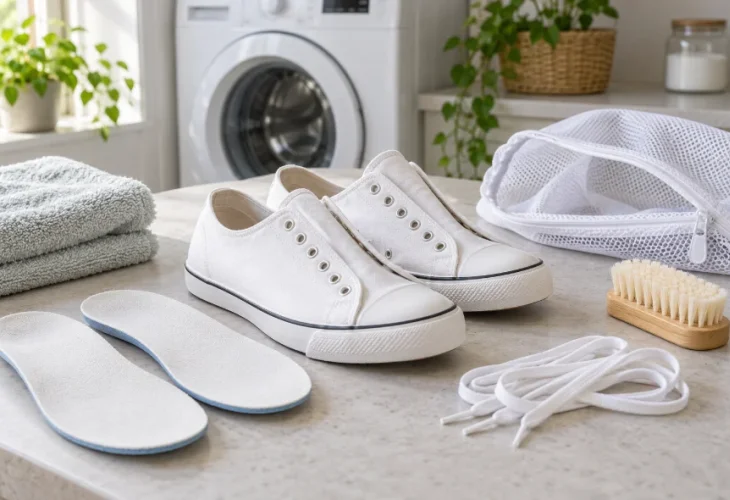
After a long walk, a rainy day, or weeks of everyday wear, even your favorite shoes can start looking a little worse for wear. Mud, dust, stains, and unpleasant odors can leave you wondering whether it's time to throw them in the washing machine.
But before tossing your shoes in with the laundry, there's something important to know: not all shoes are designed to withstand a machine wash.
Some materials can lose their shape, adhesives may weaken, and the cushioning inside certain shoes can become damaged. What seems like a quick and easy cleaning solution could end up ruining your favorite pair.
So which shoes can go in the washing machine, which should always be cleaned by hand, and what's the safest way to wash them?
Here's what you need to know.
Which Shoes Can Go in the Washing Machine?
Shoes made from durable fabrics such as canvas, cotton, nylon, or polyester may be suitable for machine washing, depending on their construction.
However, the outer fabric isn't the only thing that matters. Shoes also contain soles, adhesives, cushioning, and internal supports that may react differently to water and agitation.
Even athletic shoes and sneakers aren't automatically machine washable. Some manufacturers recommend hand cleaning to protect the materials and preserve the shoes' structure.
Before washing any pair, check the care label or manufacturer's instructions. If you can't find clear guidance confirming that machine washing is safe, hand cleaning is generally the better choice.
Which Shoes Should Never Go in the Washing Machine?
Leather and suede shoes should be kept out of the washing machine.
Excessive water can damage these materials, affect their texture, and cause them to lose their shape.
For suede shoes, use a specialized suede brush to gently remove dirt. Leather shoes should be cleaned with a product specifically designed for leather, ideally after testing it on a small, inconspicuous area.
Avoid soaking either material in water.
Shoes with delicate decorations, including sequins, beads, embroidery, or electronic lights, should also be cleaned by hand. The movement inside a washing machine can loosen or damage these details.
And if your shoes already have separating soles, loose stitching, or other structural damage, address those problems before attempting to clean them.
How to Prepare Your Shoes for Washing
If you've confirmed that your shoes are machine washable, a little preparation can help protect both the shoes and your washing machine.
Start by brushing away dried mud and loose dirt. Check the grooves in the soles and remove any small stones or debris that may have become trapped.
Next, remove the shoelaces and any removable insoles.
You can wash the laces separately in a mesh laundry bag or clean them by hand with a little detergent and water.
Removable insoles are generally best cleaned with a damp cloth and a small amount of mild detergent. Avoid soaking them unless the manufacturer specifically recommends it.
If the insoles are permanently attached, leave them in place rather than trying to pull them out.
How to Wash Shoes in the Washing Machine
Once your shoes are ready, place them inside a securely closed mesh laundry bag to reduce friction and protect them during the wash.
Add a few old, colorfast towels to the drum. These will help cushion the shoes and reduce the loud banging that can occur as they move around inside the machine.
Use a small amount of mild laundry detergent. There's no need to add fabric softener or bleach, both of which may damage certain shoe materials.
Select a gentle cycle with cold water and a low spin speed, provided these settings are consistent with the shoe manufacturer's instructions.
Avoid hot water, which can weaken adhesives, affect the shape of the shoes, and damage certain fabrics.
It's also worth checking your washing machine's instructions, as some manufacturers advise against washing shoes or other heavy items that may cause the drum to become unbalanced.
How to Clean Shoes by Hand
If you're unsure whether your shoes can handle a machine wash, hand cleaning is a simple alternative.
For most durable fabric shoes, mix a little mild detergent with lukewarm water.
Dip a soft brush or cloth into the solution and gently work over the dirty areas, paying extra attention to visible stains.
Avoid aggressive scrubbing, particularly around glued seams and other delicate sections.
Once you've removed the dirt, wipe away the detergent with a clean, damp cloth.
You don't need to soak the entire shoe. In many cases, a careful surface cleaning is enough to refresh its appearance.
The Right Way to Dry Your Shoes
Whether you've washed your shoes by hand or in the machine, drying them properly is just as important as cleaning them.
Place the shoes in a shaded, well-ventilated area and allow them to air-dry naturally.
Keep them away from direct sunlight, radiators, heaters, and other sources of intense heat, which can damage the materials, weaken adhesives, or cause the shoes to lose their shape.
Avoid putting shoes in the tumble dryer unless the manufacturer explicitly states that it's safe.
You can also loosely stuff the shoes with clean paper towels to help absorb excess moisture and maintain their shape, replacing the paper as it becomes damp.
Be patient and allow the shoes to dry completely before wearing them again.
Ultimately, the safest cleaning method depends on the materials and construction of each pair. While some fabric sneakers can handle a gentle machine wash, others need a little more care.
Taking a few minutes to check the instructions and choose the right cleaning method can help keep your shoes looking fresh without shortening their lifespan.

