

Personal Stories
“I Never Imagined I Had Such Strength”: A Mother's Remarkable Story of Faith and Survival
Battling a rare disease during pregnancy, a mother of seven discovers extraordinary strength through faith, prayer, and determination
- Michal Arieli
- | Updated
It began about three years ago. Penina Vaknin, then a mother of seven, woke up one morning to discover that her mouth was covered in painful white sores. At first, she tried to ignore them and carry on with her daily routine, but the pain only grew worse. "After four days of pain, when I felt the sores spreading down my throat, I decided to see a doctor," she recalls. "I was in the early stages of pregnancy, and I wanted to make sure everything was all right."
She pauses before adding, "Until then, I had been a completely healthy woman. I didn't even take Acamol [paracetamol]. Not in my worst nightmares could I have imagined that something so serious and dangerous was happening to me. Why would I have suspected anything?"
The doctor was equally unconcerned. He diagnosed herpes and told her to be patient until the sores disappeared. "I waited, but my condition only deteriorated," Penina recalls. Desperate for relief, she began trying various remedies. "I managed to get a special oil, goat's milk, and other treatments people recommended. I was convinced they would help. But eventually, I discovered that not only were they ineffective, they actually intensified the pain. The sores began bleeding, my entire mouth felt as though it was on fire, and I couldn't speak. One thing was absolutely clear to me: This was not herpes."
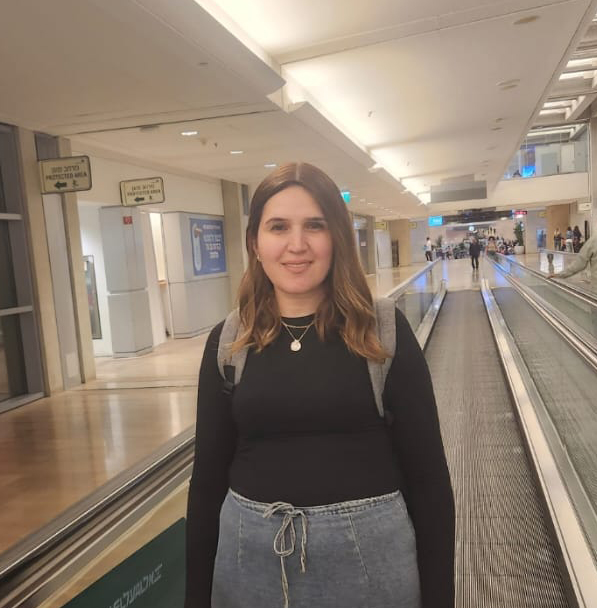 Penina Vaknin
“You Have a Rare Disease Called Pemphigus Vulgaris”
Despite her worsening condition, Penina tried to maintain a sense of normalcy at home. "I didn't want my children to suffer or feel that their mother was sick," she explains. A week passed, and when the pain became unbearable, she and her husband went to the emergency room. "We sat there waiting for seven hours," she recalls. "Eventually, the doctors examined me and performed every test they could think of. Their conclusion was that I had nothing serious—just a stubborn case of herpes. They explained that although herpes usually clears up quickly, mine was taking longer, but assured me that it would eventually disappear."
Penina returned home and continued waiting, but her condition deteriorated further. Three days later, she was back in the emergency room, where doctors examined her again and repeated the same diagnosis. By her third visit, however, she was barely able to move. "I was practically crawling. The pain was so severe that I couldn't walk. This time, instead of sending me home, the doctors immediately admitted me to intensive care and connected me to medical equipment to stabilize my condition. I was barely conscious. A few hours later, they performed a bronchoscopy, inserting a tiny camera into my airway, followed by another examination in which they took a biopsy to determine what was happening."
Suddenly, everything became frighteningly serious. "I was trembling, desperately hoping they would finally discover what was wrong with me and be able to treat it." The diagnosis, when it finally came, was devastating. "The doctors told my husband, 'Your wife has an autoimmune disease called pemphigus vulgaris. It's a rare condition that we studied in medical school, but never imagined we would actually encounter in a patient.'"
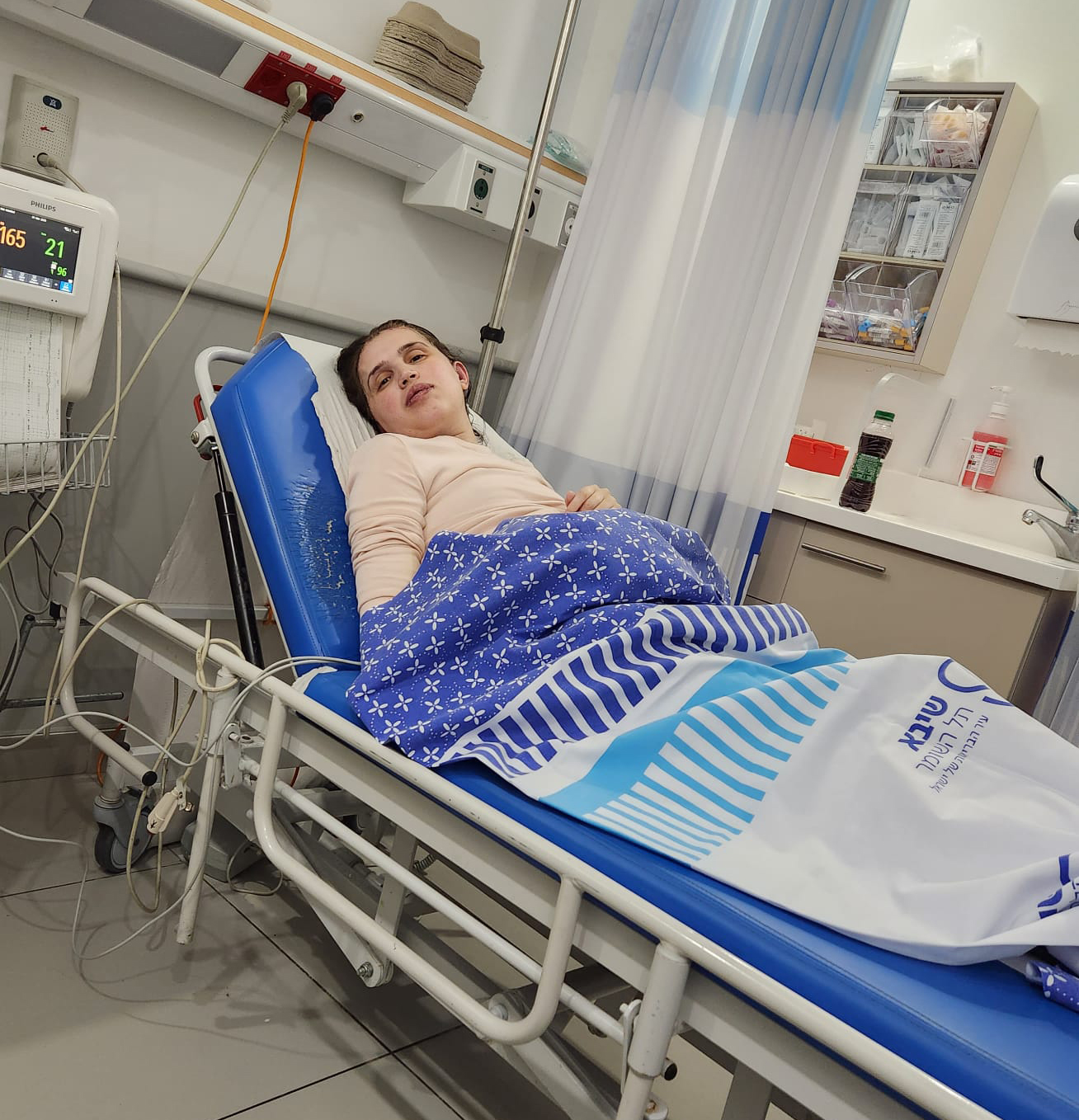
Penina was informed that she faced a lengthy hospitalization. By then, her condition had become critical. She was connected to intravenous drips in both arms and could neither eat nor drink. The sores and infected lesions that had begun in her mouth had spread across her head, accompanied by severe bleeding and discharge. Her hair began falling out, and the pain was almost impossible to describe. "It felt as though knives were stabbing me constantly," she recalls. "I went from being an independent woman who managed a home and raised a family to someone who couldn't even take care of herself."
Yet throughout the ordeal, Penina held tightly to her faith. "I made a conscious effort not to complain or question Hashem. I felt Him closer to me than ever before, and I didn't want to damage that closeness through complaints or feelings of doubt."
How did your husband respond to everything that was happening?
"My husband was truly inspiring," Penina says. "Immediately after my diagnosis, he announced to the children, 'We're going to get through this period with joy.' He didn't explain how serious my illness was. He simply told them, 'Mommy is in the hospital and will come home to visit occasionally. In the meantime, we're going to do everything we can to stay happy.'"
The older children helped care for the younger ones, while volunteers stepped in to assist the family. Whenever Penina was allowed home for a few hours, she was amazed to see that her husband was managing the household remarkably well. But the separation from her children was heartbreaking. "Usually, by the time I came home, the children were already asleep. I would sit beside them and cry, asking, 'Why can't I be with you like before? I miss you so much. I just want to be with you.'"
She struggles to describe the pain of those months. "Think about how many calls a mother receives from her children when she goes away for just three days. 'Mommy, when are you coming home?' My children went seven months without really seeing their mother. They couldn't even imagine how seriously ill I was."
What gave you the strength to endure such a difficult period?
"Only the Creator of the world," Penina answers without hesitation. "He was the only One who gave me strength. To this day, I feel Hashem's presence in every tiny detail of my life. Even when I'm standing in the kitchen cooking, I say, 'In honor of Hashem, blessed be He.' Whenever we recite a blessing or pray, I say, 'In honor of Hashem.' After everything I've experienced, I simply feel that He is always with me."
Penina also drew strength from the people who surrounded her with love and encouragement. Family members, friends, and even her daughters' teachers visited regularly. At one point, Rebbetzin Kolodetsky called her personally. "She said to me, 'Penina bat Devorah, you have atoned for the generation.' I could only respond with faint sounds because I was unable to speak. The Rebbetzin cried together with me and promised that she would continue praying for me."
After a month in the hospital, doctors informed Penina that she would need to remain hospitalized for at least another month. Her condition was so severe that, according to Penina, medical staff warned her husband that it might come down to the survival of either his wife or their unborn baby. She was transferred to a high-risk pregnancy ward, where she continued fighting for her life and the life of her child.
"One day, while I was lying in the ward, I felt myself losing consciousness. I genuinely thought I was approaching the end," she recalls. "What happened next was exactly like the descriptions you hear from people who have had near-death experiences. I saw my entire life, from childhood until that very moment, unfolding before me like a book. I understood that my life might be ending, and I began pleading with Hashem from the depths of my heart. I promised Him, 'I will never leave You. If I survive, I will praise and glorify You wherever I go.'"
Then, Penina says, she fell backward and apparently lost consciousness. "During those moments, I saw a figure approaching me from above. It was the Lubavitcher Rebbe, of blessed memory. This was especially surprising because, until then, I had never had any connection to Chabad. I saw the Rebbe come closer, stop above my head, look at me, and say a few words."
Immediately afterward, she heard doctors rushing into her room and reacting with alarm when they discovered that she had fainted. They treated her and stabilized her condition before transferring her to the pain management department for further evaluation. When she was returned to her room, half her face was partially paralyzed. Her condition gradually improved, but she was placed in strict isolation for several months. She was forbidden from leaving her room or interacting with the other women in the ward.
"I could hear the other women outside, and I would cry because I was so alone," she remembers. "My entire daily routine consisted of walking from my bed to the shower and back again."
Throughout her hospitalization, doctors repeatedly raised concerns about the pregnancy. "From that point until the thirty-fourth week, doctors came to me every day and explained, 'You'll have to say goodbye to the baby. There's no other option.'" But Penina refused to accept that outcome. "I would signal 'no' with my hand. I was fighting. I had no idea I possessed such strength, but Hashem was with me and didn't let me fall."
Her physical appearance reflected the severity of her illness. Her hair was falling out, and the peeling, bleeding lesions had spread to her forehead and ears. "Everything was covered in blood and discharge. This disease is truly terrible," she says. According to Penina, doctors indicated that ending the pregnancy could bring her suffering to an end. They also warned her that her severe illness and the medications she required could have serious consequences for the baby's development.
"They told me that because of all the medication and my condition, the baby would be born with developmental disabilities and couldn't possibly be healthy," she recalls. Despite these warnings, Penina remained determined to continue the pregnancy. She asked her friends to organize more challah-separation gatherings and recite additional Tehillim on her behalf. "They never disappointed me. Everywhere I turned, I heard about people praying for me. And I knew that Hashem would not abandon me."
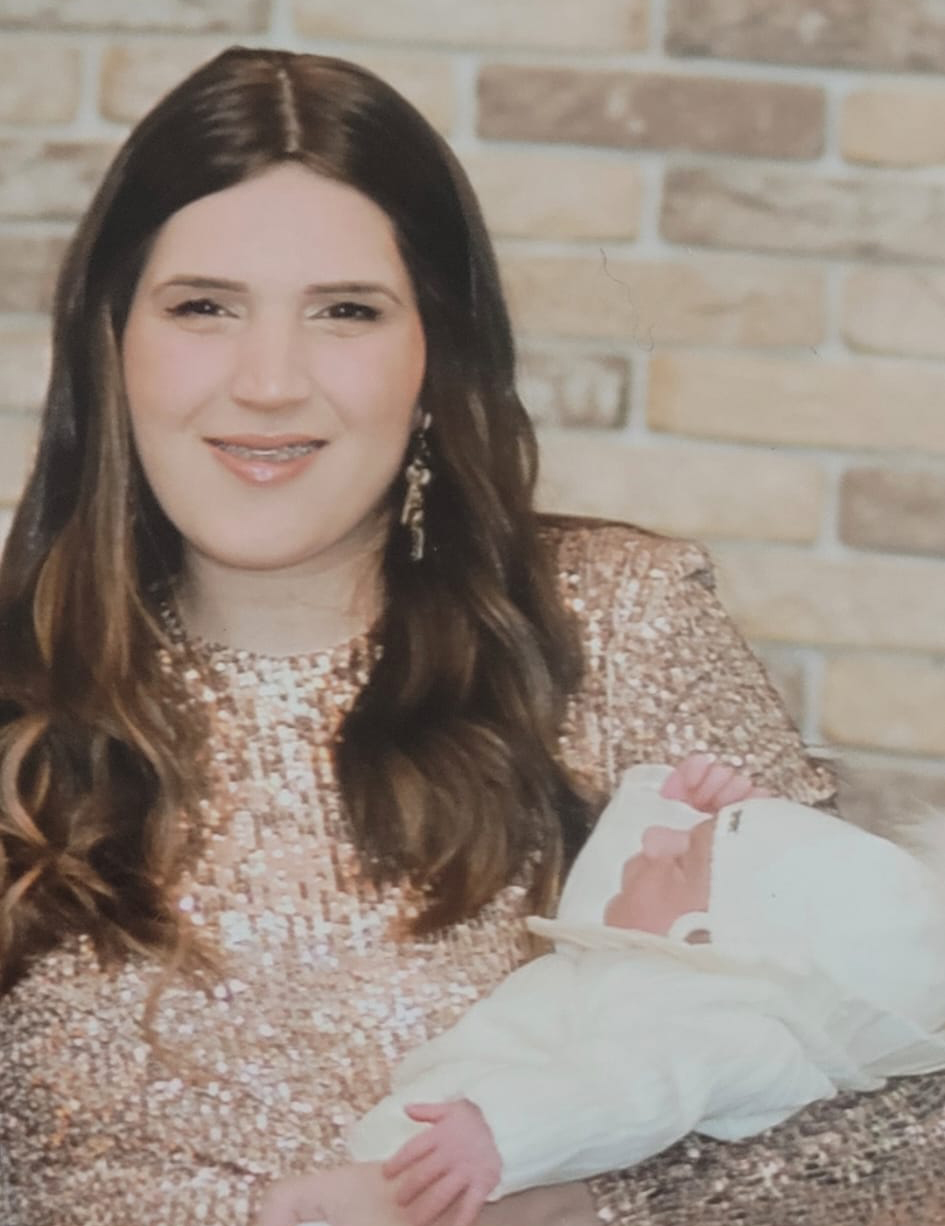 At the brit
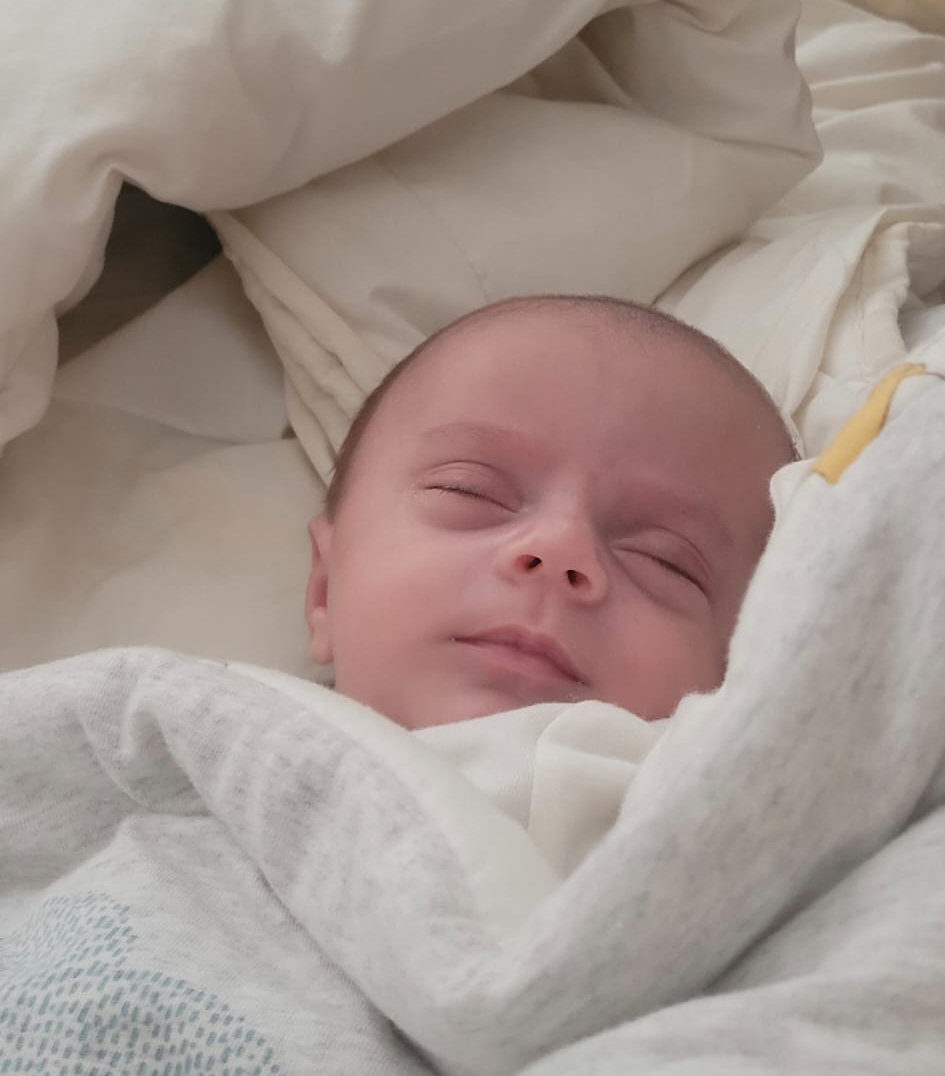
A Healthy Baby Against All Expectations
The delivery itself was another major ordeal. After twenty-four hours of labor, Penina was rushed into emergency surgery. "I was absolutely terrified because of all the frightening predictions the doctors had made," she recalls. "After the birth, I was placed under strict medical supervision and kept in isolation because of my medical condition and weakened immune system. I kept begging, 'Please, let me see my baby.'"
The doctors understood her distress but explained that the restrictions were necessary to protect both mother and child until they were stable enough to return home safely. Finally, approximately ten days after giving birth, Penina was discharged.
"I was finally going home. I began walking slowly, trying to gradually return to caring for my household and children after seven months of being unable to do so. At the same time, I had to build a connection with the baby I had given birth to but had been so separated from."
That emotional adjustment was not easy. "Throughout his first year, I felt that my relationship with him was almost mechanical. I couldn't truly connect with him emotionally. But I kept fighting to build that bond, and it was worth every effort." Today, she says with gratitude, her son is a thriving, beautiful three-year-old boy. "Baruch Hashem, he's absolutely wonderful. We named him Yehonatan—a name that felt so natural and fitting."
And Penina's blessings did not end there. "I also received another gift that felt beyond nature: our sweet Ariel, who came as a complete surprise. Baruch Hashem, that pregnancy was closely monitored by doctors, and with the appropriate medication, I went through it without another flare-up of the disease."
Learning to Appreciate the Gift of Ordinary Life
Penina's life today is very different from what it was before her illness. Although the experience changed her in countless ways, she feels it also brought her an extraordinary sense of spiritual closeness. "I was privileged to experience a tremendous closeness to Hashem," she says. "Today, I am raising my precious Yehonatan and Ariel, together with the rest of my children, with so much love."
In her kitchen, a large magnet bearing the words Mizmor LeTodah—"A Psalm of Thanksgiving"—hangs on the refrigerator. It serves as a constant reminder of the lesson she wants to pass on to her children. "I always tell them, 'Did something good happen to you? Did you succeed at something? Then let's thank Hashem.'"
For Penina, gratitude is no longer reserved for extraordinary events or dramatic miracles. It has become part of the way she approaches everyday life. "Every single day, I thank Hashem for the simple things, for ordinary life and its familiar routines," she says. "I now understand that this is the greatest gift I could ever have asked for: to simply be at home with my children, enjoy peaceful moments together, and raise them with warmth and love."
After months of unbearable pain, separation, uncertainty, and fear, Penina has discovered that the moments she once took for granted are the very ones she treasures most. For her, the greatest miracle is not only that she survived or that her baby was born healthy. It is the precious gift of being able to live an ordinary day, surrounded by the children she loves.

