

Marital Harmony
The Art of Disagreeing: What Every Married Couple Should Know
Discover what Jewish wisdom and relationship research teach us about handling disagreements, building trust, and strengthening your marriage.
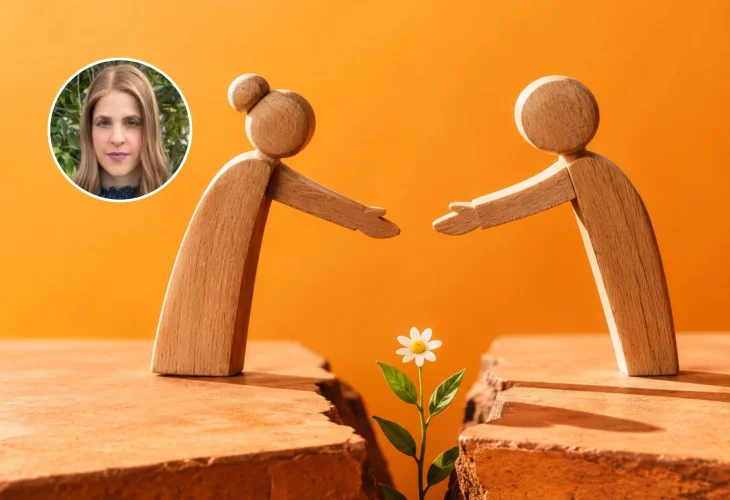
“My parents called. They invited us for Shabbat. We haven’t been there in a long time.”
From his tone, she could tell the decision had already been made. She stood with her back to him at the sink, washing dishes. The sound of running water blended with the noise of her own thoughts.
“But… I really need to be in my own space, eat the food I like, and have some time together, just the two of us,” she said.
She didn’t want to tell him that his parents’ house was crowded and noisy, that there was nowhere quiet to retreat to, or that she didn’t particularly enjoy the food. She didn’t want to hurt his feelings.
“But we were home last Shabbat, and the week before that. We’ll be home next Shabbat too. We also have to honor my parents. They’ll be hurt.”
“And three weeks ago, we were there. I think visiting once every two months is respectful enough.”
He took a step back.
“Try to understand. For me, it isn’t enough. That’s the house I grew up in. Those are my parents. That’s the synagogue where my friends are. I’m not the only one who needs to be considerate. It’s okay to consider my feelings too.”
“I didn’t mean to upset you… It’s not that they’ve done anything wrong. It’s just hard for me…”
“I didn’t mean to upset you either… It’s not that you’re wrong. It’s just hard for me too.”
He repeated her words back to her, and suddenly, it was as though she were looking into a mirror.
It wasn't him against her, or her against him. It was the two of them facing a problem together.
Why Conflict Isn't the Real Problem
Every relationship, especially a marriage, will inevitably involve disagreements. But the question isn't whether conflict exists. It's how we handle it.
Dr. John Gottman, a Jewish-American clinical psychologist and relationship researcher, conducted extensive research in which couples were asked to spend 15 minutes discussing their day, a point of disagreement, and finally, a pleasant topic. Researchers observed their facial expressions, tone of voice, emotional responses, and how they reacted to one another's feelings.
Remarkably, the researchers were able to predict with more than 90% accuracy whether couples would remain together or eventually divorce.
How? By observing the way they handled disagreements.
Gottman identified four destructive communication patterns that can seriously damage a marriage:
Criticism: Attacking your spouse's character or intentions, accusing them of selfishness, indifference, or deliberately trying to hurt you.
Contempt: Expressing disrespect through belittling remarks, condescension, sarcasm, or a dismissive tone.
Defensiveness: Avoiding responsibility, making excuses, becoming overly protective of your position, or keeping score.
Stonewalling: Emotionally shutting down, withdrawing from the conversation, or refusing to engage.
Recognizing these patterns is essential. In the spirit of “know your enemy,” we need to understand the behaviors that can quietly undermine a marriage before they cause lasting damage.
What Strong Couples Do Differently
Couples who maintain strong relationships aren't necessarily those who argue less. Rather, they're the ones who continue to show care and respect for each other, even in the middle of a difficult conversation.
They listen. They acknowledge each other's feelings. They nod to show understanding and sometimes use gentle humor to ease the tension.
Most importantly, they recognize when an argument is beginning to spiral and know how to pause, reconnect, and repair the conversation before it causes further hurt.
Because ultimately, the disagreement itself isn't the problem, and even finding the perfect solution isn't always the most important thing.
What truly matters is the way we communicate with each other along the way.
What the Torah Teaches Us About Disagreement
The Torah tells us: “And Hashem said: It is not good for man to be alone; I will make him a helper opposite him” (Genesis 2:18).
At first glance, the words “helper” and “opposite him” seem contradictory. How can the same person be both a source of support and someone who stands in opposition?
The Gemara explains: “If he merits, she is his helper; if he does not merit, she is against him” (Yevamot 63a).
Disagreements are inevitable, but when spouses work on themselves and their relationship, those differences can become a source of mutual growth and support rather than opposition.
There is no need to fear disagreement. Friction doesn't have to threaten a relationship. Sometimes, it is precisely through those difficult moments that we come to understand ourselves and each other more deeply, creating the opportunity for a stronger, more meaningful connection.

