

Hot on the Web
250 Years Later: 33 Soldiers in an Unmarked Grave Identified
Nearly 250 years after their deaths, researchers have identified 33 Revolutionary War soldiers buried in a Delaware mass grave, uncovering remarkable stories.
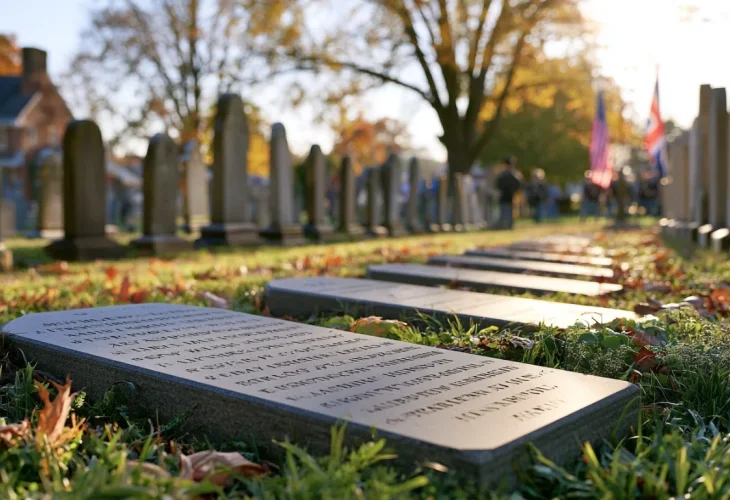
For generations, countless people walked past the Wilmington and Brandywine Cemetery in Delaware, unaware of exactly who was buried there. It was known that the cemetery held the remains of soldiers from the American Revolutionary War, but the names and stories of many of them had been lost to history.
Now, nearly 250 years after their deaths, researchers have managed to identify some of these soldiers and honor their memory. On September 23, 2026, a monument was dedicated at the site in memory of at least 66 soldiers buried in a mass grave. Of those, 33 were identified by name: 28 American soldiers from the Rhode Island Regiment and five British officers.
The American soldiers had fought in the Battle of Yorktown in Virginia in 1781, one of the decisive battles of the American Revolutionary War. Following the victory, they began making their way north, but many fell ill with smallpox during the journey. They were taken to a hospital in Wilmington, where they died between December 1781 and January 1782.
Instead of returning home to their families, the soldiers were buried in a mass grave far from home, in a place then known as the Poor and Strangers Burial Ground, a cemetery designated for the poor and those who had nowhere else to be buried.
British soldiers were also buried in the area. Four years earlier, following the Battle of Brandywine in 1777, hundreds of wounded British soldiers had been brought to Wilmington, and at least 38 were buried there.
How Were the Soldiers Identified?
The soldiers were not identified through DNA testing, but through extensive archival research. Researchers examined military rosters, hospital records, burial documents, and regimental records, eventually uncovering a document listing the names of all 28 Rhode Island soldiers who had died in Wilmington.
One of the most striking discoveries concerned the makeup of the regiment. Of the 28 soldiers, 14 were African American. Ten were free men, while four had enlisted while still enslaved.
In 1778, facing a shortage of soldiers, Rhode Island introduced a policy allowing enslaved men to enlist in the army and gain their freedom in exchange for military service. More than 100 men took advantage of the opportunity before the policy was revoked.
Among them was Private Caesar Rose, whose name is now engraved on the monument. His descendant, Jason Roomes, attended the dedication ceremony and spoke about his ancestor's journey from slavery to military service.
American and British representatives also attended the ceremony, where the flags of both countries were raised over the graves of men who had once fought on opposing sides.
During their research, historians also discovered a poem preserved in the National Library of Scotland. It had been written by the father of one of the British soldiers after he learned of his son's death across the ocean.
Nearly two and a half centuries later, the father's words were read aloud at the dedication ceremony, bringing a deeply personal element to the remembrance of soldiers whose stories had remained largely forgotten for generations.

