

Parashat Chayei Sarah
The Hidden Quality That Made Abraham So Extraordinary
A moving story about Rabbi Shlomo Zalman Auerbach reveals an important lesson about Abraham, self-control, and the extraordinary power of kindness.
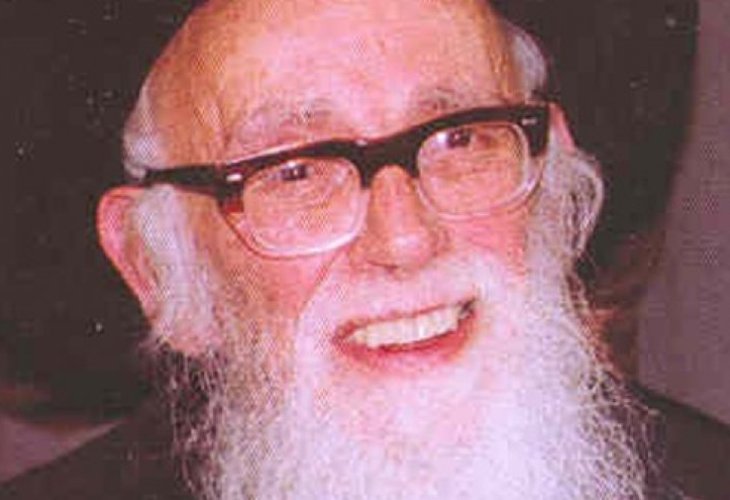 Rabbi Shlomo Zalman Auerbach
A man once called the police to complain that he kept hearing the sound of digging.
"How long have you been hearing it?" the dispatcher asked.
"Ever since I got married," the man replied.
The joke works particularly well in Hebrew, where the expression "to dig" is also used to describe someone who nags or talks endlessly.
But there's another kind of digging that every one of us knows all too well.
From the moment we're born, the yetzer hara (evil inclination) seems to take up residence in our hearts, constantly whispering its suggestions. Give in to this temptation. Make an excuse for that behavior. Take the easier path.
And it keeps digging, day after day.
Someone once sighed to me, "If only I had the evil inclination of Avraham Avinu (Abraham). Just look at the tests he passed! He must have had a much easier version than the rest of us."
I couldn't help laughing.
Avraham Avinu faced spiritual struggles so intense that, according to the Midrash (Tanchuma, Vayera 22), he reached the point of crying out that the waters had come up to his very soul.
And this man was wishing for Avraham's supposedly easier struggles!
Even the Greatest People Faced Inner Battles
Rabbi Yitzchak Hutner, in his work Pachad Yitzchak, points out a common mistake we make when learning about the great figures of Jewish history.
"It is a sickness among us that when we occupy ourselves with the perfection of our great ones, we deal only with the final summary of their greatness; we tell of their paths of perfection, while we skip over the inner battle that raged within their souls."
We tend to focus on the finished picture: Avraham's extraordinary faith, his unwavering devotion to Hashem, and his ability to withstand one difficult test after another.
But we forget the struggles that brought him there.
Of course, our Sages teach that the spiritual greatness of earlier generations was beyond our comprehension (Talmud, Shabbat 112b). Yet that does not mean their achievements came effortlessly.
Avraham did not pass his tests simply because he was naturally incapable of failing. He faced genuine choices, difficult temptations, and opportunities to justify taking an easier path.
He had to struggle with his own inclinations, overcome them, and consciously choose to fulfill Hashem's will.
The same was true of Yitzchak and Yaakov, who followed in his footsteps.
Their greatness was not that they never faced an inner battle. It was that they fought those battles and emerged victorious.
And if Avraham had to struggle, there is something profoundly encouraging in his example. We, too, can learn how to confront the voice inside us that constantly tries to lead us astray.
What Was Abraham's Secret?
In Parashat Vayera, Avraham reaches the culmination of his extraordinary journey of spiritual tests. Through the binding of Yitzchak, he demonstrates a level of devotion and self-sacrifice that is almost impossible to comprehend.
How did he reach such heights?
Certainly, Avraham possessed an exceptional fear of Heaven. But if that were the only explanation for his success, what could ordinary people like us possibly learn from him?
His spiritual level was far beyond our own.
There must have been something else: a practical approach, a way of living that strengthened his ability to overcome even the greatest challenges.
To understand that approach, consider a remarkable story about Rabbi Shlomo Zalman Auerbach, one of the great Torah scholars of the twentieth century.
A Remarkable Act of Kindness at a Time of Personal Sorrow
Rabbi Shlomo Zalman Auerbach was known for his extraordinary sensitivity toward others, particularly his wife.
At her funeral, he reportedly made a remarkable statement at her graveside: "I do not need to ask your forgiveness, because I never once hurt you."
But his concern for the feelings and dignity of others extended far beyond his own home.
During the final hours of his wife's life, Rabbi Auerbach was summoned to the hospital to say goodbye to her.
As he arrived, a young married Torah scholar from his neighborhood approached him excitedly.
"Rabbi, mazal tov! My wife has just given birth to a daughter!"
Rabbi Auerbach smiled warmly.
"Mazal tov, mazal tov!" he replied.
"How is the new mother?" he asked, showing genuine interest, even though his own wife lay dying just a few floors above.
"Baruch Hashem, she's resting now," the young man answered.
"And who will prepare meals for you in the meantime?" the rabbi continued.
The young man shrugged. He hadn't really thought about it.
"I'll arrange food for you," Rabbi Auerbach immediately offered.
The young father was embarrassed by the generous offer, but the rabbi wasn't finished.
"And where will your wife go when she's discharged from the hospital?"
"Home," the young man replied with a smile. "Back to the mess!"
Rabbi Auerbach shook his head.
"A woman who has just given birth needs to rest. I'll arrange for her to spend a few days recovering at a convalescent home."
Overwhelmed by the rabbi's kindness, the young man thanked him. Rabbi Auerbach shook his hand and continued on his way.
Shortly afterward, the rabbi's wife passed away.
When the news spread through the neighborhood, the young father was stunned.
Only then did he realize what had been happening while he had been standing in the hospital corridor, happily sharing his news.
During the shivah, the seven-day Jewish mourning period, he came to comfort Rabbi Auerbach.
After offering his condolences, he hesitantly asked, "When I met the rabbi at the hospital, did the rabbi know that the Rabbanit was dying?"
Rabbi Auerbach answered that he had known.
The young man burst into tears.
"How terrible! I kept the rabbi talking when he needed to be with his wife! Because of me, the rabbi might have missed the opportunity to say goodbye!"
But Rabbi Auerbach gently reassured him.
"Calm yourself, my son. You acted properly. A daughter was born to you at a good hour. What blame do you bear for my sorrow over my dying wife?"
Even at one of the most painful moments of his life, Rabbi Auerbach refused to allow his personal suffering to diminish another person's happiness.
He recognized that the young man's joy deserved to be celebrated, regardless of the grief he himself was experiencing.
And this extraordinary sensitivity brings us back to Avraham Avinu.
What Abraham Did After Sarah's Death
In the Torah portion following Vayera, Parashat Chayei Sarah, we read about the death of Sarah, Avraham's beloved wife and the mother of the Jewish people.
We can only imagine the grief that accompanied her passing.
Sarah had shared Avraham's remarkable journey, his challenges, his sacrifices, and his mission to bring awareness of Hashem into the world.
Her death must have been devastating.
Yet Rabbi Samson Raphael Hirsch, commenting on Genesis 23:2, draws attention to the way Avraham expressed his grief.
Rather than making a public display of his sorrow, Avraham withdrew into his home to mourn Sarah privately.
Rabbi Hirsch explains that although Avraham's grief was undoubtedly deep, he chose to carry it within his heart and home.
This was not because he loved Sarah any less. Quite the opposite. His love and sorrow were so profound that he did not need to display them before others.
Even in mourning, Avraham remained mindful of those around him.
But the Torah reveals something even more remarkable.
After describing Avraham's mourning, the verse states:
"And Avraham rose from before his dead." (Genesis 23:3)
What is the deeper significance of Avraham rising?
Rabbi Yerucham Halevi, in Daat Torah, offers an extraordinary explanation.
Avraham understood that he now needed to speak with the people of Chet to arrange Sarah's burial.
Out of respect for them, he wiped away his tears, washed his face, and composed himself before approaching them.
As Rabbi Yerucham explains, Avraham did not consider it respectful to speak with others while his face was still covered in tears.
He therefore mastered his emotions and approached them with a pleasant expression.
Think about that for a moment.
Avraham had just lost his wife, his lifelong companion, and one of the most important people in his world.
Yet even in the depths of his sorrow, he was concerned about showing proper respect to the people he was about to meet.
He did not allow his own suffering to make him forget the dignity of others.
The Connection Between Respecting Others and Serving Hashem
Perhaps this reveals one of the great secrets behind Avraham's extraordinary ability to withstand life's most difficult tests.
His spiritual greatness was not expressed only through the mitzvot between a person and Hashem. It was also reflected in his exceptional care for the mitzvot between one person and another.
Avraham understood that the way we treat other people is inseparable from the way we serve Hashem.
Our Sages teach in the Midrash (Tanchuma, Shemot 5) that a person who denies the kindness received from another human being may eventually come to deny the kindness received from Hashem.
And from this warning, we can learn the opposite.
When we develop genuine gratitude, sensitivity, and respect toward others, we strengthen those same qualities in our relationship with Hashem.
A person who learns to honor another human being is also learning what it means to honor the One who created that person.
This was Avraham's approach.
His extraordinary devotion to Hashem was inseparable from his concern for the feelings, needs, and dignity of those around him.
And this offers us a practical lesson for our own struggles with the yetzer hara.
We may not possess Avraham's spiritual greatness, but we can begin by paying closer attention to how we treat others.
Can we hold back an unkind remark, even when we're upset? Can we celebrate another person's happiness when we're facing difficulties of our own? Can we show patience and respect when our emotions are pulling us in the opposite direction?
These may seem like small victories, but each one requires us to overcome our own inclinations.
And every time we choose kindness over anger, consideration over selfishness, or respect over resentment, we strengthen our ability to choose what is right.
Avraham's greatness was not simply that he overcame extraordinary tests. It was that he developed a character rooted in respect for others and devotion to Hashem.
That is the example he left us.
And that is the kind of greatness we can strive toward, one choice and one act of kindness at a time.

