

World News
US-Iran Peace Talks: Qatar Reports Progress on Nuclear Deal and End to War
Qatar and Pakistan reportedly broker preliminary understandings on Iran's nuclear program, the Strait of Hormuz, and sanctions relief, as the Trump administration weighs its next steps
- Shlomi Diaz
- | Updated
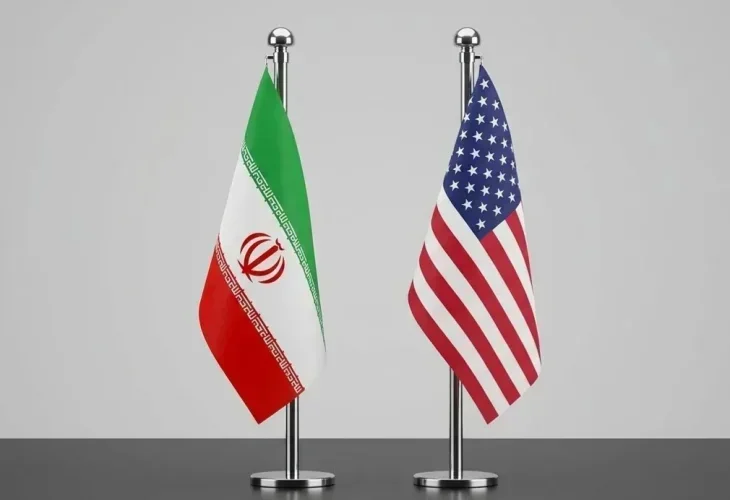
Preliminary understandings have reportedly been reached between Iran and the United States through mediation by Qatar and Pakistan, raising the possibility of a diplomatic breakthrough in efforts to end the war between the two countries. According to a report published Saturday evening by the Qatari newspaper Al-Araby Al-Jadeed, the discussions have focused on Iran's nuclear program, freedom of navigation through the Strait of Hormuz, and economic incentives for Tehran.
An Iranian delegation has arrived in Doha, while Qatari officials have invited the White House to send an American delegation to participate in the negotiations. Under the latest proposal, China and Russia have also been identified as potential guarantors of an agreement on Iran's behalf.
Iranian Foreign Minister Abbas Araghchi told Qatar's Al Jazeera network that Tehran had reviewed a letter from US Vice President JD Vance and discussed its contents during high-level meetings. The letter, reportedly addressed to Mohsen Rezaei, secretary of Iran's Supreme National Security Council, stressed that any negotiations would have to address the nuclear issue.
Araghchi described Washington's attempt to open a channel for dialogue as a positive development, but cautioned against any effort to exploit the negotiations to create internal divisions. He warned that such an approach would constitute another American miscalculation.
Despite the diplomatic activity, Araghchi emphasized that no meetings with American officials are currently planned. He also said that Iran and the Qatari mediators had reached a proposal that would reduce the implementation period of Tehran's plan to two days.
New Proposal Ties Iranian Concessions to US Sanctions Relief
The latest Qatari initiative differs from earlier mediation efforts by introducing a phased framework designed to ensure reciprocal action by both sides. Rather than requiring either country to fulfill all its obligations in advance, the proposal calls for a series of coordinated steps, with each Iranian concession matched by a corresponding American measure.
Under the proposed arrangement, Iran would gradually restrict aspects of its nuclear program and take steps toward reopening the Strait of Hormuz. In return, Washington would ease the blockade and economic sanctions while releasing Iranian assets frozen in Western financial institutions.
The proposal also outlines several specific commitments. Iran would agree to address its nuclear stockpile at a later stage, begin discussions on arrangements for reopening the Strait of Hormuz within seven days, and participate in daily confidence-building measures with the United States. Both countries would establish a mutually agreed timetable for implementing their obligations.
The framework is intended to overcome one of the central obstacles in the negotiations: determining which side must act first. By linking each concession to a corresponding measure, the mediators hope to build trust and create a pathway toward a broader agreement.
Trump Has Not Decided Whether to Resume Military Operations
Meanwhile, US Secretary of State Marco Rubio said President Donald Trump has not yet decided whether to resume military operations against Iran, according to reports in American media outlets.
Speaking at a press conference, Rubio emphasized that the president prefers an alternative approach and has made no final decision regarding renewed military action. He added that Trump could have ordered such operations weeks or even months earlier had he chosen to pursue that course.
Rubio also acknowledged that he was unaware of any established timetable for the Qatar-led negotiations, underscoring the uncertainty surrounding the diplomatic process.
The Lebanese newspaper Al-Akhbar, which is affiliated with Hezbollah, offered further details about Iran's position, citing sources familiar with the discussions. According to the report, Tehran is not opposed in principle to reciprocal commitments involving the reopening of the Strait of Hormuz and the lifting of the maritime blockade.
Iran's principal reservations reportedly concern the nuclear provisions, particularly a proposed requirement to grant inspectors from the International Atomic Energy Agency (IAEA) access to its nuclear facilities. In exchange, the United States would lift certain sanctions and release a portion of Iran's frozen assets.
Iranian officials have repeatedly maintained that substantive negotiations over the country's nuclear program can begin only after a formal declaration ending the war, accompanied by concrete steps demonstrating Washington's commitment to the agreement.
Although the reported understandings suggest some diplomatic progress, important disagreements remain over the timing and implementation of nuclear restrictions, sanctions relief, and the formal cessation of hostilities. With Qatar and Pakistan continuing their mediation efforts, the prospects for an agreement will depend largely on whether Washington and Tehran can establish a mutually acceptable sequence of commitments.

