

Interesting
Historic SS United States to Become World's Largest Artificial Reef Off Florida Coast
The legendary ocean liner, once the fastest passenger ship to cross the Atlantic, is set to be deliberately sunk off Florida's coast, creating a massive artificial reef and a new underwater attraction for divers
- Shira Dabush
- | Updated
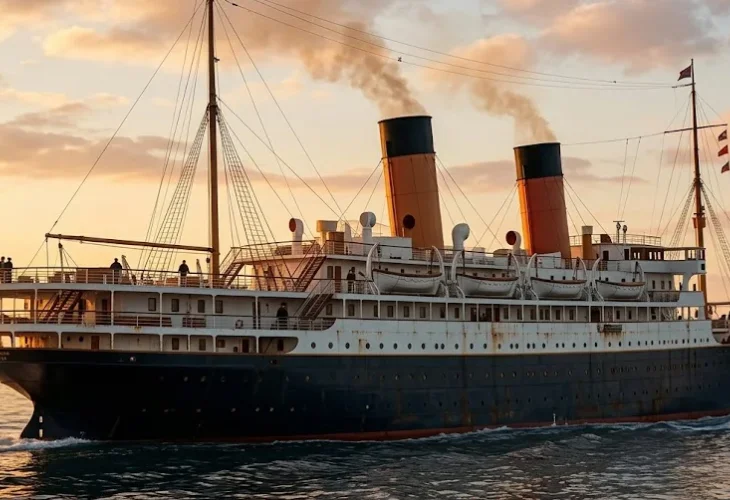
The historic SS United States, once a symbol of American engineering excellence, luxury, and record-breaking speed, is preparing for an extraordinary transformation. The legendary ocean liner is scheduled to be deliberately sunk off the coast of Florida, where it will become a massive artificial reef and a major attraction for diving enthusiasts.
The tourism authority for the Destin-Fort Walton Beach area recently announced that the sinking is planned for November 12, weather permitting. The vessel will be positioned approximately 22 nautical miles (41 kilometers) southwest of the coast. If the project proceeds as planned, the SS United States will become the world's largest artificial reef, providing a new habitat for marine life while creating a unique underwater destination for divers.
From Record-Breaking Ocean Liner to Underwater Attraction
When the SS United States entered service in 1952, transatlantic ocean travel represented the height of luxury and technological achievement. Measuring approximately 302 meters (990 feet) in length, it was the largest passenger ship ever built in the United States and an extraordinary accomplishment in American maritime engineering. On its maiden voyage, the ship made history by breaking the speed record for a passenger crossing of the Atlantic Ocean, cementing its reputation as one of the fastest and most impressive ocean liners of its era.
The vessel was designed in cooperation with the American shipping industry and the US Navy, with features that would allow it to be rapidly converted into a military troop transport if necessary. For 17 years, it carried passengers between Europe and the United States, becoming an enduring symbol of the golden age of ocean travel. However, as commercial aviation expanded and air travel became faster, more affordable, and increasingly accessible, demand for lengthy transatlantic voyages declined. In November 1969, the SS United States was withdrawn from service, bringing its celebrated passenger career to an end.
Over the following decades, various efforts were made to preserve the historic vessel. From 1996 until 2025, it remained docked in Philadelphia, where restoration proposals repeatedly encountered financial obstacles. Eventually, a new plan emerged: rather than allowing the ship to deteriorate indefinitely, it would be repurposed as an artificial reef, preserving its legacy while giving it an entirely new purpose.
Transforming such an enormous vessel into an underwater habitat, however, requires extensive preparation. Following are seven fascinating facts about the ambitious project.
1. More Than a Year of Preparation
Sinking a ship to create an artificial reef involves considerably more than towing it to a suitable location and allowing it to descend to the ocean floor. In the case of the SS United States, cleaning and preparation work has taken more than a year and required thousands of hours of labor. Crews emptied and cleaned 128 fuel and oil tanks, removed equipment and potentially hazardous materials, and conducted extensive inspections to identify contaminants that could pose risks to the marine environment.
According to the project organizers, the vessel has been prepared in accordance with regulatory requirements governing artificial reefs. These measures are intended to minimize environmental risks and ensure that the ship is suitable for its new role as an underwater habitat.
2. Extensive Surveys of the Ocean Floor
Selecting a location for an artificial reef requires a thorough understanding of the surrounding marine environment. Before the sinking site was chosen, specialists conducted surveys of the seabed to ensure that positioning the massive vessel would not damage existing natural resources or historically significant underwater sites.
The project also includes plans for environmental monitoring after the ship is submerged. Researchers from universities and scientific institutions are expected to conduct biological, physical, and chemical assessments to examine how the marine environment changes over time. These studies will help scientists understand how marine organisms colonize the ship, how the new reef interacts with surrounding habitats, and what long-term effects the structure may have on the local ecosystem.
3. The Ship Will Be Sunk Without Explosives
Unlike some artificial reef projects that rely on controlled explosions, the SS United States will reportedly be sunk through a gradual flooding process. According to the organization responsible for preserving the ship's legacy, water will enter through specially prepared openings in its hull, slowly flooding the vessel.
The process is intended to control the ship's descent and help ensure that it settles upright on the seabed. Maintaining an upright position is particularly important for a vessel of this size, both for the stability of the structure and for its eventual use as a diving attraction.
4. Certain Areas Have Been Sealed to Protect Divers
Preparing a sunken ship for recreational diving involves significant safety considerations. Although shipwrecks can be fascinating underwater attractions, their enclosed spaces can present serious hazards, particularly to inexperienced divers. Inside a submerged vessel, narrow corridors and compartments can make navigation difficult, while loose cables, protruding metal, and other structural elements may snag diving equipment. Movement through confined areas can also disturb sediment and severely reduce visibility.
Unlike diving in open water, entering an enclosed shipwreck prevents a diver from ascending directly to the surface in an emergency. Anyone exploring an interior compartment must first locate a safe exit, making specialized training and appropriate equipment essential. To reduce these risks, certain lower decks and compartments of the SS United States have been sealed as part of the preparation process. These modifications are intended to restrict access to particularly hazardous areas while making the wreck more suitable for diving activities.
5. Artificial Reefs Can Support Marine Life
Although deliberately sinking a historic ocean liner may seem unusual, artificial reefs can provide valuable habitats for marine organisms. A large underwater structure offers surfaces on which algae and other organisms can attach and grow, as well as crevices and sheltered areas where fish and other marine species can hide, feed, and reproduce.
Over time, the hull and exposed surfaces of the SS United States may become colonized by a variety of marine organisms, gradually transforming the once-bustling passenger ship into a complex underwater habitat. The structure could also provide shelter for juvenile fish and attract species that are less commonly observed in the surrounding area. Researchers hope that studying this process will offer valuable insights into marine ecosystems and the development of artificial reefs, although the eventual ecological benefits will depend on how the habitat develops and interacts with its surroundings.
6. A Potential Boost for Florida's Tourism Industry
Beyond its potential environmental benefits, the project is expected to create significant tourism opportunities for the Destin-Fort Walton Beach region. Organizers hope the submerged ocean liner will become a major destination for divers, attracting visitors eager to explore one of the most unusual underwater sites in the world. Its enormous size and historic significance could make it particularly appealing to experienced wreck divers and marine enthusiasts.
The attraction may also benefit local dive shops, charter boat operators, fishing businesses, hotels, restaurants, and other tourism-related enterprises. While the full economic impact will only become clear after the sinking and the establishment of diving activities, supporters believe the project could generate additional employment and strengthen the region's reputation as a destination for marine recreation.
7. A Maritime Museum Will Preserve the Ship's Legacy
Not every part of the SS United States will disappear beneath the waves. Several historically significant components, including the ship's iconic funnels, radar mast, and bow anchor, have already been removed and preserved as part of plans for a land-based maritime museum.
The proposed museum will explore the vessel's remarkable engineering, distinctive design, and cultural significance, allowing visitors to learn about its history without needing to dive beneath the ocean's surface. The goal is to preserve the ship's legacy in two complementary ways: as a maritime heritage attraction on land and as an underwater destination that introduces new generations to its extraordinary story.
More than seven decades after its maiden voyage, the SS United States is poised to undergo a transformation few could have imagined during its glamorous years of transatlantic service. Once celebrated for carrying passengers across the ocean at record-breaking speed, the legendary vessel may soon become a permanent home for marine life and an entirely new kind of destination for those who venture beneath the waves.

