

Home Styling
The 6 Essential Tools Every Home Should Have
From loose cabinet handles to furniture assembly, find out which tools can help you handle common household jobs without buying an expensive kit.
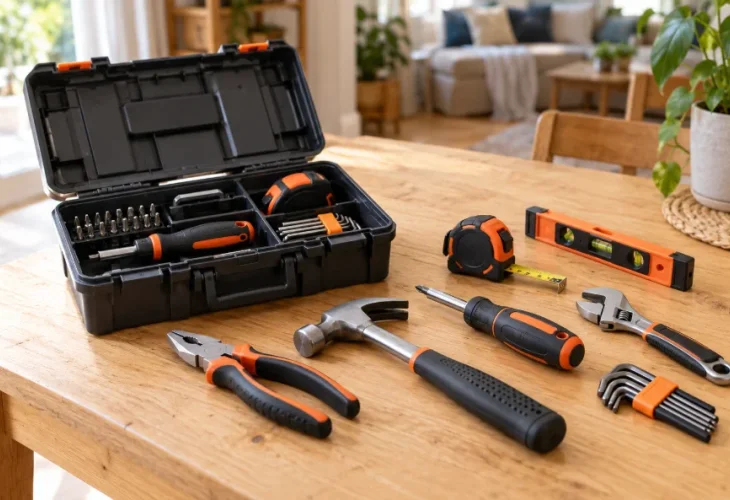
We've all been there. A cabinet handle comes loose, a screw needs tightening, or a piece of furniture needs a quick adjustment. It should be a five-minute job, but there's just one problem: you can't find the right tool.
Maybe there's a screwdriver buried somewhere in a kitchen drawer, a hammer in a closet, and a handful of mystery screws scattered around the house. Or perhaps you've been putting off a simple repair because you don't have the equipment to tackle it.
The good news? You don't need an expensive collection of tools to handle most basic household repairs. A small, well-organized toolbox with a few carefully chosen essentials is often more useful than a large kit filled with items you'll rarely touch.
Whether you've just moved into your first apartment or want to get better organized, here's how to put together a practical home toolbox without spending a fortune.
The Six Essential Tools Every Home Should Have
You don't need to buy everything at once. Start with these six basics, which will cover many common household tasks, and add more specialized tools as you need them.
1. A screwdriver with interchangeable bits
If you're buying just one tool to start with, a screwdriver with interchangeable bits is an excellent choice.
Instead of keeping several separate screwdrivers, you can switch between different bits depending on the screw you're working with. Look for a set that includes both flathead and Phillips bits in several sizes.
It's also worth checking the screws used in your furniture, since some may require different types of bits.
The most important thing is getting the right fit. A screwdriver bit should sit securely inside the screw head without slipping. If it doesn't fit properly, don't force it. Using the wrong bit can damage the screw and make it much harder to remove later.
2. A tape measure
Whether you're checking if a new bookshelf will fit, measuring a window for curtains, or figuring out where to hang a picture, a tape measure is one of the most useful tools you can own.
For most household projects, a tape measure between 10 and 16 feet long (approximately 3 to 5 meters) is more than enough.
Choose one with easy-to-read markings and a reliable locking mechanism that holds the tape in place while you're measuring.
3. Combination pliers
Combination pliers are useful for gripping, holding, bending, and pulling small objects.
You might use them to hold a nut in place while tightening a bolt, remove a stubborn pin, or grip something that's too small or awkward to handle with your fingers.
Look for a pair that feels comfortable in your hand and opens and closes smoothly. There's no need to buy the largest or most expensive model for ordinary household use.
4. An adjustable wrench
An adjustable wrench allows you to tighten or loosen nuts and bolts of different sizes without needing an entire collection of wrenches.
A small or medium-sized model is usually sufficient for basic household repairs.
Before turning a nut, make sure the wrench's jaws fit snugly around it. If the fit is too loose, the wrench can slip and damage the nut or cause an injury.
5. A medium-sized hammer
You don't need a heavy construction hammer for everyday tasks around the house.
A medium-sized claw hammer is a practical option for jobs such as tapping in nails or removing old ones. The claw on the back allows you to pull nails out when necessary.
However, remember that not everything should be hung using an ordinary nail. Heavy mirrors, shelves, and other wall-mounted items require suitable fasteners based on the type of wall and the weight being supported.
6. A set of Allen keys
If you've ever assembled flat-pack furniture, you're probably familiar with Allen keys, also called hex keys.
They're commonly used for assembling beds, tables, chairs, and cabinets, and they're especially helpful when furniture needs tightening after months or years of use.
Keep a basic set in your toolbox rather than relying on the individual keys supplied with furniture.
If a particular item comes with a special tool, store it in a labeled bag so you'll know exactly what it belongs to when you need it again.
Small Extras That Make Household Repairs Easier
Once you've collected the essentials, a few inexpensive additions can make your toolbox considerably more useful.
A small level helps you hang pictures and shelves straight, while a pencil is handy for marking measurements and drilling points.
A utility knife with a secure locking mechanism is useful for opening packages and cutting suitable materials, and a pair of sturdy work scissors can handle jobs that ordinary household scissors may struggle with.
It's also worth keeping a small flashlight nearby, particularly when working inside cabinets, behind appliances, or in poorly lit corners.
Don't forget basic safety equipment. A pair of safety glasses is important for tasks that may send dust, chips, or small fragments into the air.
Another useful addition is a small organizer with separate compartments for screws, nails, nuts, and washers. This makes it much easier to find what you need without searching through a jumble of loose hardware.
You can also keep a few zip ties for organizing cables and felt pads for protecting floors from furniture legs.
One thing you shouldn't stock up on indiscriminately, however, is wall anchors. These need to be selected according to the wall material and the weight of the item being installed. An anchor that works in one wall may be unsuitable for another.
Do You Really Need a Power Drill?
A cordless drill-driver can be a great investment, especially if you frequently assemble furniture or tackle small home improvement projects.
It can save time and effort when installing multiple screws, making it particularly useful for larger assembly jobs.
However, a power drill isn't essential for every household, especially if you only occasionally need to tighten a cabinet handle or adjust a loose hinge.
In fact, a manual screwdriver can sometimes be the better option for delicate tasks because it gives you more control over the amount of force you're applying.
If you decide to purchase a drill, make sure it's suitable for the work you intend to do.
Driving screws into furniture is different from drilling holes into walls, and some wall materials require specialized drilling equipment.
Before drilling into any wall, take precautions to avoid hidden electrical wiring and plumbing. If you're unsure what's behind the surface or whether the tool is appropriate, it's safer to consult a qualified professional.
How to Keep Your Toolbox Organized
Even the best collection of tools won't be particularly helpful if you can never find what you're looking for.
Choose a toolbox based on the number and size of the tools you actually own, rather than buying the biggest one available.
A good toolbox should close securely, be comfortable to carry, and make it easy to access individual tools without emptying everything onto the floor.
Compartments or removable trays can be especially useful for keeping smaller items organized.
Store your toolbox in a dry location to help prevent rust and keep it safely out of children's reach. Sharp tools, blades, and other potentially dangerous items should be secured.
It's also worth getting into the habit of returning each tool to its proper place after use. That way, the next time a screw comes loose or a quick repair is needed, you'll know exactly where to find what you need.
Start Small and Build Your Collection Over Time
One of the biggest mistakes people make when buying tools is assuming they need a complete professional set from the beginning.
In reality, most everyday household repairs can be handled with a relatively small number of basic tools.
Rather than spending hundreds of dollars on equipment you may never use, begin with the essentials and gradually add items as specific needs arise.
Over time, you'll discover which tools you reach for most often and which ones are worth investing in.
A practical home toolbox isn't about owning every tool imaginable. It's about having the right tools ready when you need them.
And the next time a cabinet handle comes loose or a picture needs hanging, you'll be able to tackle the job without turning the entire house upside down looking for a screwdriver.

