

Raising Children
How to Handle Children's Tantrums and Emotional Meltdowns
Discover practical strategies to build emotional regulation skills, respond calmly to tantrums, and recognize when professional support may be needed
- Shira Priant
- | Updated
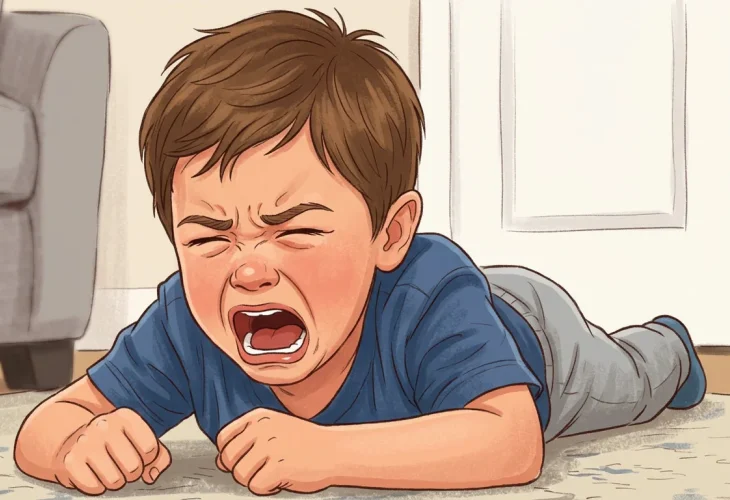
Temper tantrums, hysterical crying, emotional outbursts, and meltdowns are experiences almost every parent knows all too well. These intense expressions of frustration and emotional distress can be exhausting, often accompanied by feelings of helplessness, embarrassment, and even personal failure. Parents turn to books, social media, friends, and healthcare professionals in search of answers, hoping to discover one thing: How can we make the tantrums stop?
The most common advice is to remain calm and consistent, combine a warm tone with firm boundaries, and look for underlying triggers such as hunger or exhaustion. While these recommendations may sound straightforward, putting them into practice during an emotional crisis is considerably more difficult. For some families, these strategies work remarkably well. For others, however, the cycle of emotional and behavioral conflicts continues day after day, wearing down even the most patient and attentive parents.
The less popular answer to the question of how to stop tantrums is that they are unlikely to disappear entirely until children develop the skills needed to regulate their own emotions. Rather than focusing exclusively on how to end an outburst, parents may benefit more from asking two fundamental questions: How can we help our children develop emotional self-regulation, and when do recurring meltdowns suggest that something more serious may be going on?
Why Children Need Help Learning to Regulate Their Emotions
Psychologist James Gross defines emotional regulation as the processes through which people influence which emotions they experience, when they experience them, and how they experience and express those emotions. Children are not born with fully developed emotional regulation skills. Instead, they enter the world with the potential to acquire them gradually, through thousands of everyday interactions as their brains mature.
Emotional regulation also involves learning to tolerate discomfort, disappointment, and frustration without becoming overwhelmed. During infancy and early childhood, however, children have only a limited ability to manage intense emotions independently. They rely heavily on caregivers to help them regain their emotional balance, gradually developing the capacity to do so on their own.
This is precisely why parents play such an important role in the process. During the early years, when the brain systems involved in emotional regulation are still developing, parents effectively serve as an external source of regulation. In simple terms, children temporarily "borrow" their parents' calm. Through countless experiences of reassurance, patience, and emotional support, they gradually develop the internal resources needed to soothe themselves.
This process, known as co-regulation, is not about eliminating difficult feelings or preventing children from experiencing frustration. Rather, it is about helping them manage emotions they are not yet equipped to handle independently. Over time, these repeated experiences become the foundation for greater emotional resilience and self-control.
What Parents Can Do During an Emotional Meltdown
When a child is overwhelmed by anger, disappointment, or distress, the parent's first responsibility is to remain as calm as possible. Taking a deep breath, lowering the voice, and physically moving down to the child's eye level can help communicate a sense of safety and reassurance. Children are particularly sensitive to the emotional reactions of the adults around them, and a calm presence can help prevent an already difficult situation from escalating.
It is also important to use as few words as possible. A child experiencing an intense emotional meltdown may struggle to process explanations, logical arguments, or lengthy instructions. Instead of trying to reason with the child, parents can briefly acknowledge the emotion behind the reaction: "You're really upset because the tower you built fell down." Sometimes, simply recognizing the child's frustration is enough to help them feel understood. However, this approach is not effective for every child. Some become even more agitated when adults attempt to describe their feelings. In those cases, it may be better to avoid commenting on the emotion and focus instead on maintaining a calm, reassuring presence.
Physical proximity can also be comforting, although the amount of contact a child needs will vary. Some children welcome a hug or gentle touch, while others need personal space and become more distressed when touched. Remaining nearby without forcing physical contact allows parents to offer reassurance while respecting the child's immediate needs. The goal is not to force the child to calm down, but to provide a safe and steady presence while the emotional intensity gradually subsides.
These moments can be particularly challenging because parents are often dealing with their own frustration, fatigue, or embarrassment. Yet the ability to respond calmly, even imperfectly, is itself an important part of the learning process. Children do not need parents who never become upset; they need adults who can demonstrate how to manage difficult emotions and regain their composure.
Building Emotional Regulation Skills Between Tantrums
Although the way parents respond during a meltdown matters, much of the work of developing emotional regulation happens during calmer moments. Everyday conversations provide valuable opportunities to help children recognize, understand, and express their feelings. Parents can give emotions a name in ordinary situations, saying, for example, "You're sad because it's time to leave," or "You're frustrated because you can't have another treat." These simple interactions gradually help children develop the emotional vocabulary needed to communicate their experiences rather than express every disappointment through an outburst.
Calm moments also offer opportunities to practice basic coping strategies. Parents might teach young children to take slow, deep breaths by pretending to blow out an imaginary candle. Practicing these techniques when children are relaxed makes them more familiar and easier to use when emotions become intense, although young children may still need considerable assistance applying them during a crisis.
Reducing predictable triggers can also make a significant difference. Regular sleep schedules, consistent mealtimes, and a stable daily routine can help lower the likelihood of emotional overload. Many young children also struggle with transitions, particularly when they must abruptly stop an enjoyable activity. Giving advance notice, such as "We'll be going home in five minutes" or "Bath time is in ten minutes," can help them prepare for what comes next. When children know what to expect, they are often better equipped to cope with changes and disappointments.
Equally important is recognizing progress, even when it appears small. A child who manages to wait briefly, recovers more quickly from frustration, or uses words instead of physical aggression is demonstrating developing emotional regulation skills. Acknowledging these efforts helps reinforce positive behavior and encourages further growth. Parents, too, should recognize their own progress. Remaining patient during a difficult moment or recovering calmly after losing one's temper represents a meaningful achievement.
Emotional regulation develops gradually, and progress is rarely linear. A child who handles frustration successfully one day may struggle with the same situation the next, particularly when tired, hungry, overstimulated, or emotionally overwhelmed. Rather than viewing every setback as a failure, parents can understand these experiences as part of an ongoing developmental process.
When Do Frequent Tantrums Require Professional Attention?
Young children vary considerably in their emotional responses. Some experience frequent, dramatic outbursts, while others rarely display intense distress. Differences in temperament, developmental stage, and environment can all influence how children respond to frustration. However, when tantrums seem unusually severe, frequent, prolonged, or difficult to manage compared with what is typical for a child's developmental stage, it may be worth seeking professional guidance.
A pediatrician can help identify or rule out physical factors that may be lowering the child's tolerance for frustration. These can include unrecognized pain, sleep disturbances, unusual sensory sensitivities, hearing difficulties, chronic constipation, or other medical conditions. Addressing an underlying physical problem can sometimes make a substantial difference in a child's behavior and emotional well-being.
When appropriate, healthcare professionals and parents may also consider a more comprehensive developmental or psychological assessment. Conditions such as anxiety, attention-deficit/hyperactivity disorder (ADHD), and autism can sometimes be associated with patterns of emotional distress that differ from those typically seen in young children.
For example, difficulties with executive functioning and impulse control are central features of ADHD and may make it harder for a child to manage frustration, wait patiently, or regulate emotional responses. Recognizing these challenges can help families understand behavior that might otherwise be interpreted as deliberate defiance or poor discipline.
For some autistic children, emotional meltdowns may result from overwhelming sensory input, difficulty coping with unexpected changes, or an accumulation of stress that exceeds their ability to manage. Understanding these experiences can fundamentally change how adults interpret and respond to the child's behavior. Rather than viewing a meltdown as an attempt to manipulate or challenge authority, parents can recognize it as a genuine expression of distress.
Of course, not every intense tantrum indicates a developmental or psychological condition. The purpose of seeking professional guidance is not to attach a label to every challenging behavior, but to understand the child's needs and identify the most appropriate ways to provide support.
Some families are understandably hesitant about pursuing evaluations during early childhood, particularly because they worry about premature labeling or find the developmental assessment process overwhelming. These concerns deserve consideration. Decisions about further evaluation and intervention should be guided by the child's individual circumstances, the family's needs, and careful consultation with qualified professionals.
Ultimately, the goal of parenting through emotional meltdowns is not to raise children who never become angry, frustrated, or overwhelmed. Difficult emotions are an inevitable part of life, and learning to manage them is a skill that develops over time.
What children need most is not an immediate solution to every uncomfortable feeling, but consistent opportunities to experience those feelings in a safe and supportive environment. Through patient guidance, predictable routines, emotional understanding, and repeated experiences of co-regulation, parents can help their children build the skills they will eventually use independently.
The tantrums may not disappear overnight, but each experience of being supported through a difficult emotion can become another step toward lasting emotional resilience.

