

World News
Violent Protests Sweep Germany as Riots and Looting Erupt Across Major Cities
Youth-led demonstrations over rising living costs, education, and military conscription turn violent in Frankfurt, Cologne, and other German cities, prompting mass arrests, clashes with police, and widespread security measures
- Yuval Aviv
- | Updated
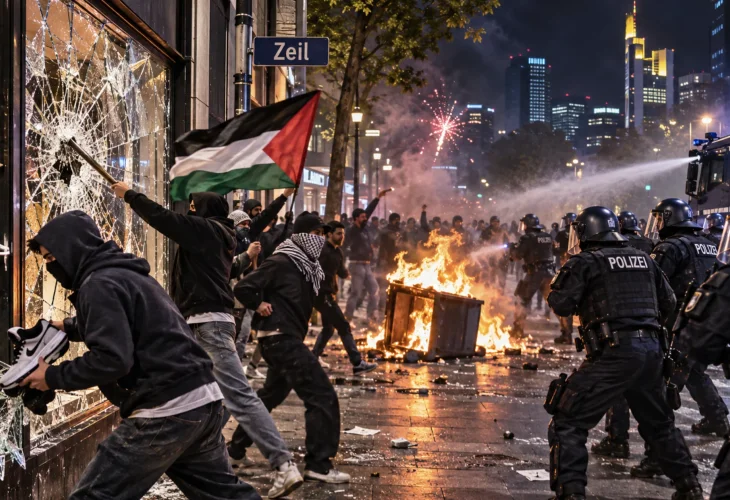 Illustration
A wave of protests sweeping across several European countries in recent weeks reached Germany on Saturday, as demonstrations by young people against the rising cost of living, problems in the education system, and the possible reinstatement of compulsory military service escalated into violent riots. Protests took place in 34 cities, drawing tens of thousands of participants, although organizers had anticipated a turnout of more than 180,000 demonstrators.
Looting and Violent Clashes in Frankfurt
The most serious disturbances occurred in Frankfurt, where more than 1,000 police officers were deployed following widespread looting and destruction along the city's main shopping street. Rioters, some wearing masks and draped in Palestinian flags, smashed storefront windows and broke into businesses. In one particularly alarming incident, a gun store was broken into, prompting police to arrest suspects, recover two firearms taken from the premises, and dispatch a special unit to secure the store.
Violence intensified as rioters hurled stones, bottles, fireworks, and Molotov cocktails at police officers. Trash bins were set ablaze, while security forces responded with water cannons and pepper spray. Police closed the Zeil shopping street and surrounding squares, deploying a helicopter, drones, and armored vehicles in an effort to restore order. Despite the heavy police presence, small groups of rioters continued moving through the streets, complicating efforts to contain the unrest.
Unrest Spreads to Cologne, Stuttgart, and Hamburg
Violent disturbances were also reported in several other German cities. In Cologne, a police officer was injured, hundreds of people were stopped for identity checks, and at least five suspects were arrested. Approximately 200 people gathered near the city's cathedral, where bottles and bicycles were thrown.
In Stuttgart, where an estimated 6,000 people participated in demonstrations, trash bins were set on fire, while additional disturbances were reported in Hamburg. In Berlin, shop owners took precautionary measures to protect their storefront windows amid fears that the unrest could lead to further looting and property damage.
German Officials Vow to Hold Rioters Accountable
Hesse's Interior Minister, Roman Poseck, claimed that approximately 100 far-left extremists had exploited the demonstrations to launch attacks against police officers. Hesse's Minister-President, Boris Rhein, pledged to investigate the violence and ensure that those responsible would be held accountable.
The unrest comes amid growing dissatisfaction among young Europeans over economic pressures, education policies, and concerns about the possible return of mandatory military service. What began as demonstrations over these issues escalated into violent confrontations in several German cities, prompting a major police response and renewed concerns about public safety.

