

Israel News
IDF Installs Anti-Drone Nets at Gaza Outposts Amid Growing Threat
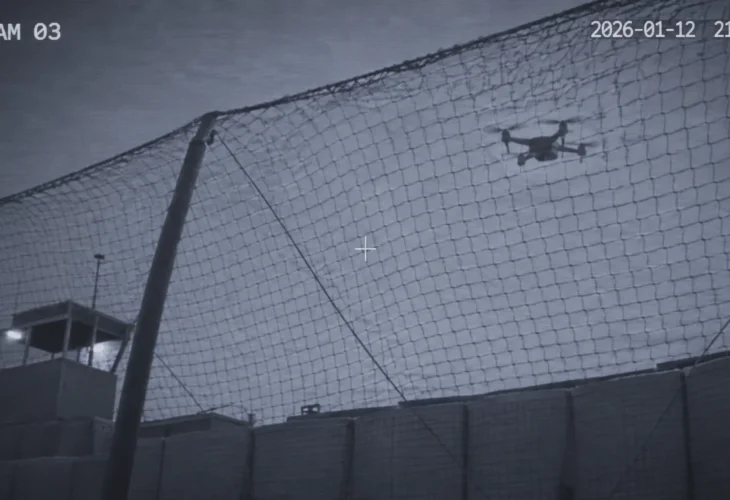
The IDF has begun installing protective nets at Gaza outposts amid concerns that Hamas could acquire advanced fiber-optic drones already used in Lebanon.
 Illustration
The IDF has begun installing special protective netting at military outposts beyond the Gaza border fence to defend against potential drone attacks. The new defensive measures are being introduced amid growing concerns that terrorist organizations in Gaza could acquire advanced drone technology already used in Lebanon.
According to a report published Monday night by Israel's Channel 12 News, the protective nets have initially been installed at three military outposts as part of a pilot program. The IDF expects to complete installation at all its outposts beyond the Gaza border fence within the coming months.
The initiative is primarily aimed at countering the threat posed by fiber-optic drones, which emerged as a significant weapon during the fighting in Lebanon.
Unlike conventional drones that rely on radio signals, fiber-optic drones are controlled through a physical cable, making them resistant to traditional electronic jamming systems.
The IDF's Southern Command is concerned that similar technology could eventually reach terrorist organizations in Gaza, particularly because these drones are relatively easy to manufacture and smuggle.
However, the military has emphasized that no use of fiber-optic drones has been detected in the Gaza Strip so far.
Alongside these defensive preparations, the IDF is monitoring Hamas's efforts to expand its drone capabilities. According to Israeli defense assessments, the terrorist organization is accumulating unmanned aerial vehicles that could be converted into weapons for future attacks.
Smuggling efforts are reportedly concentrated along the border with Egypt. Israeli military officials estimate that dozens of explosive drones have been smuggled into Gaza in recent months.
Meanwhile, the threat posed by advanced drones continues to develop along Israel's northern border.
Approximately a month ago, the Lebanese newspaper Al-Modon reported that Hezbollah was working to rebuild its military capabilities amid internal assessments that another war with Israel could break out in the near future.
According to the report, Hezbollah is investing in the development of first-person view (FPV) drones, which allow operators to control the aircraft using live video transmitted from an onboard camera.
The drones are currently capable of carrying approximately 5.5 pounds (2.5 kilograms) of explosives. Hezbollah is reportedly working to increase their payload capacity to between 9 and 13 pounds (4 to 6 kilograms).
The organization has also reportedly extended the operating range of the fiber-optic cables used to control its drones by more than six miles (10 kilometers), allowing them to strike targets from greater distances.
According to Al-Modon, Hezbollah is equipping some of these drones with powerful explosives, nails, and metal balls, intended to increase casualties in potential attacks against Israeli forces.
The IDF's latest defensive measures in Gaza reflect growing concerns over the spread of drone warfare technology and the possibility that tactics developed on Israel's northern front could eventually be used by terrorist organizations in the south.

