

Relationships
Struggling to Find Your Match? A Jewish Matchmaker Explains Why
After helping thousands of Jewish singles, matchmaker Menachem Yisrael shares four steps to finding the right partner and building a lasting marriage.
- Michal Ariel
- | Updated
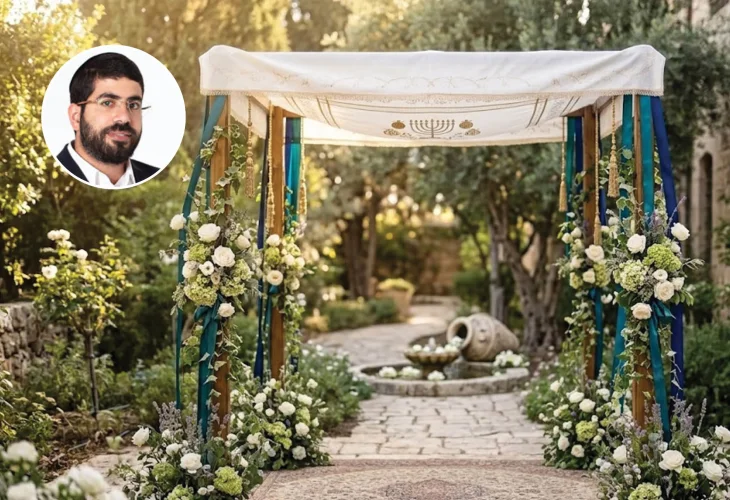
Why do so many men and women reach their 30s and even their 40s without finding the right person to marry? Is it simply a matter of not meeting the right match, or could something deeper be holding them back?
This question troubled Menachem Yisrael for years.
As director of Besorot Tovot, a Jewish matchmaking organization that has helped thousands of single and divorced men and women in the Haredi community, Yisrael has witnessed firsthand the challenges of finding a spouse.
“For years I was troubled by one question: Why are there so many single men and women who reach their 30s, and even their 40s, without finding their match?” he explains.
His journey into matchmaking began almost by accident.
“In the year after my own wedding, I tried to arrange a few matches, and from then on I felt this was my mission,” he recalls. “I worked in the field quite a bit, until I decided to establish an organization that provides an answer for everyone, out of a deep desire to help as much as possible and an understanding that the situation on the ground is anything but simple.”
Initially, Yisrael focused primarily on helping people find a spouse for a second marriage, including many older individuals facing particularly difficult circumstances. But over the past decade, his approach has changed significantly.
“I came to understand that something here is being missed,” he says. “How is it possible that there are single men and women who reach much older ages and go through hundreds of dates that lead nowhere? I concluded that there is something deeper here that needs to be recognized and understood, and that something is inner readiness.”
He also began noticing a connection between people who struggled to find a spouse and couples whose marriages eventually ended in divorce.
“I encountered many cases of couples who married and later divorced, and I noticed a common denominator between the difficulty of getting married and the difficulty of staying married. Both come from the same root of a lack of readiness.”
According to Yisrael, even people with excellent character traits and a genuine desire to build a successful marriage can struggle if they enter the process without understanding themselves or what a healthy relationship requires.
“They are thrown into the water without understanding where they are going,” he explains. “If the match doesn't move forward, they may stay stuck in the same place for years without progressing. And if they do marry, they often run into fundamental conflicts that lead to heartbreak.”
Why Is Finding a Spouse More Complicated Today?
Determined to address what he saw as a growing problem, Yisrael spent the past decade developing a program called Four Steps to the Chuppah, combining teachings from Chazal (the Jewish Sages), insights into emotional well-being, and psychological principles.
Through this approach, he says he has guided thousands of young men and women toward building their own homes and preparing for marriage.
But previous generations managed to get married without professional guidance. Why does he believe it has become so important today?
“The situation today is completely different from previous generations,” Yisrael explains.
For one thing, he points out that many singles begin dating at an older age than they once did.
“The older a person is, the more opinions of their own they have, and it's no longer a case of Mom and Dad marrying them off.”
Technology has also transformed the dating experience, introducing an almost endless opportunity to compare potential partners.
“We live in a reality where technology influences us from every possible direction, creating endless room for comparisons. That, of course, is a major obstacle to moving forward.”
However, Yisrael emphasizes that these challenges don't mean finding a spouse is impossible. Rather, he believes they highlight the importance of entering the dating process with greater preparation.
He compares the situation to learning to ride a bicycle without understanding the road signs. Without proper guidance, a person risks making mistakes that could have been avoided.
The stakes are even higher, he argues, when making one of life's most significant decisions.
“Especially when you're about to make the most important decision of your life, and more than anything you want it to last and for the home not to fall apart, Heaven forbid.”
Yisrael believes the increasing number of single and divorced individuals he encounters demonstrates the need for a different approach.
“Some people claim we need more matchmakers for older singles. I say that adding matchmakers is always good, but instead of building a hospital under the bridge for ages 30 to 40, it would be better to build the bridge properly in the first place, and bring people into the dating world better prepared.”
But is the goal simply to help people get married faster, or to help them understand what they're looking for?
“There is one goal, and everything else is a means to reach it,” he explains. “The goal is to give young men and women the tools to build a home the right way, and when that happens, the process will naturally be faster, because a large part of the delays come from trying to build the home the wrong way and focusing on the wrong things.”
Four Steps to Preparing for a Healthy Marriage
Through years of meeting singles who had experienced repeated disappointments, Yisrael came to believe that one of the most important steps toward finding a spouse is understanding yourself.
“In my role as director of a matchmaking organization, I've sat in meetings with quite a few singles who had already reached the age of 40,” he recalls.
He remembers hearing their genuine frustration after unsuccessful dates, unsuitable suggestions, and introductions that seemed completely wrong for them.
But rather than focusing exclusively on the potential partners or matchmakers involved, he began encouraging people to look inward.
“Before you turn your gaze outward and examine the suggestion, you have to turn your gaze inward and understand who you are and how you're entering this process.”
His program focuses on four stages of preparation.
The first stage is building a healthy relationship with yourself.
Yisrael draws on a fundamental Jewish belief about marriage: the Talmud teaches that 40 days before a child is formed, a bat kol (heavenly voice) announces that a particular woman is destined for a particular man.
“As people of faith, we know with absolute certainty that each of us has a match,” he says.
But he believes that preparing to receive that blessing begins with developing a healthier relationship with oneself.
“Before you start building the second floor of the home with your intended match, you have to make sure the first floor exists and that a person's relationship with himself is sound.”
He connects this idea to the Torah's commandment, “Love your neighbor as yourself” (Leviticus 19:18).
“In order to receive love from another, we first have to establish inner love.”
For example, Yisrael describes a young woman who struggles with self-worth and self-acceptance because of her personal circumstances.
He believes these difficulties may affect how she approaches relationships, potentially leading to unhealthy dependence on a partner or an overwhelming need for reassurance.
Such patterns, he explains, can create difficulties during dating or place significant strain on a marriage.
“These are only small examples of the fact that when there's no first floor, there's no chance of a proper, healthy relationship.”
In his view, that foundation rests on a person's beliefs about themselves, their value, and what they deserve.
“Because in the end, reality is the outgrowth of what happens in our world of thought.”
The second stage is understanding your personality and identifying what you truly need in a spouse.
Once a person has strengthened their relationship with themselves, Yisrael encourages them to explore their individual personality patterns, values, and needs.
This involves developing a clearer personal profile and using that understanding to identify the qualities that would make someone a suitable marriage partner.
“Because in order to find your spouse, you have to set a destination,” he explains. “And if that destination doesn't exist, we may think we're driving forward and making progress, when in fact we're only getting further away.”
The third stage involves recognizing and releasing emotional barriers.
Previous disappointments, broken engagements, or unsuccessful relationships can sometimes leave people struggling to trust a potential partner.
Yisrael believes that identifying these emotional barriers and working through them is an important part of preparing for a healthy relationship.
“This is a process of release and inner healing,” he explains.
The fourth stage is learning how to build a genuine connection.
Yisrael calls this stage “the bridge to connection.”
It focuses on communication, developing emotional closeness, and understanding how to maintain a relationship after the initial dating process.
“This is the key to a whole life of connection and true partnership.”
From Personal Growth to Finding the Right Match
For Yisrael, some of the most meaningful moments come when people share how his approach has influenced their lives.
His guidance is available through a digital course, distributed by disc or email, as well as through books he has written.
One of those books, The Meeting, offers practical advice for people preparing to date or already navigating the matchmaking process.
It includes stories, insights, guidance on recognizing relationship red flags, and advice about making important decisions. It also addresses the period between engagement and marriage and offers guidance for parents during the first year.
Another book, The Secret Power, explores additional ideas related to emotional healing.
What particularly moves Yisrael is hearing that people have benefited from the process even before finding a spouse.
“I'm not only moved by the fruits and the results, but also by people who mention that even before they managed to finalize a match, the process they went through affected other circles in their lives.”
For example, someone who develops greater self-worth may notice improvements in their professional life and friendships. Similarly, learning healthier communication skills can strengthen relationships well beyond the dating world.
But Yisrael also shares several stories of people who, he says, eventually found their match after working through the program.
One involved a divorced man who had spent years searching unsuccessfully for a second wife.
After experiencing significant pain and disappointment in his first marriage, he struggled with loneliness and repeated setbacks.
“Finally, out of a deep sense of loneliness, he purchased my classes and decided to work on them and apply them one by one,” Yisrael recalls.
The man began contacting him regularly by email, asking questions and seeking guidance as he worked through the material.
Over time, Yisrael says, he made significant changes in his life.
Eventually, an invitation arrived announcing his wedding.
Another story involved a 30-year-old woman whose engagement had ended in heartbreak.
After hearing about the course, she decided to begin the process of personal growth and preparation.
Eventually, she became engaged again.
But there was an unexpected twist.
“Amazingly, it turned out that the young man was exactly the one whose engagement to her had been broken off five years earlier.”
Yisrael believes that the years apart had allowed both individuals to change and grow.
“Hashem willed it and arranged events in precisely this way, so that both he and she would make a change.”
A third story involved a 27-year-old woman who had experienced considerable difficulties in her personal life.
Feeling discouraged by her experiences, she was considering taking an extended break from everything, traveling abroad, and disappearing for a while.
With just a month remaining before her planned departure, she decided to purchase Yisrael's course.
Two months later, she contacted him to arrange a consultation.
She had begun dating someone, and the relationship seemed promising, but several concerns were troubling her.
After discussing them, Yisrael felt that her worries were rooted in fear rather than genuine problems with the relationship.
Two months later, she sent him a message.
“We're engaged.”
“When the wedding invitation arrived, I couldn't stop smiling,” he recalls.
He later discovered that the groom had also completed his program.
“Today, baruch Hashem (thank God), they are happily married. Everything precisely arranged, and at exactly the right time for them.”
The Most Important Advice for Anyone Entering the Dating World
After years of helping people navigate the challenges of dating and marriage, what is the single most important piece of advice Yisrael would give someone just beginning the process?
His answer is simple: approach dating from a place of hope rather than fear.
“The most important tip for everyone is to make sure you come to your dates from a positive place, and not from a place of frustration and fear.”
He believes that unresolved disappointment, insecurity, or emotional barriers can influence how people approach potential relationships.
“Because in the end, what we spread around us is what we have, and if we feel that we're coming from despair and from blocks, it's important to go through a process that allows us to heal, to release, and to come from a place of choice.”
At the same time, he encourages singles to think carefully and honestly about the qualities they are seeking in a future spouse.
What kind of relationship do they want to build? What values matter most to them? And what kind of person would truly complement their personality and needs?
“The more genuine and optimistic you are with yourself, the greater the chance that you'll easily reach the good relationship you dream of.”
For Yisrael, preparing for marriage isn't simply about increasing the chances of finding someone. It's about developing the emotional awareness, communication skills, and personal foundation needed to build a lasting relationship.
“I wish everyone siyata diShmaya and great success with all my heart,” he concludes, “and may we merit this coming year much good news, salvation, and joy.”

