

Facts in Judaism
Bar Mitzvah Preparation Guide: Everything Parents Need to Know
From wearing tefillin and receiving an aliyah to planning the celebration, discover the essential traditions, customs, and practical steps to prepare for a meaningful Bar Mitzvah
- Naama Green
- | Updated
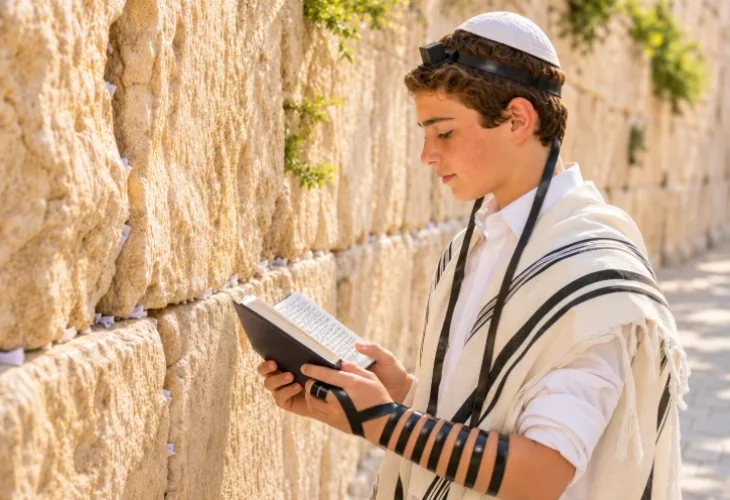
As a boy approaches his 13th birthday, excitement begins to build around his upcoming Bar Mitzvah. Alongside preparations for the celebration, parents often have practical questions about the Hebrew date, wearing tefillin, being called up to the Torah, and the customs surrounding this important milestone.
A Bar Mitzvah marks the moment a Jewish boy reaches the age of 13 according to the Hebrew calendar and becomes an adult under Jewish law. Until this age, his parents are responsible for his religious education and observance. Once he turns 13, he becomes personally obligated to fulfill the Torah's mitzvot, including wearing tefillin, reciting the Shema, and observing Shabbat.
From this point onward, he assumes personal responsibility for his actions, can be counted toward a minyan, and may fulfill certain religious obligations on behalf of others. The occasion is traditionally marked by several meaningful events, including the first wearing of tefillin, an aliyah to the Torah, and a celebratory seudat mitzvah.
Wearing Tefillin for the First Time
One of the most significant Bar Mitzvah traditions is learning to wear tefillin. Although a boy becomes obligated in the mitzvah upon reaching his 13th Hebrew birthday, many communities begin preparing him beforehand, with the exact timing varying according to family and community custom.
During this preparation period, he learns how to put on the tefillin correctly, recite the appropriate blessings, and handle them with the respect and care they require. This gives him an opportunity to become familiar with the mitzvah before assuming full responsibility for its observance.
Many families choose to celebrate this milestone at the Western Wall in Jerusalem. According to figures cited by the Western Wall Heritage Foundation, approximately 5,000 Bar Mitzvah tefillin and Torah-reading ceremonies take place at the Western Wall each year. However, there is no requirement to hold the ceremony there. A boy can begin wearing tefillin at his local synagogue or even at home.
Being Called Up to the Torah
Another central Bar Mitzvah tradition is the boy's first aliyah to the Torah after reaching the age of 13. The aliyah may take place on any appropriate Torah-reading day, including Monday, Thursday, Shabbat, or certain holidays and fast days.
In many communities, the Bar Mitzvah boy prepares to read his assigned portion himself. However, this is not obligatory. The synagogue's designated Torah reader may read the portion while the boy recites the blessings before and after his aliyah.
In numerous communities, it is customary to shower the Bar Mitzvah boy with candies following his aliyah, adding an especially joyful touch to the occasion.
The Blessing of Baruch Shepetarani
Following the boy's aliyah, many fathers recite a special blessing: Baruch Shepetarani Me'onsho Shel Zeh — "Blessed is He who has released me from responsibility for this one's punishment."
The blessing acknowledges the transition in religious responsibility that takes place when a son reaches the age of mitzvot. In many communities, it is customary to recite this blessing without mentioning Hashem's name or kingship.
Celebrating with a Seudat Mitzvah
A Bar Mitzvah is also traditionally celebrated with a seudat mitzvah, a festive meal honoring the boy's acceptance of his new religious responsibilities. In many communities, the Bar Mitzvah boy delivers a short Torah discourse reflecting on the weekly Torah portion or the significance of becoming obligated in mitzvot.
One particularly lively custom involves guests interrupting the boy's speech with enthusiastic singing, sometimes before he has had a chance to finish. Traditionally, this practice is intended to spare embarrassment to boys who may find it difficult to prepare or deliver a formal Torah discourse. In some communities, the guests interrupt the speech three times, after which the Bar Mitzvah boy good-naturedly abandons his attempt to continue.
Five Important Steps to Prepare for a Bar Mitzvah
1. Confirm the Hebrew date. Check a reliable Hebrew calendar to determine when your son turns 13. Since Jewish birthdays are determined according to the Hebrew calendar, the date may differ from his birthday on the secular calendar. If he was born close to sunset or his birthday involves a Hebrew leap year, consult a rabbi before finalizing the arrangements.
2. Purchase reliable tefillin. Buy tefillin from a trustworthy source with recognized halachic supervision. A rabbi can help you select a suitable pair that meets the family's religious customs and requirements.
3. Arrange appropriate guidance. Find an experienced Bar Mitzvah teacher who can patiently guide your son through wearing tefillin, reciting the blessings, and preparing for his aliyah. Beyond the practical details, allow time for questions and meaningful discussions about the spiritual significance of the occasion.
4. Coordinate with the synagogue. Contact the synagogue's gabbai well in advance to arrange the aliyah and confirm which Torah portion your son should prepare. Once the religious arrangements are in place, you can finalize the location and details of the celebration.
5. Prepare a meaningful Bar Mitzvah speech. Help your son choose a brief Torah insight or message that he genuinely understands and connects with. Rather than focusing solely on delivering an impressive presentation, encourage him to express his own thoughts. Alongside the Torah message, he can thank his parents and family and share his hopes for continued growth in Torah study and good deeds.
A Bar Mitzvah is far more than a birthday celebration. It marks the beginning of a new stage of Jewish life, one in which a young boy begins assuming personal responsibility for his relationship with Hashem, his observance of mitzvot, and his contribution to the Jewish community. With thoughtful preparation, the occasion can become a meaningful foundation for a lifetime of spiritual growth.

