

Personal Stories
Teen Injured in Galilee Explosion: A Family’s Story of Faith, Miracles, and Hope
Three weeks after a deadly explosion during a school trip left 15-year-old Roi Cohen with a severe eye injury, his family shares their harrowing experience, remarkable stories of survival, and an unexpected mezuzah discovery that strengthened their faith
- Moriah Luz
- | Updated
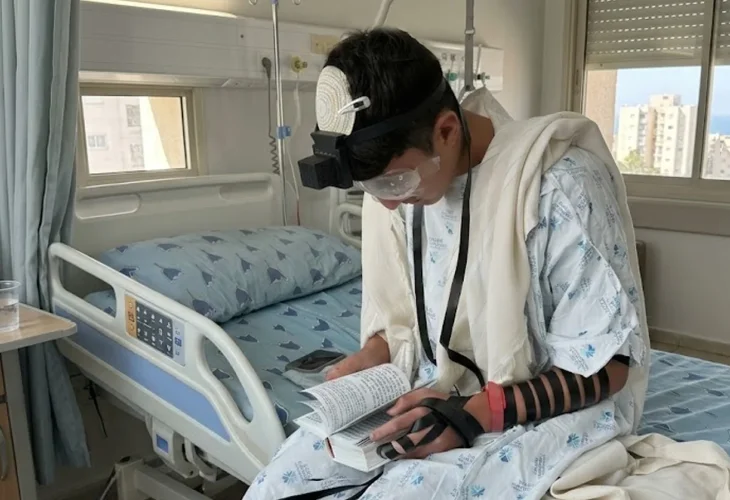 Roi in the hospital
“Next stop: Hutzot HaMifratz.” The train conductor’s announcement provides the backdrop to our conversation. Hila Cohen speaks softly, her husband, Yair, sitting beside her. Whenever memories overwhelm her, he gently takes over, continuing where she leaves off. Nearby, their 15-year-old son, Roi, dozes with a bandage covering his eye.
Three weeks have passed since an unexploded munition detonated in the Upper Galilee during a school trip organized by the ORT Ma’alot religious high school. Roi was standing just two meters from the explosion. Shrapnel struck several parts of his body, but the most serious injury was to his left eye socket, where a half-centimeter metal fragment became lodged. As we speak, the family is traveling to Ichilov Hospital in Tel Aviv for an important examination, praying for good news.
The explosion occurred while the students were praying Mincha, the afternoon prayer. Moments before they reached the concluding Aleinu prayer, a tremendous blast sent students and teachers flying in every direction. “Roi was thrown forward onto his face,” Hila recalls. “He saw everyone starting to run. He tried to get up, but fell again.” Several staff members were injured, some seriously. With remarkable presence of mind, the students took charge of the emergency alongside one of their injured rabbis. They removed their belts and tzitzit, improvised tourniquets, and worked to stop their friends’ and teachers’ bleeding.
“You’re Alive”
Roi had set out on the trip in high spirits. At the beginning of the school year, his yeshiva had introduced a new program in which students in grades eight through ten would hike a different section of the Israel National Trail each month. The outings were conducted without personal cellphones. Only a small group of students, designated as the photography and social media team, received special permission to carry phones. Those devices proved invaluable after the explosion, enabling the students to summon emergency medical teams, provide detailed reports from the scene, and explain that helicopters were urgently needed.
“At around three o’clock, a teacher at the school where I work forwarded a message to our staff group,” Hila recalls, her voice trembling. “It said there had been a disaster at the Ramim Ridge during a school trip involving students and teachers, and that there were casualties, including injuries and fatalities. At first, I didn’t make the connection.” At precisely that time, her eldest daughter was traveling by train when she overheard two women discussing the disaster. Familiar with the area, she immediately realized it was Roi’s school trip. She began calling her brother repeatedly until another student finally answered his phone. The family later discovered that this was the boy who had been working to keep Roi conscious. “She heard Roi murmuring, ‘Hang up, hang up,’” Hila says. “I think he was trying to protect her because he didn’t want her to panic.”
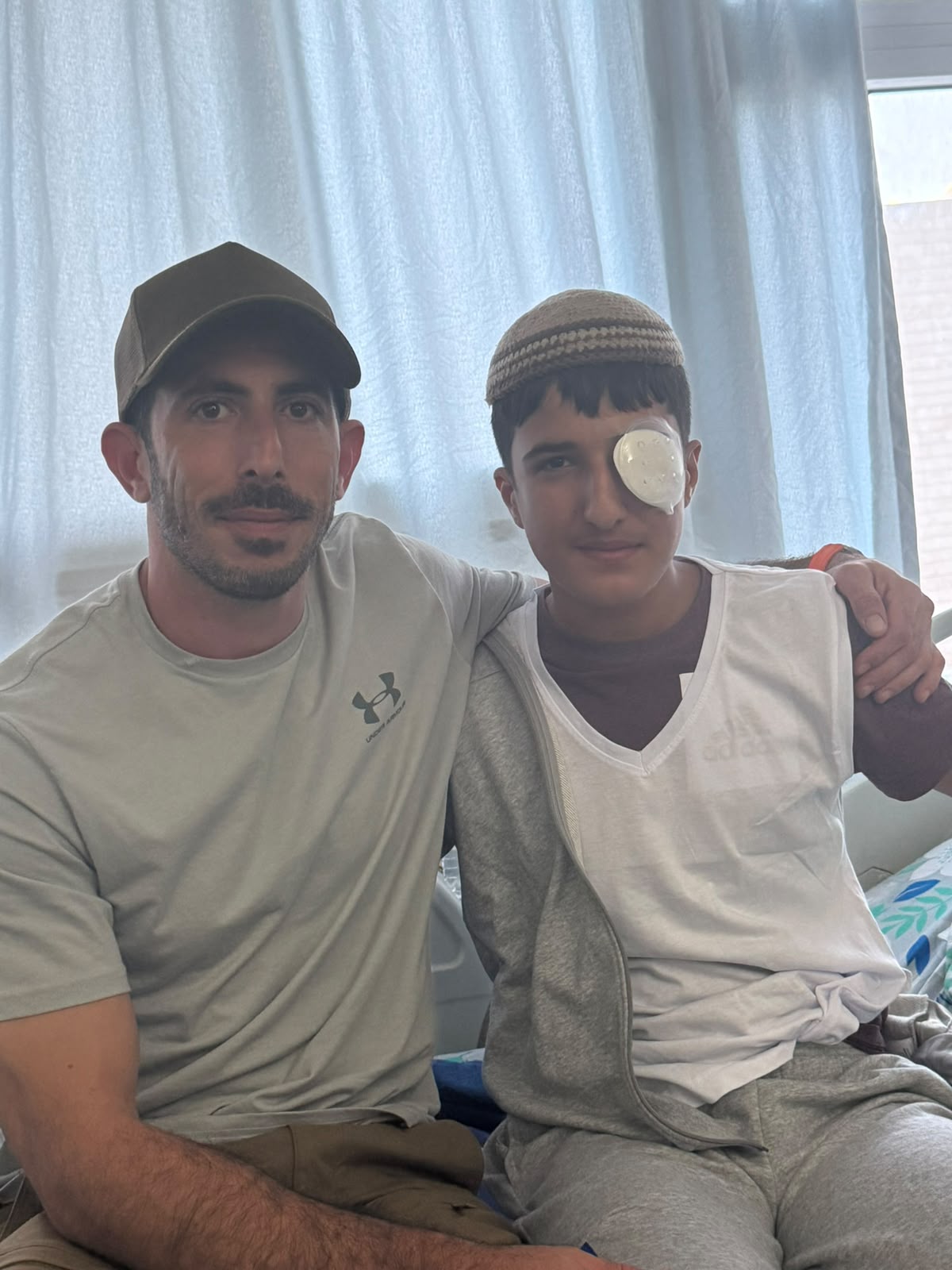 Roi with his boxing coach
The friend passed the phone to a soldier, who explained Roi’s condition. “He told her that Roi was injured and occasionally losing consciousness, but, thank God, he was alive.” Roi’s sister asked for a brief video call, which she recorded and sent to her parents. Hila remains profoundly grateful for that recording, which brought her some reassurance during the agonizing hours that followed. The injured students and teachers had been evacuated to different hospitals, and amid the confusion, it took considerable time before Hila, with the help of kind strangers, finally discovered where her son had been taken.
Her husband, Yair, was abroad on a business trip at the time. When Hila reached the hospital, she saw Roi being wheeled out of a CT scan, visibly injured and groaning in pain. “I said to him, ‘Roi, you’re alive!’ And he murmured, ‘I’m worried about Wilensky. I saw him lying there. I want them to put me to sleep so I won’t remember anything or feel anything.’ He was in terrible pain.” Roi was referring to his friend Yair Wilensky, who tragically lost his life in the explosion. The two boys had been close. Hila recalls that the previous year, when Yair broke his leg, Roi had carried him on his shoulders to help him get from place to place.
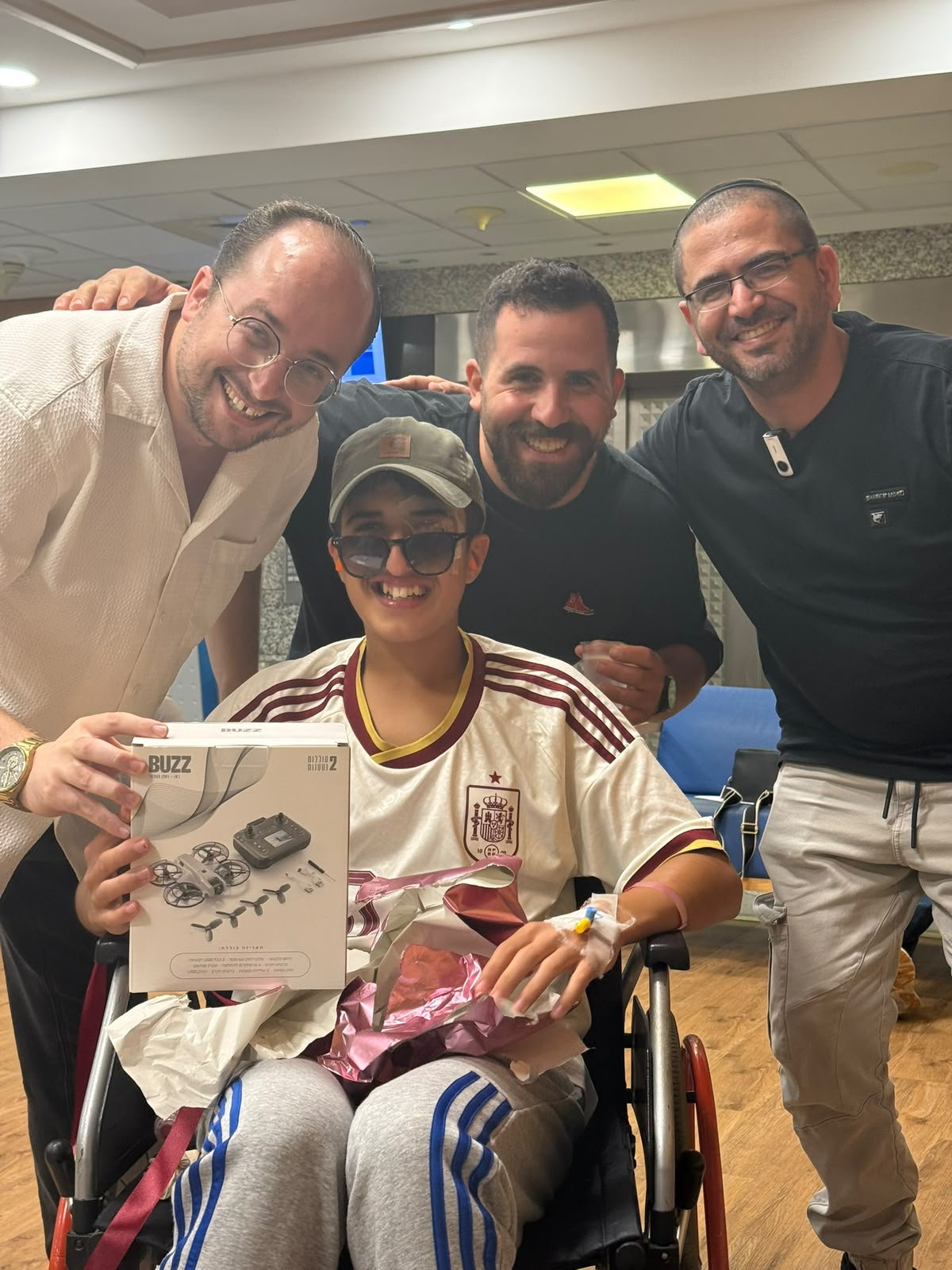 Roi with visitors - his father's friends from work
“There Were So Many Miracles”
“Should we talk about the miracles?” Hila asks. Discussing her son’s injuries is painful, particularly because their long-term consequences remain uncertain. The loss of his friend is still devastatingly fresh. Yet as Hila begins recounting the extraordinary circumstances surrounding the explosion, her voice fills with gratitude. “There were so many miracles,” she says.
The explosive device had been unknowingly placed inside one of the students’ backpacks at the beginning of the trip. It remained there for hours. Shortly before the explosion, the students stopped for a meal, set up portable gas stoves, and cooked their food. “If it had exploded while they were sitting on the ground, they could all have suffered severe head injuries,” Hila explains.
After the meal, the group prepared to board their bus. At the last moment, however, they decided to pray Mincha before departing. Hila shudders at the thought of what might have happened had the explosion occurred inside the bus. As the students were praying, a vehicle approached the area. Some of the boys moved to the other side of the road to allow it to pass. “Those boys were spared, which was an enormous miracle,” she says. “And there were other miracles, too.”
One student was struck by a fragment that penetrated his head, caused bleeding, and exited without injuring his brain. Another had decided, just moments earlier, to turn his cap around, and a piece of shrapnel became lodged in its brim. In another case, a fragment grazed a student's spinal cord. “Everything was so close to becoming much worse,” Hila says. “These were truly acts of Hashem’s kindness.” Even the fragment that severely damaged Roi’s eye could have caused far greater injury. “If it had traveled just a little farther, it could have entered his brain. We would have been facing an entirely different situation, God forbid.”
You describe tremendous pain alongside extraordinary miracles, yet I don’t hear anger or blame in your voice. Do you feel any anger about what happened?
“First and foremost, we know that everything is in Heaven’s hands,” Hila answers without hesitation. “It was a decree, and this is what was meant to happen.” The explosion occurred just days after Chol Hamoed Sukkot, when tens of thousands of visitors, including families with babies and young children, had hiked through the Naftali Mountains. “Approximately 25,000 people had been hiking there, and nothing happened,” she notes.
She also emphasizes that the school had obtained the necessary permits and taken extensive precautions to ensure the students’ safety. “Roi has a particular enzyme deficiency. We mentioned it on his trip authorization form under medical sensitivities, and his rabbi personally called me to ask how it affects him. They were incredibly responsible and careful.” Nevertheless, she says, some circumstances remain beyond human control. “We have no anger toward anyone, God forbid.”
Following the explosion, the IDF’s Yahalom combat engineering unit searched the area and discovered dozens of unexploded explosive devices. “I kept thinking about what could have happened if those had detonated as well,” Hila says. “All we can do is stand before Hashem and say thank You.”
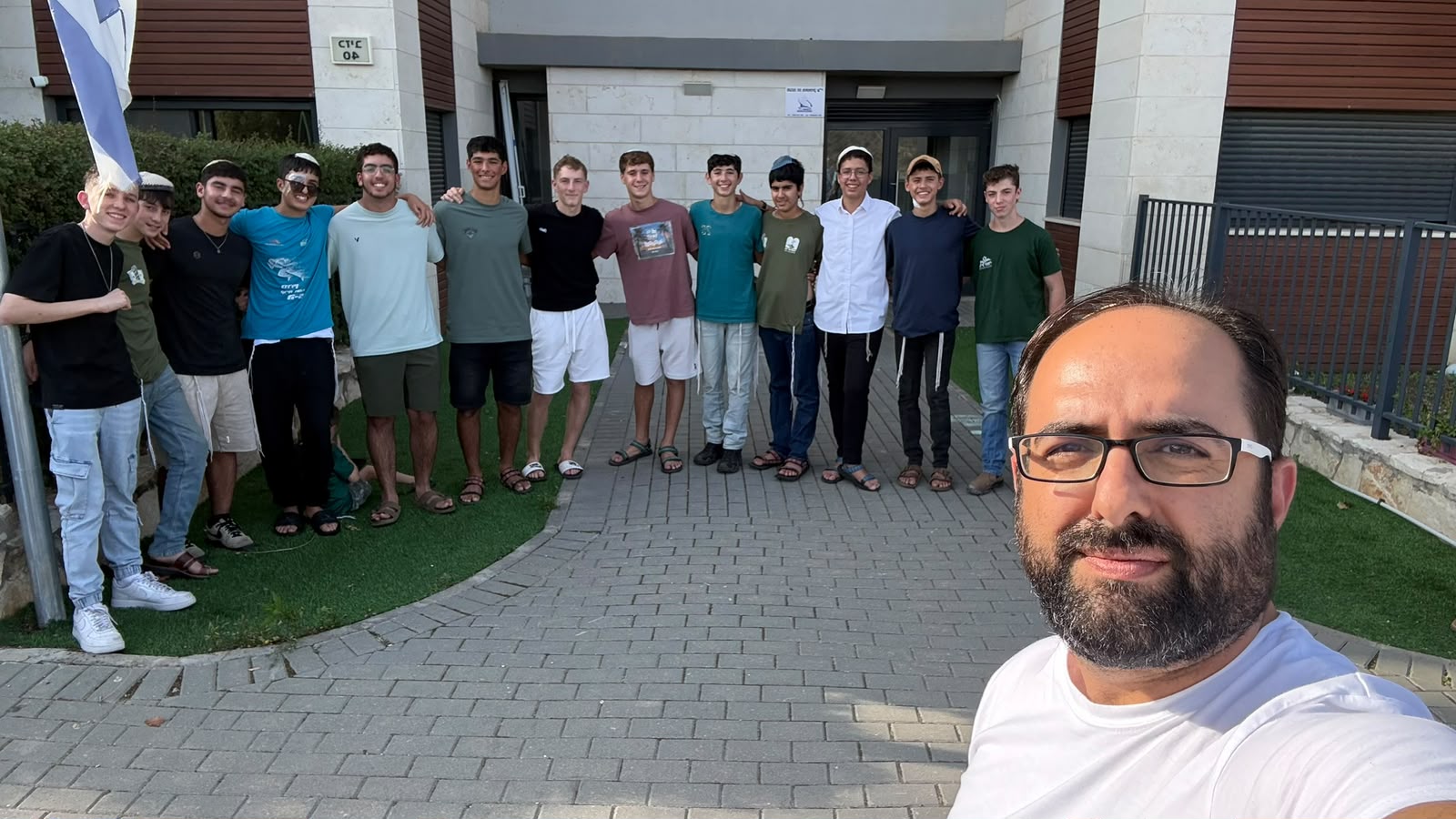 The welcome his friends gave him when he returned home for the first time
A Startling Discovery
A few days before our conversation, Yair published a social media post describing a discovery that deeply moved the family. “I have a sister who is Chabad, and from the very beginning she encouraged us to have our tefillin and mezuzot checked,” Hila explains. Between Roi’s medical treatments and the rabbi’s busy schedule, however, the inspection was repeatedly postponed. A week earlier, when Roi was finally discharged home for the first time, the couple contacted the rabbi responsible for checking the religious items. “He told us he would examine them immediately and have everything ready by the time we arrived.”
A few hours later, Yair received an urgent phone call. When he arrived, the rabbi unfolded the parchment from the mezuzah at the entrance to their home and pointed to the Hebrew word eineichem—“your eyes.” The letter ayin, which is also the Hebrew word for “eye,” had been partially erased and split through the middle. “The rabbi gave us a replacement mezuzah, and literally a minute before Shabbat, we put up the new one,” Hila recalls.
The couple decided to share their experience publicly to raise awareness of the importance of having mezuzot checked. Their story prompted another family, whose son had suffered a head injury in the explosion, to have his tefillin inspected. “He’s 15 years old, and his parents bought him beautiful, high-quality tefillin two years ago,” Hila says. “His mother sent me a message in disbelief, telling me that the tefillin worn on his head had been found to be invalid.” Hila speaks about these discoveries with hope. “People say that when you correct something in the tefillin or mezuzah, you can also bring about a correction in the body and soul.”
“We Fall, and We Rise Again”
Since the explosion, Roi has undergone three eye surgeries. He also suffered an injury to his nose and a concussion. “At the moment, he cannot see through the injured eye, apart from detecting light,” Hila explains. “We are hoping for more miracles and praying that his vision will return. And we thank Hashem that his right eye can see.”
During the first week after his injury, Roi was hospitalized in Nahariya. Hila is deeply grateful for the compassionate care he received from the medical staff and their willingness to accommodate the many friends who came to visit him. She speaks warmly about the prayers and messages of support that poured in from across Israel and around the world, as well as the extraordinary kindness shown by their extended family, the Ma’alot community, colleagues, Roi’s classmates, and the yeshiva staff.
“His friends surrounded him with love and stayed by his side for hours,” she recalls. “Because he was constantly going from one surgery to another, Roi still hasn’t had the opportunity to receive psychological treatment to help him process what happened. But he had that sense of togetherness.”
Following a recommendation from Rabbi Elimelech Firer, the family transferred Roi to Ichilov Hospital for continued treatment. Their time there, Hila says, revealed the extraordinary compassion and unity of the Jewish people. “Roi’s friends traveled all the way from the north to Tel Aviv to visit him. Some were still injured themselves, and some even arrived in wheelchairs. They brought such joy and energy into the hospital corridors. They created a wonderful atmosphere and opened everyone’s hearts. We are raising a generation of heroes.”
As our conversation draws to a close, we turn to a joyful milestone unfolding alongside the family's difficult journey: the engagement of Roi’s eldest sister just one week earlier. “We had been completely focused on surviving and making sure Roi received the best possible care for his eye, without overlooking anything,” Hila says. “The engagement brought us a renewed sense of possibility, happiness, and hope. Thank God, this is who we are as a people. We fall, and we rise again.”

