

Jewish Law
Before You Open the Siddur: 10 Laws on Prayer Preparation
Discover important Jewish laws and customs for preparing for prayer, from giving tzedakah and washing your hands to praying with a minyan and entering the synagogue with reverence
- Yonatan HaLevi
- | Updated
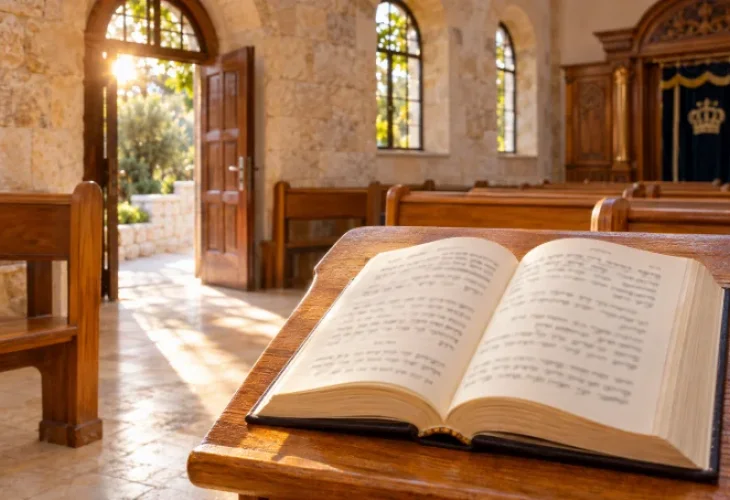
We can spend years praying every day without realizing that there are important guidelines governing how we prepare to stand before Hashem. Did you know, for example, that it is recommended to give charity before prayer, or that one should pause briefly at the entrance to the synagogue before stepping inside?
The laws of preparing for prayer extend beyond the words we recite. They address our clothing, personal cleanliness, relationships with others, and even the manner in which we approach the synagogue. Following are ten important teachings from Chapter 12 of the Kitzur Shulchan Aruch that can help bring greater meaning and reverence to our daily prayers.
1. Dress With Respect for Prayer
The verse “Prepare to meet your God, O Israel” (Amos 4:12) teaches us that prayer requires appropriate preparation, including dressing respectfully. Just as we would take care with our appearance before meeting an important dignitary, we should approach prayer with clothing befitting the privilege of standing before Hashem (Shabbat 10a).
2. Give Charity and Embrace Love for Fellow Jews
Giving tzedakah before prayer is a meaningful way to prepare ourselves spiritually. This practice is based on the verse, “As for me, through righteousness I shall behold Your face” (Psalms 17:15), which connects acts of righteousness with approaching Hashem.
Before each prayer, we should also consciously accept the mitzvah of “Love your fellow as yourself” (Leviticus 19:18), cultivating genuine love for every Jew. The Kitzur Shulchan Aruch (12:2) explains that love for fellow Jews unites the prayers of the Jewish people. When our prayers are joined together in unity, they become more favorable before Hashem.
3. Attend to Your Physical Needs Before Praying
Before beginning to pray, a person should consider whether they need to use the bathroom. Someone who feels the need to relieve themselves should first attend to that need rather than begin praying or studying Torah.
The Sages derive this principle from the verse, “Guard your steps when you go to the House of God” (Ecclesiastes 4:17), interpreting it as an instruction to attend to one's bodily needs before standing in prayer (Berachot 23a).
4. Can I Pray While Needing the Bathroom?
If someone has already prayed while needing to use the bathroom, the validity of the prayer depends on how urgent the need was. If the person could have comfortably waited for approximately 72 minutes, the prayer remains valid.
However, if the need was so urgent that the person could not have waited that long, the prayer is considered unacceptable. In such a case, the person must relieve themselves and then repeat the prayer (Kitzur Shulchan Aruch 12:3).
5. Wash Your Hands Before Prayer
Before praying, one should wash their hands with water up to the wrists. This requirement applies even to someone who washed their hands upon waking, if they have since touched something unclean or parts of the body that are normally covered and may be sweaty.
The practice reflects the importance of approaching prayer with physical cleanliness and respect (Kitzur Shulchan Aruch 12:5).
6. Make Every Effort to Pray With a Congregation
Praying with a minyan carries special spiritual significance, and a person should make a genuine effort to join communal prayers whenever possible.
The Talmud derives this principle from the verse, “As for me, may my prayer to You, Hashem, be at a favorable time” (Psalms 69:14). The Sages explain that a particularly favorable time for prayer is when the congregation prays together (Berachot 8a).
The Rambam emphasizes this idea, teaching that communal prayer is always heard. Even when sinners are among those praying, Hashem does not reject the prayers of the congregation (Mishneh Torah, Laws of Prayer 8:1).
7. The Synagogue Is Special, Even When Praying Alone
Even when circumstances require a person to pray without a minyan, it is preferable to pray in a synagogue because of the sanctity of the place (Kitzur Shulchan Aruch 12:9).
Furthermore, when two synagogues are available, there is a special merit in walking to the more distant one. The Talmud describes this as sechar pesiot, the spiritual reward earned for the additional steps taken in pursuit of a mitzvah (Sotah 22a). The effort we invest in reaching a place of prayer is itself meaningful.
8. The Special Merit of Being Among the First Ten
Arriving early at the synagogue is more than a matter of punctuality. It carries a unique spiritual reward.
Rabbi Yehoshua ben Levi teaches that a person should make an effort to be among the first ten people to arrive at the synagogue. Even if a hundred others arrive afterward, those among the first ten receive a reward corresponding to them all (Berachot 47b).
This teaching highlights the value of prioritizing communal prayer and approaching it with eagerness rather than treating it as an obligation to be fulfilled at the last moment.
9. Establish a Regular Place for Prayer
The Sages encourage us to designate a regular synagogue for prayer and, whenever possible, a consistent place within that synagogue (Berachot 6b).
Ideally, this place should be near a wall, recalling the verse describing King Hezekiah: “And Hezekiah turned his face toward the wall” (Isaiah 38:2). One should also avoid praying next to a wicked person.
The principle applies at home as well. Someone who prays privately should establish a specific place where they can pray without interruption from other household members (Kitzur Shulchan Aruch 12:10). Having a designated place can help create a sense of consistency, focus, and reverence.
10. Hurry Toward a Mitzvah, but Enter With Reverence
It is a mitzvah to run when going to the synagogue, the study hall, or to perform another mitzvah. This practice reflects our eagerness to serve Hashem and is derived from the verses “Let us pursue the knowledge of Hashem” (Hosea 6:3) and “I shall run along the path of Your commandments” (Psalms 119:32). Running for the purpose of a mitzvah is permitted even on Shabbat.
However, once inside the synagogue or study hall, running is prohibited. Instead, a person should pause briefly upon reaching the entrance, allowing themselves to become mindful of the holiness of the place and the awe appropriate to standing before Hashem.
Before entering, one should recite the verse: “As for me, through Your abundant kindness I shall enter Your house; I shall bow toward Your holy sanctuary in awe of You” (Psalms 5:8).
The Kitzur Shulchan Aruch (12:11) compares reciting this verse to requesting permission to enter. Only then should one proceed inside, walking with dignity and reverence, as though entering the presence of a king.
Ultimately, these ten halachot remind us that prayer begins before we open our siddur. The way we prepare our bodies, conduct ourselves toward others, and approach the synagogue all help shape the experience of standing before Hashem. By bringing greater awareness to these seemingly small details, we can transform familiar daily prayers into more meaningful encounters with the Divine.

