

Health and Nutrition
Can Your Skincare Routine Reduce Dementia Risk?
Emerging research suggests a possible link between skin barrier health, chronic inflammation, and cognitive decline. Scientists are investigating whether moisturizing could help protect the aging brain.
- Shira Priant
- | Updated
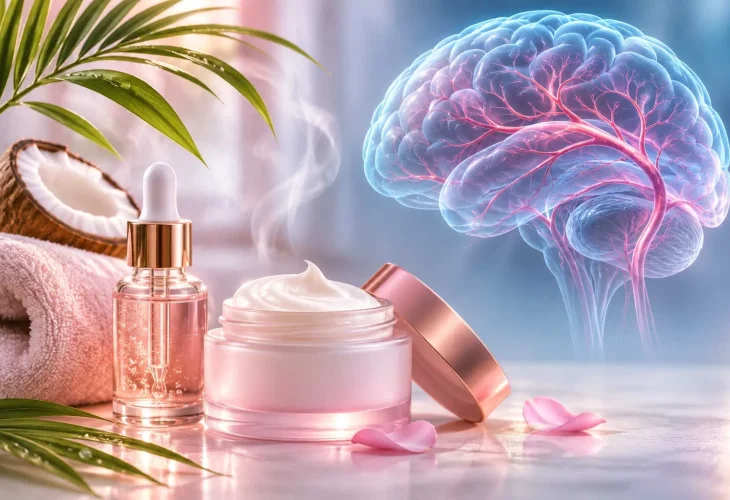
No matter how hard we try to conceal our age, our skin often gives it away. Cosmetics companies make billions promising that the latest cream, serum, or facial oil can help you look younger. But setting aside the desire to turn back the clock, what if caring for your skin could also have implications for your brain health?
It's a question scientists have begun exploring in recent years, as emerging research suggests a possible connection between the skin's protective barrier, chronic inflammation, and cognitive decline.
Dr. Malú Tansey, a neuroscientist and professor of Alzheimer's research at Indiana University School of Medicine, explained to SELF that the body relies on several protective barriers to keep harmful substances from entering the bloodstream. These include defenses in the nose, lungs, and intestines, as well as the skin, one of the body's largest protective barriers. The skin's outermost layer consists largely of dead cells held together by lipids and proteins, creating a protective shield that helps retain moisture while keeping potentially harmful substances out.
Like other parts of the body, however, this barrier can weaken with age, potentially leaving us more vulnerable to environmental threats such as pesticides, pathogens, and air pollution.
Could a Weakened Skin Barrier Be Linked to Dementia?
Damage to the skin's protective barrier can contribute to chronic inflammatory conditions such as eczema and psoriasis. According to Tansey, persistent inflammation in the body may eventually affect the blood-brain barrier, the protective system that regulates which substances can enter the brain. When this barrier becomes compromised, inflammation may develop within the brain itself. This raises an intriguing question: Can the gradual weakening of the skin barrier with age contribute to the type of inflammation associated with dementia?
A research team led by Dr. Katrina Abuabara at the University of California, San Francisco (UCSF), investigated this possibility by studying 237 adults over the age of 50 whose cognitive abilities had been monitored over several years. To assess the strength of each participant's skin barrier, researchers repeatedly applied and removed adhesive tape from the same area of skin, then measured how quickly moisture escaped through the skin.
The results revealed an association between greater moisture loss, indicating a weaker skin barrier, and faster deterioration in verbal memory, including the ability to recall words. Abuabara noted that these changes could be associated with early signs of dementia, but emphasized that the findings remain preliminary. Also, the participants' skin barrier function was measured only once, limiting researchers' ability to determine how changes in skin health might relate to cognitive decline over time.
Additional evidence comes from a large dataset involving approximately eight million people. According to Abuabara, older adults with active moderate-to-severe eczema were found to have approximately a 20% higher risk of developing dementia.
Does Poor Skin Health Cause Cognitive Decline?
Despite these findings, experts caution against assuming that skin problems directly cause dementia. Dr. Bruce Brod, a dermatologist at the University of Pennsylvania, explained that the observed associations may reflect shared risk factors rather than a direct cause-and-effect relationship. In other words, the same underlying processes that damage the skin barrier might also contribute to declining cognitive function.
Tansey points to several possible mechanisms that could help explain the connection. Persistent itching, burning, and irritation can interfere with sleep, while chronic sleep disturbances in middle age have already been linked to an increased risk of dementia. Repeated nighttime awakenings can also raise levels of cortisol, the body's primary stress hormone. Prolonged exposure to elevated cortisol may negatively affect the hippocampus, a region of the brain essential for forming memories.
In addition, irritated or hypersensitive nerve endings in the skin may send persistent distress signals to the brain, potentially contributing to the body's overall stress response. These mechanisms offer possible explanations for the observed relationship, but researchers have yet to establish whether improving skin barrier function can prevent cognitive decline.
Can Moisturizing Your Skin Help Protect Your Brain?
The idea that something as simple as moisturizing could benefit brain health is appealing, but scientists do not yet have enough evidence to make that claim. Researchers at UCSF are recruiting participants for a clinical trial that will investigate whether daily moisturizing can influence cognitive performance. The results may help clarify whether strengthening the skin barrier has benefits that extend beyond the skin itself.
In the meantime, Tansey recommends taking practical steps to support skin health. These include regularly applying a rich moisturizer to the body, preferably a water-free formulation, and caring for the scalp, potentially by massaging coconut oil into damp hair. Using a humidifier in dry environments may also help prevent excessive moisture loss. People with eczema, psoriasis, or other inflammatory skin conditions should follow their physician's treatment recommendations to help manage symptoms and protect the skin barrier.
Although the connection between skincare and dementia remains an emerging area of research, the findings suggest that the skin may play a more significant role in overall health than previously appreciated. Whether maintaining a healthy skin barrier can actually protect the aging brain remains to be determined, but caring for the body's largest protective organ may have benefits that go well beyond appearance.
 Health and NutritionDementia Isn't Just for Seniors: The Rise of Early-Onset Cases
 Health and NutritionEczema and Swimming: The Surprising Benefits of Pool Time
 Health and NutritionCan Better Sleep Lower Your Dementia Risk?
 Health and NutritionWhat Is Gua Sha? The Ancient Beauty Secret for Sculpted, Radiant Skin

