

World News
UK Steps Up Spy Flights Near Russia as NATO Tensions Escalate
Britain intensifies surveillance missions around Kaliningrad amid Russian nuclear threats and reported demands for Finland to leave NATO and for the alliance to withdraw forces from the Baltic states
- Yuval Aviv
- | Updated
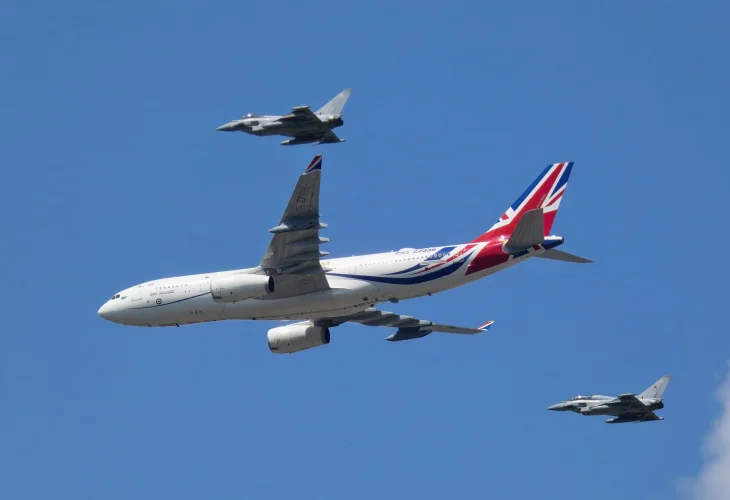 (Credit: pexels)
Britain significantly increased its aerial intelligence operations near Russia in October, conducting an unusually high number of surveillance missions around the Russian enclave of Kaliningrad and along NATO's borders with Russia and Belarus, according to a report published by the Daily Mail over the weekend.
Two British Rivet Joint reconnaissance aircraft carried out 17 missions during October, compared with just four in May. The aircraft, the only two of their kind operational in Britain at the time, departed from RAF Waddington in Lincolnshire. Equipped with advanced intelligence-gathering systems, the aircraft can intercept military communications, radio transmissions, and radar signals, helping identify Russian air defense systems and develop electronic countermeasures.
The increased surveillance activity followed a warning from Moscow on September 30 that Russia could employ all available means, including nuclear weapons, if NATO attempted to isolate Kaliningrad. Russian President Vladimir Putin warned that in the event of an escalation, "there would be no winners at all."
Kaliningrad's Strategic Importance
Situated between Poland, Lithuania, and the Baltic Sea, Kaliningrad is a strategically important Russian enclave that serves as a base for the country's Baltic Fleet. The territory houses nuclear-capable Iskander missiles and S-400 air defense systems, while construction of a powerful radar installation capable of detecting targets thousands of kilometers away is reportedly nearing completion.
Security analysts believe the unusual concentration of British reconnaissance flights may have been intended to gather intelligence on newly deployed Russian military systems, including the radar installation, while simultaneously sending a message of deterrence. "An increase in this kind of activity sends a very clear message to the Russians that they are being watched," said former military intelligence colonel Philip Ingram. Another source described the concentration of surveillance missions as "highly unusual."
Russia Reportedly Demands NATO Concessions
Meanwhile, German newspaper Bild reported that Russia had presented a series of far-reaching demands during talks in Abu Dhabi. According to the report, Moscow called for Finland to withdraw from NATO, the removal of alliance military bases from the Baltic states, and recognition of Russian territorial gains in Ukraine, along with additional territorial concessions and the demilitarization of ports.
In exchange, Russia reportedly offered to withdraw nuclear weapons from Belarus and refrain from deploying intermediate-range missiles on its territory. Finnish Defense Minister Antti Häkkänen strongly rejected the reported demand that Finland leave NATO, declaring: "Such matters are not subject to negotiation in any form. Russia knows this. It is simply outrageous to even suggest such a thing."
The reported demands, together with Britain's intensified reconnaissance operations, underscore the continuing tensions between Russia and NATO, particularly around the strategically sensitive Baltic region.
 World NewsPutin Says a Deal to End the War in Ukraine Is Possible
 World NewsPutin Escalates Threat Against Kyiv, Urges Foreign Nationals to Leave Immediately
 World NewsIsrael on High Alert as Trump Weighs Possible Strike on Iran
 World NewsMoscow Warns of Nuclear Response if Kaliningrad Is Cut Off; NATO Says It Isn’t Rattled

