

Behind the News
Inside Israel’s Knesset: A Tour Guide’s View of History, Democracy, and Life Behind the Scenes
Veteran Knesset tour guide Fanny Kaletzky shares unforgettable encounters, emotional moments, and a rare glimpse into the daily workings of Israel’s parliament
- Michal Arieli
- | Updated
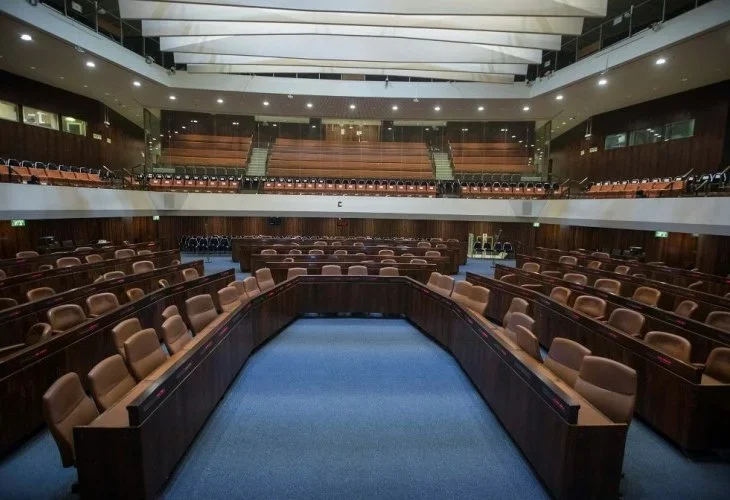 The Knesset plenum (Photo: Noam Revkin Fenton, Flash 90)
As the 26th Knesset began its term this week, 120 newly elected lawmakers hurried to settle into their offices. Meanwhile, another group was busy navigating the bustling corridors: the Knesset's regular tour guides, who found themselves taking on an unexpected responsibility of helping the new members of parliament find their way around.
"We arrived at the Knesset as we do every morning, but this time there was tremendous excitement," recalls Fanny Kaletzky, one of the parliament's senior tour guides. "Watching the new Knesset members arrive felt like witnessing history unfold before our eyes."
The lawmakers arrived accompanied by family members and photographers, but many looked visibly bewildered by the building's complicated layout. "You practically need a GPS to navigate the Knesset," Kaletzky says with a smile. "So we took charge and guided them through the corridors like lost children. We also helped members of the Israeli and international media find their way around. It was a remarkable day, but before long we were back to our regular responsibilities, preparing for the swearing-in ceremony."
Making the Knesset Accessible to Every Citizen
Kaletzky has been guiding visitors through the Knesset for more than five years. Now in her late 60s, she immigrated to Israel from Riga as a teenager and spent decades working as a graphic designer before deciding to pursue a second career as a tour guide. She completed her training just as the COVID-19 pandemic brought tourism to a standstill.
"The graphic design industry was also struggling, and suddenly I found myself without work," she recalls. "Around that time, someone sent me a WhatsApp message saying the Knesset was looking for tour guides."
The opportunity was part of an initiative introduced by then-Knesset Speaker Mickey Levy, who sought to recruit senior citizens as guides, drawing on their language skills and life experience. "That's how I ended up here," Kaletzky explains. "And I'm certainly not the oldest. Some of my colleagues are over 80 and carry out their work with extraordinary dedication."
Although the Knesset attracts visitors from around the world, Kaletzky says most of the groups she currently guides are Israeli citizens. Her goal is to help them understand how their parliament operates and encourage them to take an active interest in its proceedings.
"The Knesset isn't some inaccessible fortress. It belongs to the people," she explains. "The elected officials working here are their representatives, and citizens have every right to understand how they carry out their responsibilities."
She notes that visitors from abroad are often surprised by the building's accessibility. "In some parliaments, visitors have to pay an entrance fee, almost as though they're visiting a museum. But the Knesset isn't a museum. It's a living, working institution, and visitors can witness that work taking place in real time."
One of the biggest surprises for visitors is discovering that they can attend parliamentary committee meetings and, in some circumstances, participate in discussions. Kaletzky recalls two children, aged 10 and 12, who attended a committee meeting because they wanted to influence an issue they cared deeply about.
"It's much simpler than people imagine," she explains. "You send an email requesting permission to attend, receive a response, and sometimes you can even participate that same day."
Witnessing History Through the Eyes of Visitors
Having conducted dozens of tours each week and accompanied thousands of visitors, Kaletzky has encountered many memorable moments that bring Israel's history vividly to life.
"One day, we entered the government meeting room, where there was a special exhibition marking 50 years since Operation Entebbe," she recalls. "As I was explaining the operation, we discovered that one of the women in our group had actually been there. She had been aboard the hijacked plane with her two children."
Other visitors include descendants of former and current Knesset members, as well as elderly Israelis who remember some of the country's defining moments firsthand.
"Sometimes we're standing beside Israel's Declaration of Independence when an older visitor suddenly says, 'I remember that day so clearly. I was sitting beside the radio, listening to Ben-Gurion declare the establishment of the state.'"
The Knesset continued welcoming visitors during the war, occasionally leading to unexpected situations. During one festive opening ceremony of the summer session, approximately 100 ambassadors from around the world were in attendance when an air raid siren sounded.
"As Israelis, we're unfortunately accustomed to such situations," Kaletzky recalls. "We calmly escorted everyone to the protected areas, but you should have seen the ambassadors' faces. They were absolutely terrified and had no idea what to do."
Some of her most moving experiences have involved visitors whose lives were profoundly affected by terrorism or other national tragedies. "Last Memorial Day, we were standing with a group of terror victims beside the Knesset's memorial monument," she recalls. "As we explained its significance, an Israeli Air Force flyover passed overhead, descending as a gesture of respect, solidarity, and appreciation. It was an incredibly moving moment."
A Reflection of the Nation's Joy and Pain
Despite working in Jerusalem, Kaletzky does not live in the capital. She leaves home at 5:30 every morning and often returns only after 9 p.m. Certain occasions are especially demanding, including Tu B'Shvat, when the Knesset celebrates its anniversary and welcomes thousands of visitors. Yet the long hours do not trouble her. "It's my choice, and I love what I do," she says.
Kaletzky is also struck by the challenging encounters lawmakers sometimes face. "People stop Knesset members in the corridors and confront them with questions and requests. Most take the time to respond, even when the person doesn't support their party or asks particularly difficult questions."
For Kaletzky, however, the most emotionally difficult period was the time when Israeli hostages remained captive in Gaza. "For the first time, I felt a real struggle just getting up in the morning," she admits. "I knew I would encounter representatives of the hostage and missing persons' families again, and I had no way to help them."
The sense of helplessness was particularly painful when demonstrations became confrontational. "Imagine someone standing in front of you, demonstrating or even shouting directly at you, and you simply have to absorb it. The hardest part is knowing there's nothing you can do to change their situation. It was a terrible period."
As tour guides, she explains, they are not responsible for handling disruptive visitors or maintaining order during demonstrations. Those responsibilities fall to the Knesset ushers. Nevertheless, she finds such scenes difficult to witness.
Ultimately, Kaletzky sees the Knesset as a reflection of Israeli society itself. "The Knesset is like a barometer," she explains. "Whatever is happening outside its walls is reflected inside, often that very same day." The same corridors that echo with protesters' voices also become places of celebration when hostages return home or other joyful news reaches the country.
"We experience the country's pain and happiness from within," Kaletzky says. "We're an inseparable part of everything happening in Israel, and I consider it an enormous privilege—one I'm grateful for every single day."
 Israel NewsNetanyahu at 50-Year Entebbe Commemoration: "We Pushed Back an Existential Threat From Iran"
 Behind the NewsBasic Law: Torah Study: What Passed, What It Means, and What Happens Next
 Israel NewsKnesset Grants MK Tally Gotliv Parliamentary Immunity
 Israel NewsKnesset Votes Down Bill to Bar Red Cross Visits to Prisons Holding Terror Inmates

