

Parashat Toldot
The Three Wells of Isaac: A Powerful Lesson About Conflict and Unity
Discover how the Kli Yakar connects Isaac’s three wells to the destruction of the Holy Temples, the dangers of baseless hatred, and the power of peace to create room for everyone
- Tzvi Yehuda
- | Updated
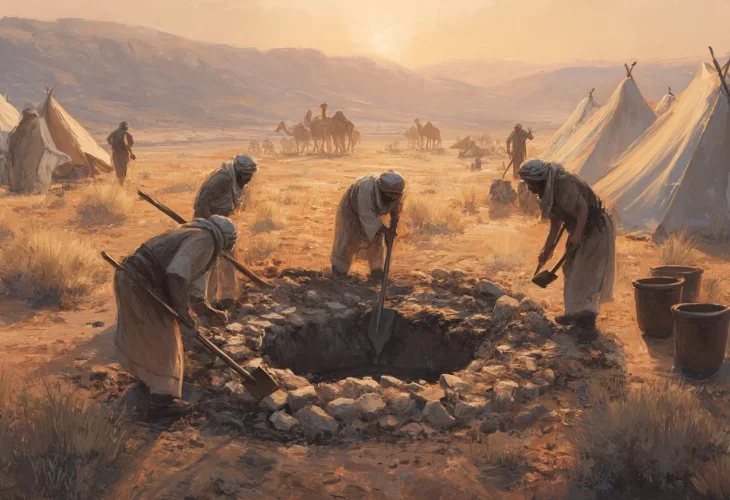
“Isaac's servants dug in the valley and found a well of fresh water there.” (Genesis 26:19)
The struggle over the wells dug by Isaac's servants, described in Parashat Toldot, is far more than a dispute over water. According to the Ramban and other classical commentators, these events foreshadow the struggles the Jewish people would face throughout history.
The Kli Yakar, drawing on the Ramban's interpretation, explains that the three wells represent the three Holy Temples. Just as the first two wells became sources of conflict, the First and Second Temples were ultimately destroyed amid struggles between Israel and the surrounding nations. The third well, however, was named Rechovot, meaning “spaciousness,” because no one disputed ownership of it. It symbolizes the Third Temple, which will be built in an era of lasting peace.
The Kli Yakar takes this interpretation a step further, shifting the focus from external threats to the internal divisions that contributed to the destruction of the Temples.
Two Temples, Two Forms of Conflict
Citing the Talmud in Yoma (9b), the Kli Yakar explains that internal strife played a role in the destruction of both Temples, though it took different forms. During the First Temple period, divisions arose primarily among the nation's leaders. Following the split between the Kingdom of Israel and the Kingdom of Judah, rival kings struggled for political power and authority, weakening the nation and contributing to its downfall.
This is reflected in the Torah's description of the first well: “The shepherds of Gerar quarreled with Isaac's shepherds.” The emphasis on shepherds is significant because they symbolize leaders, as reflected in the verse, “I will appoint shepherds over them” (Jeremiah 23:4). Isaac named the well Esek, meaning “contention” or “dispute.” According to the Kli Yakar, the name reflects a conflict rooted in competing political interests. Each king believed the other was encroaching upon his rightful authority. Although destructive, the hostility had an identifiable cause.
During the Second Temple period, however, sinat chinam, baseless hatred, had spread throughout Jewish society. Ordinary people harbored resentment toward one another without any legitimate grievance. This distinction is reflected in the Torah's description of the second well: “They dug another well, and they quarreled over it as well; so he named it Sitnah.” Unlike the account of the first well, the Torah does not specifically mention shepherds, alluding to the widespread hostility that characterized the Second Temple era.
The name Sitnah, associated with enmity and accusation, captures the nature of this hatred. The Kli Yakar describes it as the work of the Satan, who incited people against one another and caused them to stumble through their own animosity. He also uses this interpretation to criticize the social divisions of his own generation, lamenting the tendency of people to quarrel without any meaningful cause.
The Third Well: When Peace Creates Space
The third well represents a striking departure from the first two. This time, there is no conflict. Isaac names it Rechovot, declaring, “For now Hashem has made room for us, and we shall be fruitful in the land” (Genesis 26:22). According to the Kli Yakar, this well symbolizes the Third Temple, which will be built in the Messianic era. Citing Isaiah's prophecy, “Of the increase of his government and of peace there shall be no end” (Isaiah 9:6), he explains that the era of Mashiach will be characterized by peace and truth.
The name Rechovot therefore carries a deeper meaning. It refers not only to physical space, but also to the sense of expansiveness that comes from living in harmony. The Kli Yakar illustrates this idea with a vivid comparison: When two people are consumed by hostility, even a vast city like Antioch cannot provide enough room for them to coexist peacefully. Regardless of how much space surrounds them, they feel crowded by one another's presence.
By contrast, when peace prevails, even a densely populated land feels spacious. People can live alongside one another without feeling threatened or restricted, regardless of how many share the same surroundings. This, explains the Kli Yakar, is the deeper meaning of Isaac's declaration: “For now Hashem has made room for us, and we shall be fruitful in the land.” Even as the population grows, there will be room for everyone because harmony, rather than rivalry, will define their relationships.
The True Meaning of Spaciousness
The Kli Yakar's interpretation transforms the story of Isaac's wells into a timeless lesson about the relationship between unity and national flourishing. The first two wells illustrate how divisions rooted in political ambition or baseless resentment can undermine a society. The third offers an alternative: a world in which people no longer perceive one another as rivals competing for limited space, influence or recognition.
The message is as relevant to individual relationships as it is to the destiny of the Jewish people. When hostility dominates, even abundant space can feel suffocating. When peace prevails, people discover room for one another, even in the closest quarters. True spaciousness, the Kli Yakar teaches, is not determined by how much room we possess, but by how willingly we make room for others.
It is this spirit of unity that will characterize the ultimate redemption, when the Third Temple is rebuilt and the Jewish people flourish together in peace.
 Parashat ToldotIs It Really Our Effort or Hashem’s Help? A Lesson from Parashat Toldot
 Parashat ToldotWhy Did Isaac Want to Bless Esau? A Powerful Lesson About the Possibility of Change
 Parashat ToldotTwo Nations, One Struggle
 Parashat ToldotParashat Toldot: Why You Shouldn't Wait for the Perfect Time to Begin

