

Parashat Toldot
Parashat Toldot: Why You Shouldn't Wait for the Perfect Time to Begin
Discover a powerful lesson from Parashat Toldot about taking action, trusting Hashem, and making meaningful changes even when circumstances are difficult
- Amitai Chanaya
- | Updated
How often have we wanted to establish a regular learning schedule, change a habit, or spend more time with our families, only to decide that we should wait until life becomes a little less hectic? When work slows down, when our worries subside, or when we finally have more time, we tell ourselves, we'll get started.
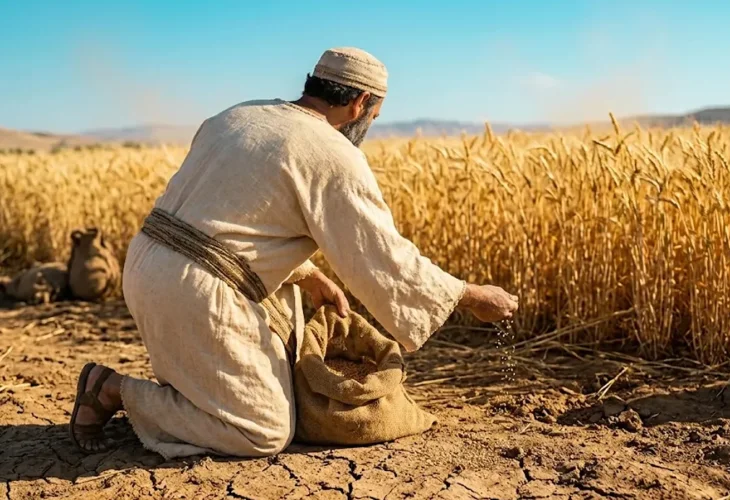
Parashat Toldot offers a powerful lesson about taking action even when circumstances are far from ideal. The Torah tells us that Yitzchak Avinu remained in the Land of Israel despite a severe famine, in accordance with Hashem's command. Later, the Torah states: "And Yitzchak sowed in that land, and he reaped in that year a hundredfold, and Hashem blessed him" (Bereishit 26:12).
Rashi draws attention to the seemingly repetitive expressions "in that land" and "in that year." Why does the Torah emphasize both? Rashi explains: "Both are mentioned to teach that the land was difficult and the year was difficult." Yitzchak was planting during a famine, in soil that offered little promise of a successful harvest. Yet he reaped a hundred times more than anticipated. As the verse concludes, "And Hashem blessed him." His extraordinary success came not because conditions were favorable, but because Hashem blessed his efforts despite them.
Why Do We Keep Waiting for the Right Time?
We often postpone meaningful changes because we believe the circumstances are not yet right. Someone who wants to become more careful about shemirat halashon, guarding one's speech, may decide to begin when tensions have eased. A person hoping to establish a daily Torah study routine may wait until work becomes less demanding. Someone who wants to repair a strained relationship may hold off until the other person makes the first move.
Yet even when one difficult period ends, another challenge often takes its place. If we insist on waiting until everything falls into place, important aspirations can remain indefinitely out of reach.
Yitzchak's example teaches us that challenging circumstances need not prevent meaningful action. Sometimes, progress begins with just ten minutes of Torah study each day, paying particular attention to one blessing during davening, or taking a few moments to listen attentively to a family member despite feeling exhausted. Small, consistent efforts can help us build the habits and relationships we value.
What If We Try and Still Don't Succeed?
Yitzchak experienced an extraordinary Divine blessing, but his story does not guarantee that every effort will produce immediate results. Meaningful changes often require patience, and their impact may not become apparent for a long time.
Someone working to improve a particular character trait may struggle repeatedly before noticing progress. Parents who invest tremendous effort in raising their children do not always see the fruits of their dedication right away. Torah study and the refinement of one's middot also demand perseverance, even when growth is difficult to measure.
Our responsibility is to make the appropriate effort, regardless of whether the outcome is certain. Maintaining a positive habit, exercising restraint during a moment of anger, or making time for something important represents progress in itself. The value of these actions does not depend entirely on their visible results.
The Power of Taking the First Step
Consider something important that you have been putting off recently. What is preventing you from getting started? Sometimes, the obstacles are genuine, and waiting may be the responsible choice. But when the only thing holding us back is the hope that circumstances will eventually become perfect, perhaps it is time to reconsider.
Rather than focusing on everything that stands in our way, we can ask ourselves what small, realistic step is possible right now.
Yitzchak Avinu planted in difficult soil during a difficult year, and Hashem blessed the work of his hands. Rashi's explanation reminds us that we need not wait for ideal circumstances to begin making an effort. Although we cannot control every challenge or guarantee the results, we can choose how to respond.
Sometimes, the most important step toward meaningful change is simply deciding to begin.
 Parashat ToldotIs It Really Our Effort or Hashem’s Help? A Lesson from Parashat Toldot
 Faith (Emunah)Rabbi Chanina ben Dosa: The Story of Faith That Made Vinegar Burn
 Parashat ToldotWhen Prayer Seems Impossible: A Powerful Lesson from Parashat Toldot
 Parashat ToldotWhy Did Yaakov Receive Esav’s Blessing? The Abarbanel’s Explanation

