Interesting
How to Spot High-Quality Clothing Before You Buy: 3 Simple Tricks
Discover three simple ways to check clothing for durability, prevent pilling and shrinking, and choose garments that will still look good after dozens of washes
- Shira Dabush
- | Updated
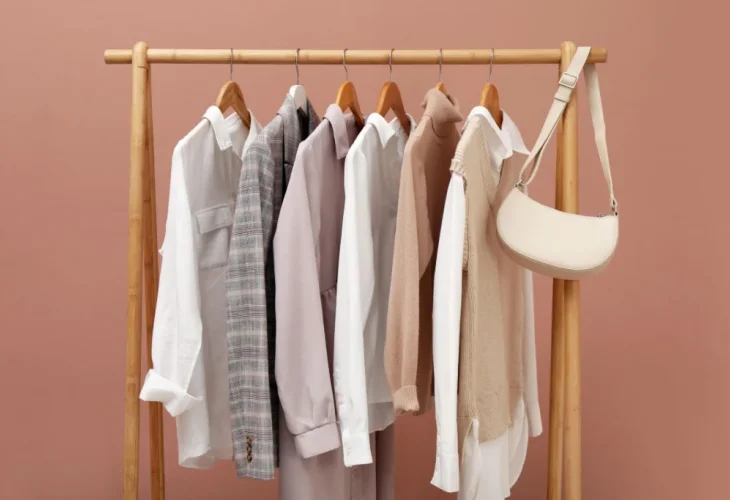
When shopping for clothes, almost all of us instinctively touch the fabric. If it feels thick, rough, or stiff, we tend to keep looking. But when we come across something exceptionally soft, it's easy to assume we've found a high-quality garment. That assumption, however, can be misleading.
In the textile industry, hand feel—the way a fabric feels to the touch—is a characteristic that manufacturers can significantly alter during the finishing process. Fabric softeners, including silicone-based treatments, can transform stiff or coarse materials into fabrics that feel remarkably smooth and luxurious. Research shows that these finishing treatments can affect more than softness. Depending on the materials and methods used, they can also influence a fabric's resistance to washing, friction, water absorption, and pilling—the formation of those tiny, annoying balls of fiber on clothing.
In other words, what your fingers tell you in the store is only a small part of the story.
Why Does That Perfect Outfit Look Different After Just Two Washes?
It's important to clarify that soft fabric isn't necessarily poor quality. Softness itself doesn't cause clothing to fall apart. A well-made garment can feel wonderfully soft and remain in excellent condition for years. The problem is that softness alone tells us very little about the quality of the fibers, yarns, stitching, or fabric construction.
Manufacturers use various finishing techniques to make textiles softer, smoother, and more flexible. Some treatments are highly durable, while others gradually wear away through regular use and washing. Certain softeners can also influence a fabric's resistance to abrasion and pilling, depending on the fiber type, construction, and finishing chemicals. That's why a garment that feels silky in the store may feel completely different after a few trips through the washing machine.
How can you identify better-quality clothing before spending your money? Following are three practical techniques inspired by textile research and testing methods used in Japan and China.
1. Don't Just Feel the Fabric—Gently Stretch It
One simple test you can perform in the store is to gently hold a section of fabric and stretch it slightly in both directions. There's no need to pull hard. Naturally, knitted fabrics are generally more elastic than woven fabrics, so the two shouldn't be judged by the same standard. What matters is how the material behaves when you release it.
If the fabric returns smoothly to its original shape, that's an encouraging sign. If it remains wavy, looks stretched out, or immediately loses its shape, it's worth taking a closer look before buying. Japanese textile testing organizations recognize the importance of examining how garments retain their shape after laundering. For example, the Japanese testing center Nissenken evaluates clothing after washing and cleaning to assess changes in dimensions and appearance. This matters because even a fabric that performs well on its own may behave differently once it has been cut and sewn into a finished garment.
2. Look for Loose Fibers Before They Turn Into Pills
Those tiny balls that appear on sweaters, shirts, and other clothing after repeated wear are known as pilling. In Japan, textile testing organizations pay particular attention to this problem. The Japanese testing institute Menken explains that pilling begins with friction. As fabric rubs against other surfaces, individual fibers gradually emerge from the material, become entangled, and eventually form small balls.
You can look for early warning signs before purchasing a garment. Hold the fabric at an angle under bright light rather than examining it only from above. Look closely at the surface. If a brand-new garment already has a noticeable layer of tiny, loose fibers protruding from it, consider how it might respond to repeated friction. Areas such as the underarms, waist, sleeves, and sections that rub against handbags are particularly susceptible to pilling. Visible surface fuzz doesn't automatically mean a garment will pill badly, but it is a useful detail to consider alongside the fabric's overall construction.
3. Examine the Fabric's Construction
Researchers at Chinese textile universities have investigated how to produce cashmere fabrics that are both soft and more resistant to shrinking and pilling. Their findings highlight an important principle: Fabric quality depends on several factors working together, including fiber composition, construction, and finishing methods. In one study, a combined treatment improved a cashmere fabric's pilling-resistance rating from 2–3 to 4 while significantly reducing shrinkage during washing—all without sacrificing its soft feel.
For shoppers, the lesson is straightforward: Don't let softness distract you from examining how the garment is made. Hold the clothing up to the light and inspect the fabric. Is the knit or weave consistent? Are there unusually thin or sparse areas? Do the threads appear secure? Are the seams straight, even, and neatly finished? These details can reveal potential weaknesses that you might overlook if you judge a garment solely by how it feels against your skin.
How to Keep Your Clothes Looking New
Even high-quality fabrics can deteriorate when washed improperly. Conversely, delicate garments can often last significantly longer with the right care. One of the simplest recommendations from Japanese textile experts is to reduce friction during washing.
The Menken institute recommends using laundry bags for garments prone to pilling because clothing repeatedly rubs against other items inside the washing machine. It also suggests gently brushing certain fabrics after wear to realign loose fibers and help prevent tangling. For delicate clothing, turning garments inside out before washing can provide additional protection. It's also important to follow the manufacturer's care instructions, select an appropriate wash cycle, and avoid overloading the machine.
Ultimately, the best-quality garment isn't necessarily the one that feels most luxurious during the first five seconds in the store. It's the one that still looks and feels good after fifty washes.