

Words of Torah
Feeling Unworthy of Prayer? Why Hashem Never Abandons Us
A powerful teaching from Rashi on Parashat Balak reveals how Hashem's love and closeness remain, even when we struggle with guilt, shame, and failure
- Yonatan HaLevi
- | Updated
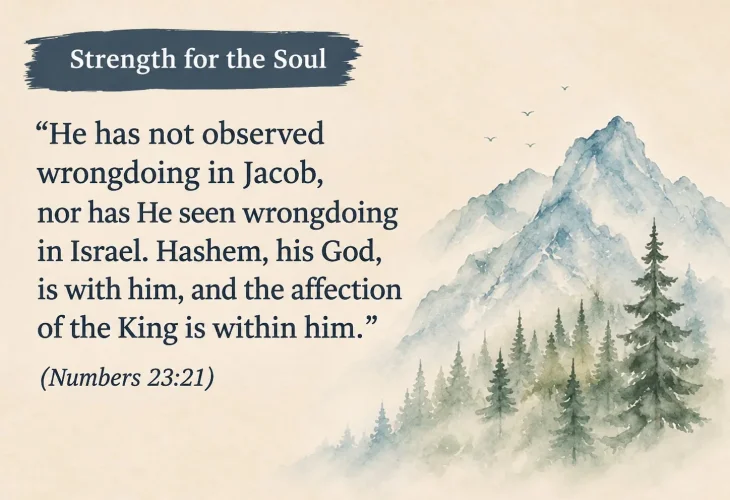
“He has not observed wrongdoing in Jacob, nor has He seen wrongdoing in Israel. Hashem, his God, is with him, and the affection of the King is within him.” (Numbers 23:21)
Rashi explains that Hashem does not scrutinize the Jewish people's every wrongdoing. Even when they transgress His commandments, He does not search out each individual sin or examine every failing. Rashi goes even further: “Even when they anger and rebel against Him, He does not depart from their midst.” Even when the Jewish people act against Hashem's will, His presence remains among them.
Regarding the verse's concluding words, “u'truat melech bo,” Rashi explains that they express affection and friendship. The King maintains a bond of love and closeness with His people, even when they fall short.
There are days when shame makes it difficult to turn to Hashem. Perhaps we said something hurtful, lost our temper after promising ourselves we would remain calm, or repeated a mistake we thought we had overcome. Disappointed in ourselves, we begin to feel unworthy of asking Him for anything. And then, just as we are about to pray, a thought arises: After the way I behaved today, how can I possibly ask Hashem for help?
At moments like these, it is worth remembering the words spoken by none other than Bilaam: “He has not observed wrongdoing in Jacob, nor has He seen wrongdoing in Israel. Hashem, his God, is with him, and the affection of the King is within him.”
The very King we feel too ashamed to approach remains bound to the Jewish people with love and affection. He does not abandon us because we lost our temper, stumbled, or sinned. While our mistakes are not insignificant, they do not sever our relationship with Him.
Perhaps that is precisely when we need to pray. The words that seemed impossible to utter can finally emerge—especially when they begin with a simple, heartfelt admission: “Hashem, I'm sorry that…”
 Words of TorahYour Mistakes Do Not Define Your Worth: A Powerful Lesson in Returning to Hashem
 Words of TorahPut Down the Bag: A Powerful Lesson About Forgiveness
 Words of TorahCan One Moment Change Your Life? The Jewish Power of Teshuvah
 The Month of ElulTeshuvah and Divine Love: A Powerful Guided Prayer for Spiritual Renewal

