

Israel News
Netanyahu Weighs Presidency in Proposed Deal to Form Israeli Unity Government
A reported plan would allow Netanyahu to serve two more years as prime minister before becoming Israel's president in 2028, potentially paving the way for a power-sharing agreement amid the political deadlock
- Yuval Aviv
- | Updated
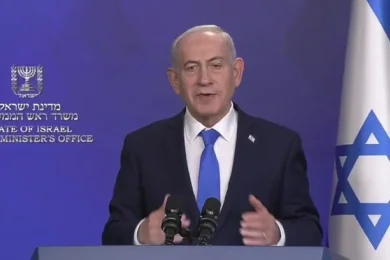
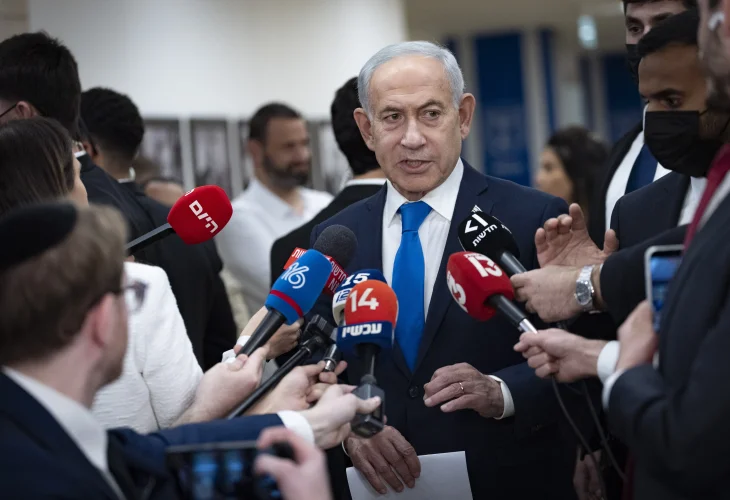 Netanyahu (Photo: Chaim Goldberg, Flash90)
Associates of Prime Minister Benjamin Netanyahu have reportedly been exploring a proposal to move up Israel's presidential election as part of negotiations over a possible national unity government. According to a report aired Thursday evening on Kan 11, the plan would allow Netanyahu to serve approximately two years as prime minister before moving to the presidency.
The proposal would require an amendment to a Basic Law allowing the next president to be elected more than a year before taking office. Under current law, presidential elections are held no more than 90 days before the beginning of a new term. President Isaac Herzog's term is scheduled to end in July 2028.
Early Presidential Election Could Guarantee Rotation Agreement
Electing Netanyahu president in advance would reportedly serve as a guarantee that he would honor a potential rotation agreement with Yashar! party chairman Gadi Eisenkot, or as part of separate negotiations with Naftali Bennett and Avigdor Liberman. Under such an arrangement, Netanyahu's coalition partners would have greater certainty that he would leave the premiership in July 2028 to assume the presidency, allowing another leader to take over as prime minister.
However, doubts have reportedly emerged within Likud circles over whether the proposed legal amendment could withstand judicial review by the High Court of Justice. No decision has been made to advance the initiative, which remains under consideration ahead of possible unity government negotiations.
The proposal follows Israel's October 27 election, in which Likud won 27 Knesset seats but Netanyahu's political bloc secured only 53 seats, compared with 67 for the opposing bloc, including 19 held by Arab parties.
The parliamentary balance presents a significant obstacle to Netanyahu's potential presidential bid, as Israel's president is elected by secret ballot in the Knesset, where Netanyahu currently lacks a majority. The changing political landscape was also reflected in this week's election of Matan Kahana as Knesset speaker. Kahana received 66 votes, defeating Likud MK Ofir Katz, who secured 52.
Eisenkot Holds Mandate to Form Government
President Isaac Herzog tasked Gadi Eisenkot with forming the next government after 67 Knesset members recommended him for the position, compared with 46 who recommended Netanyahu. Eisenkot's mandate is set to expire in early December. Herzog has urged political leaders to prevent another round of elections, a position also expressed by the Shas party.
Netanyahu has called for a national unity government, but leaders of the opposing bloc have indicated that they would prefer to replace him. Bennett has proposed a rotation arrangement in which Eisenkot would serve as prime minister first, while Liberman has ruled out joining a government led by Netanyahu.
Earlier this month, a senior Likud official claimed that U.S. President Donald Trump and Herzog would provide guarantees for a potential unity government agreement.
For now, the proposal to accelerate Israel's presidential election remains preliminary. Nevertheless, it illustrates the unconventional arrangements being considered as political leaders search for a way to overcome the parliamentary deadlock and establish a new government.
 Israel NewsLikud and Gadi Eisenkot Hold Unity Government Talks Amid Disagreements
 Israel NewsHerzog Taps Gadi Eisenkot to Form Israel’s Next Government After Securing 67 Endorsements
 Israel NewsIsraeli Opposition Leaders Agree on Key Roles as 26th Knesset Opens
 Israel NewsNetanyahu Calls for National Unity Government; Eisenkot Dismisses Appeal as Political Stunt

