

Israel News
US Denies Iran Shot Down F-16 as Tehran Threatens Military Retaliation
Washington rejects Iran’s claims of striking an American fighter jet near the Strait of Hormuz, while Tehran demands concessions in nuclear negotiations and warns of a swift military response
- Yuval Aviv
- | Updated
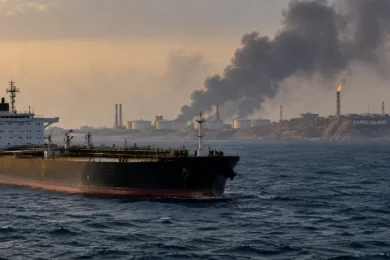
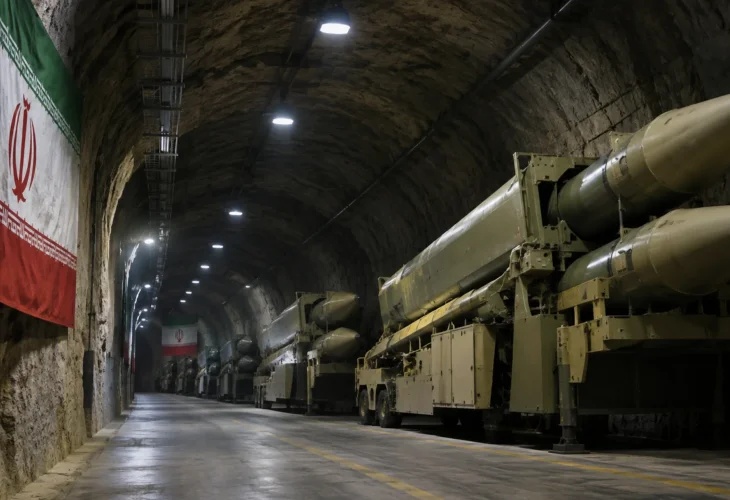 Illustration
The United States rejected claims by Iran's Islamic Revolutionary Guard Corps (IRGC) on Saturday evening that Iranian air defenses had struck an American F-16 fighter jet, forcing it to make an emergency landing. US officials dismissed the report as false, emphasizing that no American aircraft had been attacked and that all US military fighter jets operating in the Middle East were safe and accounted for.
Earlier, Iranian state television reported that a missile had been launched Friday night toward an American F-16 flying near the Strait of Hormuz. Iranian officials claimed the missile exploded close to the aircraft, forcing its pilot to make an emergency landing at a regional airport.
Iran Sets Conditions for Renewed US Negotiations
Amid the conflicting military statements, Iranian Foreign Minister Abbas Araghchi addressed the possibility of resuming negotiations with Washington in an interview with a local newspaper. He said the United States would need to change its approach and take steps to rebuild trust before meaningful progress could be made.
Araghchi stressed that reopening the Strait of Hormuz remained conditional on Washington accepting seven demands presented by Tehran. He said the timeline for implementing an agreement was not an obstacle, provided those demands were met. According to Araghchi, the original proposal, designed to be implemented within two days, also addressed American concerns, including Iran's nuclear program.
The foreign minister described what he characterized as three competing factions within the US administration: those advocating military action, those favoring negotiations, and those supporting continued economic pressure. He accused Israeli Prime Minister Benjamin Netanyahu of attempting to draw Washington into another confrontation with Iran and claimed that US President Donald Trump was shifting between these approaches.
Iran Refuses to Export Its Highly Enriched Uranium
Addressing the nuclear dispute, Araghchi outlined two conditions concerning Iran's stockpile of approximately 400 kilograms of uranium enriched to 60% purity. He insisted that the material would not be removed from Iran and that its use would be determined according to the country's needs.
Araghchi said mediators had presented several proposals, some of which deserved consideration as part of a comprehensive agreement. However, he emphasized that any final decision would require review by Iran's negotiating committee, approval by the relevant supreme council, and completion of the necessary legal procedures.
He added that Qatar and Pakistan remained the only intermediaries between Tehran and Washington, with indirect communications continuing through both countries. According to Araghchi, Iran is seeking a permanent agreement that would prevent another war rather than a temporary arrangement or concessions that could be portrayed as an American victory.
IRGC Commander Threatens Swift Military Response
Meanwhile, IRGC Commander Ahmad Vahidi visited an underground military facility known as a "missile city," where Iranian officials displayed a launcher reportedly capable of carrying and firing two liquid-fueled missiles simultaneously. Iranian authorities claimed the missiles could be launched vertically and that their speed could be controlled.
During the visit, Vahidi warned that Iran was prepared to respond rapidly to any military threat, declaring that the country's capabilities had increased significantly between the two wars. He said Iran had developed new weapons and was prepared to confront further threats.
"Our capabilities have grown in the period between the two wars," Vahidi stated. Expressing confidence in Iran's military readiness, he claimed that Iranian forces controlled the battlefield and would respond without hesitation.
"There will certainly be no delay in using force and confronting threats," he warned, promising immediate retaliation similar to previous confrontations. He added that the consequences facing Iran's adversaries were only beginning and threatened further humiliation and defeat.
The exchange of accusations and warnings comes amid continued tensions between Washington and Tehran, with disputes over Iran's nuclear program, the Strait of Hormuz, and the possibility of further military action remaining unresolved.
 Israel NewsIsrael Says It’s Being Kept in the Loop as U.S.-Iran Talks Move Toward a Draft Deal
 World NewsUS-Iran Peace Talks: Qatar Reports Progress on Nuclear Deal and End to War
 World NewsTrump: "Hit Them Hard"; U.S. Strikes Iran for the Ninth Straight Night
 Israel NewsIran Offers 7-Day Plan To Reopen The Strait Of Hormuz

