

World News
British University Reported Pro-Israel Student to Counterterrorism Police, Documents Reveal
Royal Holloway University monitored a student's political activities and referred him to Britain's Prevent program, citing his Zionist views. Counterterrorism police later found no evidence of extremism.
- Shlomo Hodges
- | Updated
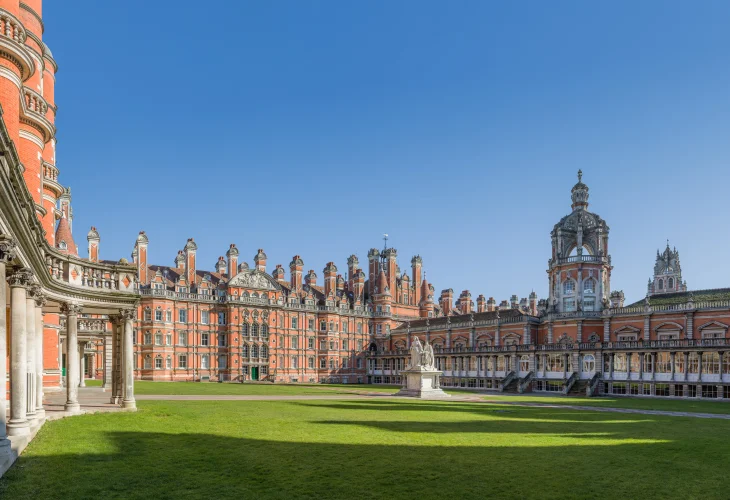 David Iliff / Wikimedia Commons / CC BY-SA 3.0
A British university referred a pro-Israel student to a government counterterrorism program after monitoring his political activities, social media accounts and movements around campus, according to internal documents obtained by The Telegraph.
Brodie Mitchell, a 20-year-old student at Royal Holloway, University of London, discovered the extent of the monitoring after requesting access to records held about him. The university provided approximately 1,465 pages of documents, including internal correspondence, reports on his activities and a referral to Britain's Prevent counterterrorism program.
Mitchell, who is not Jewish, has been an outspoken supporter of Israel and has reported receiving repeated threats over his political views.
The dispute began in September 2025, following a confrontation between Mitchell and a pro-Palestinian student activist during the university's Freshers Week. The two gave conflicting accounts of the incident, which included comments about Jewish identity and a Palestinian head covering.
Following the confrontation, Royal Holloway suspended Mitchell over allegations of offensive conduct. The suspension lasted nine weeks, and additional restrictions were imposed on his access to university facilities.
Documents subsequently disclosed to Mitchell showed that university staff had monitored his movements around campus, tracked his social media activity and documented his attendance at a Remembrance Sunday service. Staff also contacted police after he visited Golders Green to express solidarity with the Jewish community following an antisemitic attack.
In April 2026, Mitchell reached an out-of-court settlement with the university, which agreed to compensate him while maintaining that the disciplinary dispute concerned his conduct rather than his political beliefs.
However, later that month, university officials referred Mitchell to Prevent, a British government program designed to identify individuals potentially vulnerable to radicalization.
According to the documents, the referral specifically mentioned Mitchell's "Zionist & pro-Israel views" and expressed concern that some of his more recent social media statements could indicate increasingly extreme political opinions. Those statements included a call for the deportation of Pakistani Muslims whom Mitchell accused of threatening him.
Counterterrorism police ultimately rejected the referral.
In a June 2 assessment, Thames Valley Police concluded that there was no evidence Mitchell was developing an extremist mindset or promoting an ideology based on violence, hatred or intolerance. The case was subsequently closed.
Mitchell has criticized the university's handling of the matter, arguing that his political beliefs and support for Israel were improperly treated as potential security concerns.
The revelations have raised questions about the boundaries between campus safeguarding responsibilities, freedom of expression and political activism, particularly as universities across Britain continue to face tensions surrounding Israel and antisemitism.
 World NewsTrump Slams 2026 Nobel Peace Prize Winner Navi Pillay Over Anti-Israel Bias
 World NewsGolders Green Stabbing Shakes London’s Jewish Community
 World NewsReport: Iranian Cyberattack Shuts Down UK Power Station for Four Days
 World NewsU.K. Air Travel Chaos: Hundreds of Flights Canceled, El Al Also Cancels Service

