Facts in Judaism
7 Common Jewish Terms Explained: Mishnah, Gemara, Halacha, and More
Confused by Jewish terms you hear in synagogue or at the Shabbat table? Discover simple explanations of seven essential Jewish concepts.
- Yonatan HaLevi
- | Updated

"As our Sages taught..." you may hear these words at the Shabbat table followed by a story. You're eager to hear what comes next, but for a moment, you feel tempted to interrupt and ask: Who exactly are these Sages?
When someone mentions that one child is studying Mishnah while his older brother is learning Gemara, what's the difference between the two?
If you've ever felt embarrassed to ask about the meaning of a Jewish term that everyone else seems to understand, this guide is for you. Following are seven common terms you may have heard in synagogue, during a Torah class, or around the Shabbat table, along with simple explanations of what they mean.
1. Beit Din (Rabbinical Court)
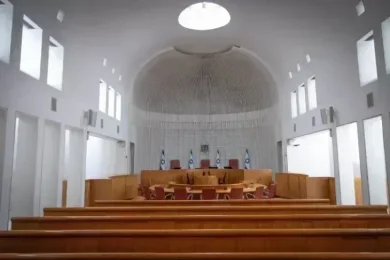
A Beit Din is a Jewish court that hears cases and makes legal decisions according to halacha (Jewish law). It generally consists of at least three dayanim, or rabbinical judges, who are qualified to serve in this capacity. Today, Israel's official rabbinical courts are part of the country's legal system and have authority over certain matters, particularly Jewish marriage and divorce. Rabbinical courts also deal with conversion and various financial disputes, depending on their jurisdiction.
2. Chazal (Our Sages of Blessed Memory)
The Hebrew term Chazal is an acronym for Chachameinu Zichronam Livracha, meaning "Our Sages of Blessed Memory." It refers to the great Jewish scholars who lived and taught in the Land of Israel and Babylonia during the Second Temple period and the centuries following its destruction, through approximately the fifth century CE.
These Sages preserved, interpreted, and transmitted the Oral Torah. They include the Tannaim, whose teachings appear in the Mishnah, and the Amoraim, whose discussions form the basis of the Gemara.
3. Mishnah
The Mishnah is one of the foundational texts of Jewish law. Compiled by Rabbi Yehuda HaNasi around 200 CE, it organizes generations of rabbinic teachings into six major sections called Sedarim, or Orders, collectively known as Shas (Shisha Sedarim). Each Order contains smaller sections called Masechtot, or tractates, devoted to specific subjects. For example, Seder Moed deals with Shabbat and Jewish holidays, including Rosh Hashanah and Sukkot.
Unlike a modern legal code, the Mishnah does not always provide a final ruling. Instead, it frequently records disagreements between Sages, preserving their different opinions and reasoning. Although primarily concerned with Jewish law, it also contains ethical teachings and other discussions. The word Mishnah is related to the Hebrew root meaning "to repeat" or "to review," reflecting the centuries during which these teachings were memorized and transmitted orally.
4. Gemara
After the Mishnah was compiled, later generations of Sages, known as the Amoraim, studied and analyzed its teachings. Their discussions became the foundation of the Gemara, which, together with the Mishnah, forms the Talmud. Two major Talmuds developed: the Jerusalem Talmud (Talmud Yerushalmi), compiled in the Land of Israel, and the Babylonian Talmud (Talmud Bavli), compiled in Babylonia. The Babylonian Talmud eventually became the more widely studied and authoritative text in traditional halachic discourse.
Gemara study involves much more than memorizing laws. Its discussions explore the reasoning behind the Mishnah, compare different teachings, address apparent contradictions, and examine ethical and legal questions. One of its defining features is its lively question-and-answer style. A Sage might make a statement, another might challenge it, and further explanations or objections follow. This back-and-forth approach encourages careful analysis and critical thinking.
Much of the Gemara is written in Aramaic, and numerous commentaries have been written over the centuries to help students understand its often complex discussions. You may also have heard of Daf Yomi, the worldwide daily Talmud study program. Participants study one daf, or folio, consisting of two printed sides, each day. Completing the entire Babylonian Talmud at this pace takes approximately seven and a half years.
5. Halacha (Jewish Law)
What blessing should you recite before eating bread? What should you do if you find something that someone else has lost? These are examples of questions addressed by halacha, the comprehensive system of Jewish law that governs religious practice and everyday conduct.
The word halacha comes from the Hebrew root meaning "to walk," reflecting the idea that Jewish law provides guidance on the proper path through life. It is rooted in the Written Torah and the teachings of Chazal, which rabbinic authorities have continued to interpret and apply throughout the generations.
Jewish law generally addresses two broad categories of obligations. The first is bein adam laMakom, commandments governing the relationship between a person and Hashem, including prayer, kashrut, Shabbat, and Jewish holidays. The second is bein adam lachaveiro, commandments governing relationships between people, including financial obligations, ethical responsibilities, and treating others fairly.
6. Yeshiva
A yeshiva is an educational institution devoted primarily to Torah study. In many yeshivas, Gemara occupies a central role, alongside other areas of Jewish learning. A yeshiva is also an environment for spiritual and personal development, where rabbis guide students in their relationship with Hashem, religious observance, and the refinement of their character traits (middot).
Some yeshivas are specifically designed for individuals who are becoming more observant or beginning their formal Torah education. Their programs may include Gemara at beginner and advanced levels, Mishnah, halacha, mussar (Jewish ethical teachings), character development, and Jewish philosophy and outlook (hashkafa).
7. Mitzvot (Commandments)
The word mitzvot is the plural of mitzvah, which comes from the Hebrew word for "command." Mitzvot are the religious obligations established by the Torah and Jewish law. Some are explicitly stated in the Written Torah, such as brit milah (circumcision), while others are derived from the Torah through methods of interpretation transmitted by Chazal.
Additional commandments and religious observances were instituted by the Sages, including practices associated with holidays such as Chanukah and Purim. Commandments originating in the Torah are known as mitzvot d'Oraita, an Aramaic expression meaning "from the Torah." Those established by the Sages are called mitzvot d'Rabbanan, meaning "from the Rabbis." Both categories play an important role in Jewish religious life, shaping everything from daily routines to holiday observances and ethical behavior.
What Other Jewish Terms Would You Like Explained?
Is there a word you hear repeatedly in synagogue, during a Torah class, or around the Shabbat table that you've always meant to look up? Share it with us. Your question might be the starting point for our next Jewish terminology guide.