

Health and Nutrition
Do Smartphone Bans Improve Grades? Major Study Reveals Surprising Results
A large-scale study involving more than 16,000 students finds that banning phones from classrooms can improve academic performance, particularly among struggling students
- Yitzchak Eitan
- | Updated
A growing debate has been taking place in schools around the world: Should mobile phones be banned from classrooms? A new study, one of the largest ever conducted on the subject, offers a compelling answer.
A Large-Scale Study Examines the Impact of Smartphone Bans
Published in the prestigious journal Science, the study was conducted by researchers affiliated with universities in Pennsylvania, Copenhagen, and New Delhi. The experiment took place during the first half of 2024 at ten higher education institutions in Odisha, eastern India, involving 16,683 students, 742 instructors, and 2,305 courses.
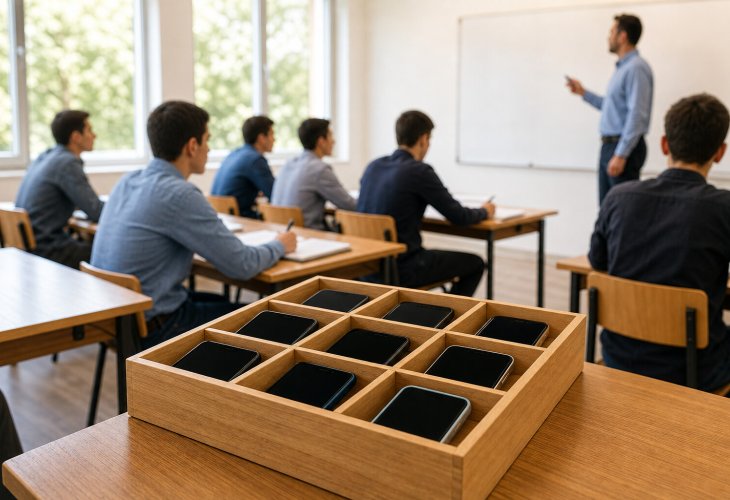
In classrooms randomly assigned to the phone-ban group, students were required to place their phones in wooden boxes at the beginning of each lesson and retrieve them at the end. The average age of participants was 19.4. Most grades were determined through externally administered examinations graded anonymously, reducing the likelihood that improvements in academic performance could be attributed to instructor bias.
Do Phone Bans Improve Academic Performance?
The results revealed that students in phone-free classrooms achieved higher grades, although the improvement was relatively modest. The researchers described the effect on learning outcomes as meaningful but not transformative. While the improvement was smaller than the average effect observed in educational experiments, it was greater than the effects typically recorded in large-scale studies, suggesting that restricting phone use could be a simple and practical policy with widespread benefits.
One of the most significant findings concerned which students benefited most. The greatest improvements were observed among students whose previous grades were below the median and those in their first year of study. No statistically significant improvement was found among higher-performing students. In other words, students who struggled academically appeared to gain the most from a learning environment free of smartphone distractions.
Fewer Distractions, but Some Unexpected Findings
The study also found that phone-free classrooms experienced fewer disruptions and fewer conversations unrelated to the lesson. Instructors themselves were also less likely to use their phones during class. However, the restrictions did not produce a consistent improvement in attendance, and some male students reported a slight increase in feelings of "fear of missing out," commonly known as FOMO.
Interestingly, students who experienced the restrictions became more supportive of policies limiting smartphone use in classrooms, suggesting that firsthand experience may influence attitudes toward such measures.
"Phone bans are one of the fastest-spreading education policies in the world," the researchers noted. Their findings suggest that while removing smartphones from classrooms may not revolutionize education, it can offer a straightforward way to improve academic performance, particularly among students who need the most support.
 InterestingLocked-Up Phones, Better Grades? A Study of 3.3 Million Students
 Raising ChildrenEvery Student Is a Child: The Powerful Educational Lesson Every Teacher Must Remember
 Health and NutritionCan Social Media Posts Reveal Loneliness? New Study Finds Surprising Clues
 Health and NutritionLove Eggs? A 15-Year Study Links Them to Lower Alzheimer’s Risk

