

For the Woman
A Cancer Diagnosis, Seven Children, and the Faith to Keep Going
When her mother was diagnosed with breast cancer, Leah Shufes decided to get checked—and discovered she had cancer too. She shares her emotional journey through chemotherapy, faith, motherhood, and recovery, and the lifesaving lesson she wants every woman to hear.
- Moriah Luz
- | Updated

"Today, cancer is no longer necessarily a death sentence. What can be deadly is when people bury their heads in the sand and say, 'Whatever is meant to happen to me will happen anyway,'" says Leah Shufes, 46, at the beginning of our conversation. "After all, leading rabbis encourage people to undergo medical screenings."
Four years ago, after her mother was diagnosed with cancer, Leah decided to get checked herself. That decision led her on an emotional journey through intensive treatment, psychological challenges, and profound faith. Today, she has one message she is determined to share: Don't postpone medical screenings that could save your life.
"We'll Get Through This Together"
"When my mother was 67, she went for a routine mammogram," Leah recalls. "She's a very calm person. I saw her that day, and she casually mentioned that the examination had revealed something suspicious. Around the same time, I'd noticed an unusual change in my own breast tissue, but I'd assumed it was related to menopause. After hearing about my mother's results, I decided to contact my family doctor."
It was during the COVID-19 pandemic, when medical consultations were being conducted by telephone. Nevertheless, Leah's doctor refused to take any chances. Based on her description, she immediately referred her to a breast surgeon, setting off a rapid series of examinations that increasingly reinforced concerns about cancer. "My mother had a very difficult time scheduling appointments, but somehow, almost miraculously, I managed to get appointments very quickly," Leah recalls.
The final test was a biopsy, in which a sample of suspicious tissue was removed for examination. Her mother had described it as a quick and relatively simple procedure, but Leah's biopsy took considerably longer. She later learned that this was because multiple tumors had been discovered. Exhausted and in pain, she sat down on a bench in the waiting area to rest and have something to drink.
"I called my mother, and during our conversation, I remembered that she was supposed to receive her own biopsy results that day. I asked whether she'd heard anything, and she replied, 'Yes, I have cancer.'" Stunned, Leah asked what her mother was doing. Her mother calmly explained that she was sitting in a café, enjoying coffee and a pastry. "Everything will be okay. We'll get through this together," she reassured her daughter. Leah struggled to hold back her tears. "I'll be there with you," she replied, "but I'm praying that my results will be different."
"For someone who has never experienced cancer, the word itself feels synonymous with death," Leah explains. "The uncertainty is terrifying, and this was my mother, whom I love and worry about. On top of that, I was overwhelmed by questions about what would happen to me and my children. I kept reminding myself that Hashem runs the world and that I'm entirely in His hands."
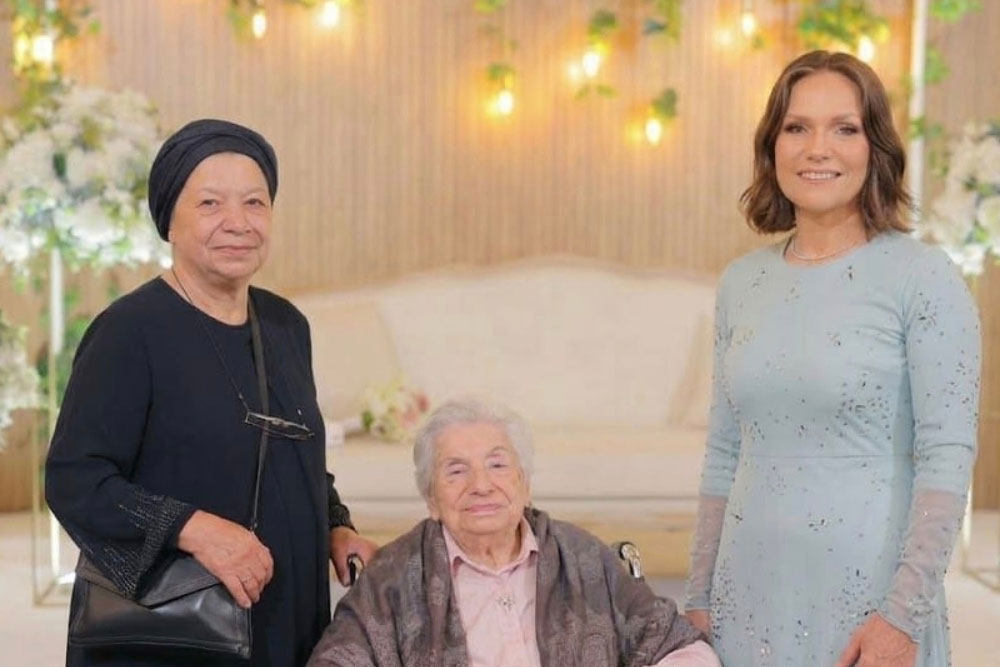 Leah with her mother and grandmother. (Photo credit: Elkana Abergel)
"Emotional Strength Matters More Than Anything"
A week later, Leah received a phone call from the hospital informing her that her biopsy results were ready and that she needed to meet with the doctor. "I already understood that it was cancer. I took a taxi and went to the hospital." Doctors informed her that she had cancer at an advanced stage, which she describes as stage two to three, and referred her for a PET-CT scan to determine whether the disease had spread.
The scan was scheduled for the middle of the night, and Leah arrived with her husband. After receiving an injection of a tracing substance and drinking a special solution, she was instructed to wait while the materials were absorbed. "I felt almost detached from everything," she recalls. As she waited, she overheard a woman in the neighboring cubicle explaining that her cancer had returned and metastasized. Hearing those words suddenly brought Leah face-to-face with the seriousness of her own situation. "That was the moment I really understood where I was. I took out a book of Tehillim and began praying."
When it was her turn, she was guided into a large cylindrical scanning machine. Above her, the ceiling had been designed with lighting that resembled the sky. "Throughout the scan, I looked up at those lights and told myself, 'There's Someone above watching over me. Whatever happens is what He wants, and I'll go through it together with Him.'"
The wait for the results was agonizing. "I felt terribly depressed and cried uncontrollably. At one point, I realized it wasn't fair to my children, so we went out for ice cream." As the family settled into the ice cream shop, it began to rain, and Leah burst into tears again. One of her sons came over and embraced her. "That week gave me a glimpse of what people struggling with depression experience. The emotional pain felt even worse than the physical illness. It made me realize just how important emotional strength really is."
Asked how long those feelings persisted, Leah explains that receiving a treatment plan helped restore some stability. "Once I had a treatment protocol, something inside me calmed down. I felt that I was finally on a path toward recovery. And because I'd decided to share what was happening with the people around me, I received tremendous support."
Seven days after the scan, a notification appeared on her phone informing her that the results were available in her patient portal. "I opened the app, and it said there were no signs of metastases. I jumped for joy and hugged my mother. Of course, I still had cancer, but I was so grateful to Hashem that it wasn't something even more serious, as I'd feared."
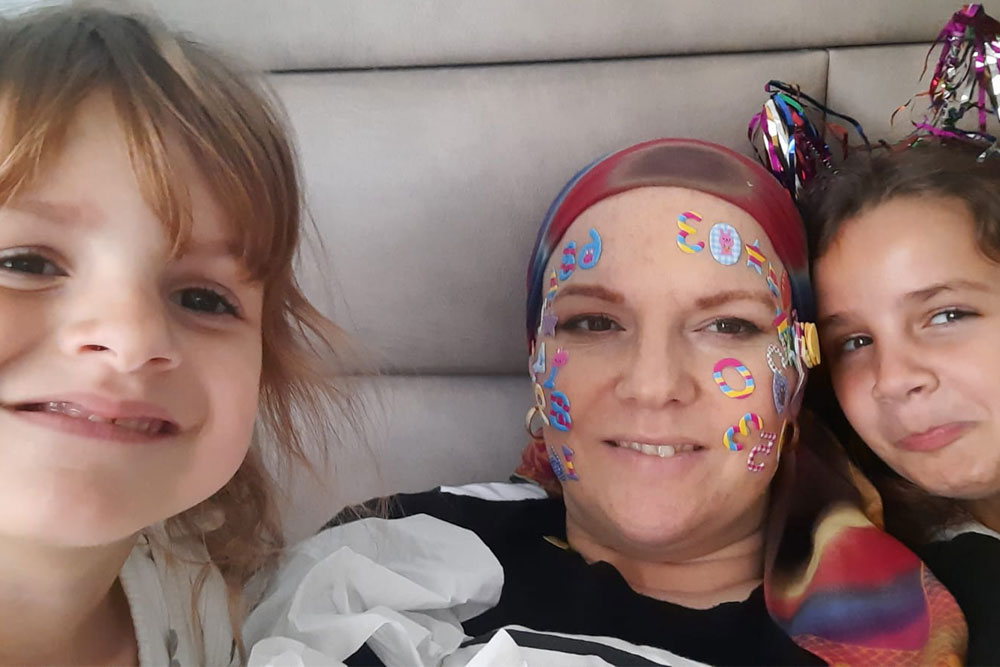
Telling Seven Children Their Mother Has Cancer
One of Leah's greatest concerns was how her illness would affect her children. At the time, she was raising seven children, ranging in age from four to twenty. "Immediately after receiving my diagnosis, I called an emotional therapist I knew and asked how I should tell them. She advised me to explain in simple terms that the disease was treatable, but that we were about to go through a challenging period during which their mother would be weak. She told me to speak openly and not hide things or keep secrets."
Just days earlier, Leah's children had learned that their grandmother had cancer and had already begun including her name in prayers for healing at their schools. "I told them that because of Grandma's diagnosis, I'd gone for tests too, and that I also had cancer. Each child needed an explanation suited to their age. My youngest, who was in kindergarten, didn't really understand what cancer meant. I explained that something dangerous was growing inside my body and that the doctors needed to remove it."
The therapist also encouraged Leah to share her situation with friends and neighbors and accept practical assistance. For someone accustomed to being independent, this required a significant change in mindset. "During the first few Shabbatot after my diagnosis, I was physically fine. I was just as strong as before, but emotionally, I was so overwhelmed that I couldn't prepare for Shabbat. When friends asked whether they could make Shabbat meals for us, I said yes. It helped tremendously."
The emotional confusion also made managing the household difficult, so Leah accepted offers of help with everyday chores. "And do you know how much my friends thanked me afterward?" she asks. "One friend told me, 'We're so happy you shared this with us and allowed us to be part of helping you.'"
Leah speaks warmly about the extraordinary support she received from her community. "I felt surrounded by a special kind of love. My friends and neighbors helped with everything, from preparing meals to folding laundry. During the weeks when I felt better, wonderful friends came over and made sure I got out of bed. One friend even prepared dough every week and brought it to my house so I could perform the mitzvah of separating challah."
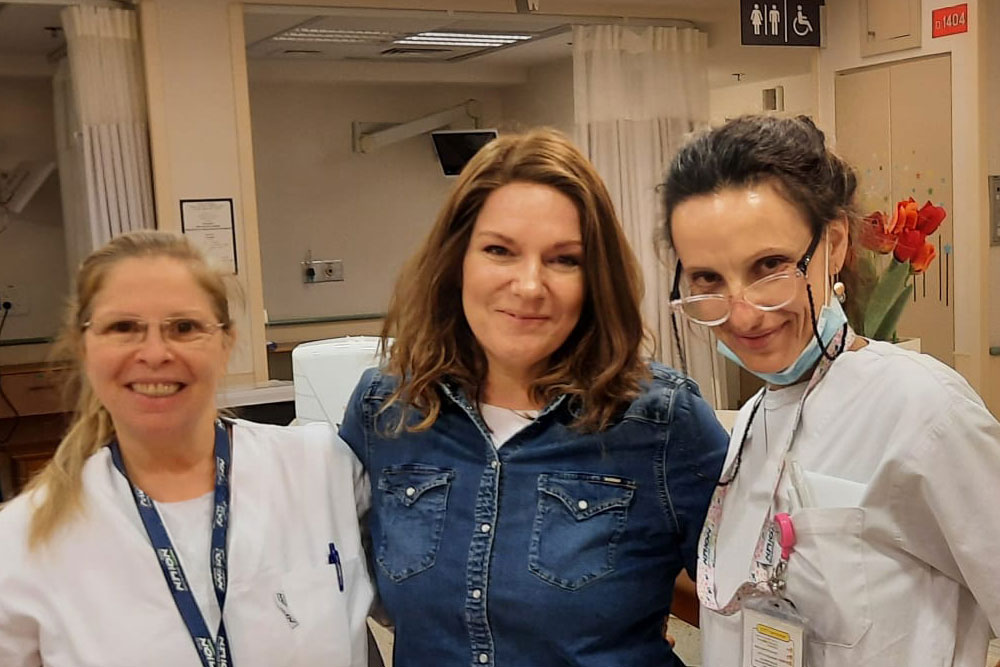 With the medical staff at the hospital
Learning to Accept What Cannot Be Changed
The emotional upheaval of the first few weeks soon gave way to the physical challenges of intensive cancer treatment. "Every three weeks, I went to the hospital for a day of chemotherapy. The treatment attacks cancer cells, but it also affects the immune system. It's incredibly difficult. Even though the sessions were three weeks apart, afterward I was completely exhausted and bedridden."
The side effects were relentless. "Everyone knows about hair loss, but that was actually one of the easier parts. I experienced numbness, overwhelming weakness, sores in different parts of my body, and a terrible taste in my mouth after losing my sense of taste. With every treatment, I felt weaker."
How does a mother of seven continue parenting under such circumstances?
"I remember lying in bed after my first treatment, dizzy and in pain. I couldn't even sleep because I was hurting so much. I called the therapist who was accompanying me, and she said, 'Let go. This is your reality right now. Allow yourself to feel the pain and accept that this is where you are.'"
Those words changed Leah's perspective. She realized that fighting against the reality of her condition was adding another layer of emotional suffering to an already painful experience. "I told myself, 'I accept that this is what Hashem wants from me right now—that I should be lying in bed.'"
From that place of acceptance, she found small ways to continue being a mother. "My daughters would come and sit with me on the bed. Sometimes I'd somehow manage to braid one of their hair, and it made me so happy."
Leah remained deeply concerned about her children's emotional well-being. One of her sons was experiencing difficulties at school and struggled to find support while his parents were occupied with her illness. "He felt as though he had neither a mother nor a father available to him," she explains. With professional guidance, Leah learned to pay closer attention to the way children interpret difficult family circumstances. "Children don't always understand reality the way adults intend. You can say one thing, but a child might interpret it completely differently."
With several sons in their teenage years, she also wanted their lives to retain as much normalcy as possible. When one of them asked to invite friends for Shabbat, she readily agreed, even though the family's meals were being provided by others. "Why shouldn't he invite them? On the contrary, life shouldn't come to a halt. I wanted the children to feel that things were continuing as normally as possible."
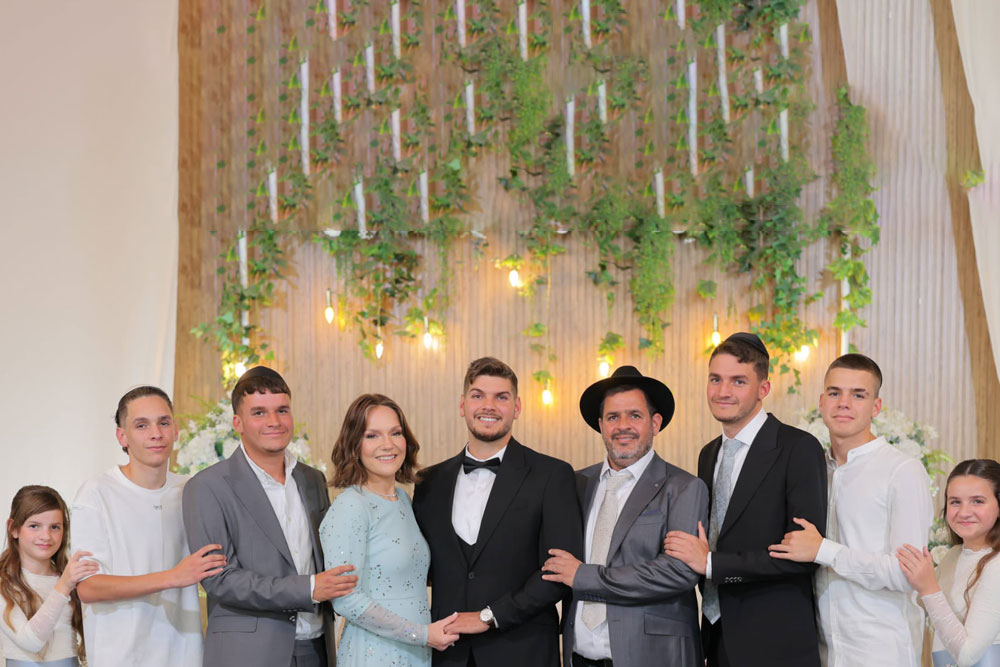 Leah and her family at her son's wedding. (Photo: Elkana Abergel)
Three Generations, One Extraordinary Journey
Leah's medical journey unfolded alongside her mother's treatment. "Almost everything she went through, I went through afterward," Leah says, although she notes that her own cancer was considered more aggressive. Her mother did not require chemotherapy, something Leah was deeply grateful for. "I was so happy she didn't have to go through it. I don't know how an older person's body could withstand such treatment."
Meanwhile, Leah's maternal grandmother, who lived with her mother and was approaching her hundredth birthday, remained an important part of her life. After consulting healthcare professionals, Leah decided to tell her grandmother about her diagnosis. "I visited her every single week. Hashem gave me the strength, and I didn't miss even one visit, even when I felt terrible. Being with her was healing for me."
She also felt that the visits reassured her grandmother. "As long as she could see me, she felt that I was okay. In fact, I must have looked so well to her that she even wanted me to take care of my mother," Leah recalls with a laugh.
After six months, Leah completed the most difficult phase of chemotherapy and moved on to a less intensive stage of treatment. She marked the milestone with a celebration at a swimming pool alongside her sister and daughters. "Yes, the treatments were difficult, but I could still choose how to approach them. I could focus entirely on the suffering, or I could also allow myself to experience the things that brought me happiness."
"There Will Still Be a Thanksgiving Celebration"
Six months later, Leah's course of treatment was declared successful. She returned to her work as a wig stylist and makeup artist, gradually rebuilding her routine and enjoying the milestones she had once feared she might miss. About a month ago, she celebrated the wedding of her eldest son.
When asked whether cancer is now firmly behind her, three years after completing treatment, Leah explains that she is still taking medication intended to reduce the risk of recurrence. She expects to continue taking it for the next decade. "These medications are truly protecting me, thank Hashem. It's a miracle and a wonder. Women in previous generations didn't have access to these treatments."
She is also looking forward to reaching the five-year milestone, after which the risk of recurrence may decline, depending on the type of cancer. "But baruch Hashem, I feel so much better today," she says. "And there will still be a seudat hoda'ah—a special meal of thanksgiving."
For Leah, the experience has reinforced both her faith and her conviction that medical responsibility must accompany it. Her message is clear: Trusting Hashem does not mean ignoring warning signs or avoiding medical examinations. It means taking the steps available to protect our health while recognizing that the outcome remains in His hands.
And if sharing her story encourages even one woman to schedule an overdue screening, she believes it will have been worth telling.
 For the WomanFrom Diagnosis to Purpose: One Woman's Journey with Multiple Sclerosis
 For the WomanThe Little Girl Who Was Right: A Mother's Journey of Faith and Miracles
 For the WomanA Friendship Worth the Heartache: Remembering Chani Weinroth
 MagazineYishai Lapidot: From ADHD Struggles to Jewish Music Pioneer, Faith, and Creative Impact

