

Israel News
Hezbollah Reportedly Plans to Undermine Lebanon's Disarmament Efforts Amid Rising Tensions
Hezbollah is reportedly pursuing a coordinated strategy to pressure Lebanon's government, fuel domestic unrest, and resist efforts to disarm the group, as internal disagreements emerge and Iran's Revolutionary Guards reportedly relocate personnel amid fears of regional escalation
- Yuval Aviv
- | Updated
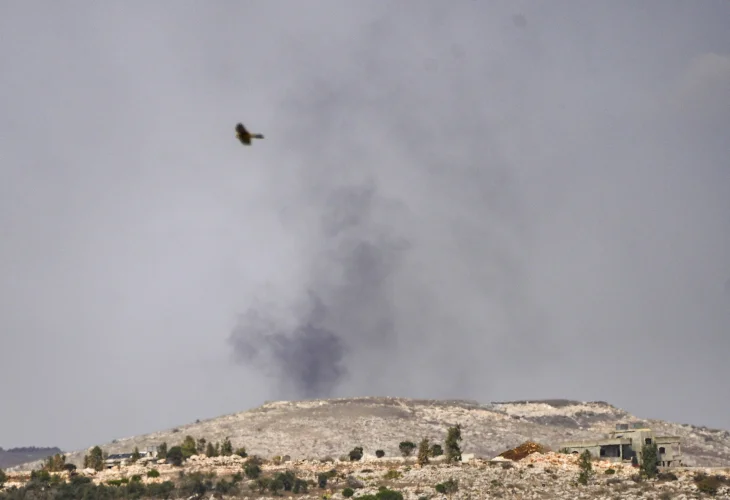 A strike in southern Lebanon last month (Photo: Eyal Margolin, Flash90)
Hezbollah has begun implementing a plan aimed at undermining the Lebanese government's efforts to bring all weapons under state control by escalating internal tensions and disrupting the functioning of government institutions, according to a report published Wednesday by the Emirati news outlet Erem News, citing Lebanese political sources.
The plan, which is reportedly subject to Tehran's strategic considerations, was launched following Lebanese President Joseph Aoun's Independence Day speech. It involves three parallel approaches: delaying progress through political maneuvering, fueling domestic tensions, and intensifying political and media attacks against the presidency and government. For now, Hezbollah reportedly intends to avoid a direct confrontation with the Lebanese military.
Hezbollah Leader Criticizes Lebanese President
Against this backdrop, Hezbollah Secretary-General Naim Qassem sharply criticized Aoun over his speech, accusing the president of placing Israel and the United States on the same footing as what Hezbollah calls the "resistance."
Qassem also accused Washington of pressuring Lebanon's leadership to make concessions benefiting Israel. He criticized the framework agreement, claiming that it had "deprived Lebanon of everything while giving Israel everything it wanted."
Rejecting accusations that Hezbollah operates on Iran's behalf, Qassem argued that Tehran is the party bearing the burden of supporting the organization rather than the other way around. "There is no sovereignty without liberation, and no independence with dependency," he declared.
Hezbollah Seeks to Turn Disarmament Dispute Into a National Crisis
According to the Lebanese sources cited in the report, Hezbollah intends to capitalize on public frustration over the rising cost of living and the challenges of reconstruction, while building alliances across sectarian lines. The objective is reportedly to transform the dispute over the organization's weapons into a broader political and social crisis.
At the same time, Hezbollah is demanding the release of its detained members and the return of weapons confiscated by Lebanese authorities.
However, disagreements have emerged within the organization's leadership. Hezbollah's political leadership is reportedly concerned about the consequences of another confrontation, while its military wing, which has undergone restructuring under the supervision of Iran's Islamic Revolutionary Guard Corps (IRGC), opposes making concessions.
Sources emphasized that these differences do not represent an organizational split, but rather conflicting assessments of the potential costs of escalation.
Lebanese Parliament Speaker Nabih Berri, who opposes Hezbollah's disarmament, has also reportedly refused to support an internal military confrontation, fearing that such a conflict would politically isolate both Hezbollah and the Amal movement.
For now, Hezbollah reportedly prefers to exert pressure through its ministers in the Lebanese government, although it has not ruled out disrupting cabinet meetings or withdrawing from the government altogether.
Reports of Iranian Forces Relocating From Beirut to the Bekaa Valley
Meanwhile, reports published Tuesday indicated that Iran's Revolutionary Guard Corps had begun evacuating facilities in and around Beirut's southern suburbs, transferring personnel, officers, and logistical equipment to the Bekaa Valley. According to the reports, the relocation was ordered by Tehran following warnings of a possible regional escalation.
The developments come amid a Lebanese government decision to prohibit Hezbollah's military and security activities, require the organization to surrender its weapons, restrict its operations to the political sphere, and arrest individuals who violate the directive.
The reported Hezbollah strategy reflects growing tensions over the Lebanese state's efforts to establish exclusive control over weapons and security operations, as the country's leadership faces resistance from the Iran-backed organization.
 Israel NewsHezbollah Rejects Israel-Lebanon Deal; Katz Says IDF Told to Prepare for Long Stay in Lebanon
 Israel NewsFirst Since the Pullback: Lebanese Army Finds Hezbollah Weapons Cache in a Pilot Zone
 Israel NewsBrokered by Washington: Israel and Lebanon Sign Security-Political Framework for Southern Lebanon
 Israel NewsTrump Says Lebanon War Is 'Over,' Tells Israel to Stand Down

