

Facts You Didn't Know
Not Trivial 19: How Much Do You Really Know?
Challenge your knowledge of Torah, Jewish history, science, geography, and more with 10 intriguing trivia questions, plus fascinating facts and answers from our previous quiz
- Hidabroot
- | Updated

What was the name of the place where Jacob wrestled with the angel?
Which planet has the shortest day in our solar system?
In which country is the world's tallest waterfall located?
Which great Jewish scholar wrote the book Emunot VeDeot (Beliefs and Opinions)?
How many zeros are in a googol?
Who composed The Four Seasons?
In what year were the Jews expelled from England?
From which plant is the spice saffron obtained?
In what year did the Panama Canal open?
What is the largest source of the Jordan River?
Answers to General Knowledge Quiz #18
Before you tackle this week's questions, here are the answers to Quiz #18.
1. Luz
The Torah states: "And he called the name of that place Bethel, but Luz was the name of the city originally" (Genesis 28:19).
The Gemara relates that Luz was a remarkable city where techelet, the blue dye used for tzitzit, was produced. Neither Sennacherib nor Nebuchadnezzar succeeded in destroying it, and even the Angel of Death was said to have no permission to enter its boundaries (Sotah 46b).
2. Oxygen
Oxygen is the most abundant element in Earth's crust, accounting for approximately 46% of its mass, followed by silicon at around 28%.
Most of the oxygen in Earth's crust does not exist as a gas. Instead, it is chemically bound within rocks and minerals, including quartz and sand, which contain silicon dioxide.
3. Daniel Bomberg
Daniel Bomberg, born in Antwerp, later settled in Venice, where he printed the first complete edition of the Babylonian Talmud between 1520 and 1523.
The page numbering system he established, with each folio divided into sides a and b, has been preserved in nearly every subsequent edition. As a result, a reference such as Shabbat 33b directs readers to the same passage across different printed editions of the Gemara.
Bomberg also published an early edition of the Mikraot Gedolot, the Hebrew Bible accompanied by traditional commentaries.
4. The Peregrine Falcon
The peregrine falcon is the fastest animal in the world when diving toward its prey. It regularly exceeds speeds of 320 kilometers per hour (200 mph), while a trained falcon was recorded reaching approximately 389 kilometers per hour (242 mph).
During its hunting dive, the falcon folds its wings close to its body and plunges toward its target at tremendous speed, often catching other birds in midair. Peregrine falcons inhabit every continent except Antarctica.
5. 540 Degrees
The sum of the interior angles of a pentagon is 540 degrees.
The formula for calculating the interior angles of any polygon is: (n − 2) × 180°
For a pentagon, which has five sides, the calculation is: (5 − 2) × 180° = 540°
In a regular pentagon, all five interior angles are equal, measuring 108 degrees each. The formula works because any pentagon can be divided into three triangles, each contributing 180 degrees.
6. King Hezekiah
King Hezekiah of Judah destroyed the bronze serpent that Moses had made in the wilderness because the Israelites had begun burning incense to it.
The Book of Kings states: "He broke into pieces the bronze serpent that Moses had made, for until those days the children of Israel had been burning incense to it; and he called it Nehushtan" (II Kings 18:4).
Moses had originally made the serpent at Hashem's command so that those bitten by poisonous snakes could look upon it and live (Numbers 21:9).
The Mishnah lists Hezekiah's destruction of the bronze serpent among the actions for which the Sages praised him (Pesachim 4:9).
7. The Atacama Desert
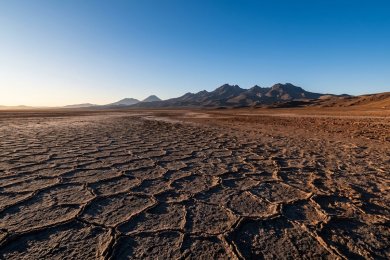
The Atacama Desert in northern Chile is considered the driest non-polar desert in the world. Some weather stations in the region have never recorded measurable rainfall, while many areas receive less than one millimeter of precipitation annually.
Its extraordinarily dry soil and harsh conditions resemble certain aspects of the Martian environment, making the Atacama an important testing ground for NASA's Mars exploration equipment and robotic vehicles.
8. Poland
Frédéric Chopin was born in 1810 in Żelazowa Wola, a village near Warsaw, Poland.
At the age of 20, he left his homeland and eventually settled in Paris, never returning to Poland. Most of his compositions were written for the piano, including his famous mazurkas and polonaises, which drew inspiration from traditional Polish dances.
Chopin died in Paris in 1849.
9. Mesillat Yesharim (The Path of the Just)
Rabbi Moshe Chaim Luzzatto, known as the Ramchal, published Mesillat Yesharim in Amsterdam in 1740.
The classic work of Jewish ethics is structured around the spiritual progression outlined in the teaching of Rabbi Pinchas ben Yair: "Torah leads to vigilance, vigilance leads to diligence, diligence leads to cleanliness..." and ultimately to divine inspiration and the resurrection of the dead (Avodah Zarah 20b).
Each stage is examined in detail, explaining how to acquire the corresponding spiritual quality and overcome the obstacles that prevent a person from attaining it.
10. The Mayflower
The Mayflower departed from Plymouth, England, in September 1620, carrying 102 passengers. After approximately 66 days at sea, the ship reached Cape Cod in November.
Before disembarking, the adult male passengers signed the Mayflower Compact, an agreement establishing a framework for self-government and committing them to abide by laws created for the benefit of their community.
 Facts You Didn't KnowNot Trivial 18: Test Yourself With These 10 Trivia Questions
 InterestingTest Your Knowledge 15: 10 Challenging Trivia Questions on Science, History, and Judaism
 InterestingTest Your Knowledge 17: 10 Fascinating Trivia Questions on Torah, Science, and History
 Facts You Didn't KnowMorning Blessings, Ashkenazi Nusach: Birkot Hashachar in Hebrew and English

