

Health and Nutrition
Is Sleeping Too Much a Health Warning? Study Links Long Sleep to Higher Mortality Risk
A new study finds that sleeping nine hours or more is associated with a higher risk of death among people with heart disease, suggesting that excessive sleep may be a sign of underlying health problems
- Yitzchak Eitan
- | Updated
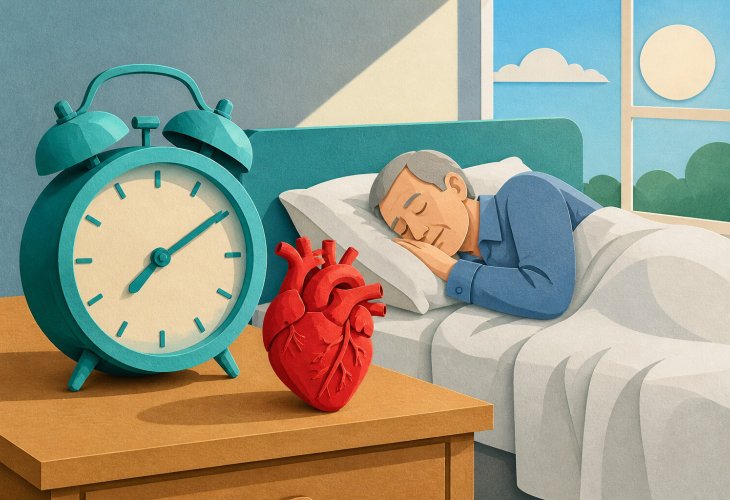
Is insufficient sleep harmful to your health? A new US study suggests that sleeping for excessively long periods may also be a warning sign, particularly among people with existing heart disease.
The study was led by Tolulope Victoria Adebile, a doctoral student in epidemiology at Penn State University’s College of Medicine. Published in the journal PLOS One and reported by Medical News Today, the study examined data from 3,287 adults who had heart disease or had previously experienced a heart attack. Participants reported their sleep duration in a national health survey conducted in 2004, and researchers compared their responses with mortality records over approximately 15 years. During the follow-up period, about half of the participants died.
Longer Sleep Linked to Higher Mortality Risk
Compared with participants who slept seven to eight hours a night, those who slept nine hours or more had a 51% higher risk of death from any cause. Their risk of dying from cardiovascular disease was 53% higher, while their risk of death from other causes was 50% higher. The association remained even after researchers accounted for age, gender, lifestyle habits and other medical conditions.
The lowest estimated mortality risk was observed among participants who slept approximately six to seven hours a night. However, this finding should not be interpreted as a recommendation to reduce sleep duration, nor does it prove that sleeping less can extend life expectancy.
Is Too Much Sleep Harmful?
Not necessarily. The researchers and physicians commenting on the study explained that prolonged sleep may be a symptom of an underlying health problem, such as chronic inflammation, depression, sleep disorders or a worsening medical condition. In other words, the body may be demanding more sleep because something is not functioning properly.
Adebile emphasized that the goal is not to encourage people to sleep less, but rather to understand why they are sleeping more. She also noted that longer sleep does not necessarily mean better-quality sleep. Someone who wakes repeatedly throughout the night may still feel exhausted after spending many hours in bed.
The study has several limitations. Both sleep duration and heart disease diagnoses were based on self-reported information. Furthermore, as an observational study, it cannot establish a cause-and-effect relationship between prolonged sleep and increased mortality.
Doctors recommend seeking medical evaluation if prolonged sleep is accompanied by daytime fatigue, sudden nighttime awakenings or unexplained weight loss. It is also advisable to consult a healthcare professional if changes in sleep patterns interfere with your ability to carry out daily activities or exercise.
 Health and NutritionCardiologists Warn: 3 Everyday Foods That Could Be Harming Your Heart
 Health and NutritionHow Much Sleep Do You Really Need? The Ideal Hours for a Longer, Healthier Life
 Health and NutritionThe Morning Habit That Could Be Putting Your Heart at Risk
 Health and NutritionSitting Too Much? Here's the 2-Minute Rule Doctors Recommend

