עברית
עברית

Shabbat
The Secret of Shabbat Peace: On Divine Kingship, Unity, and Harmony in the Home
A powerful Torah perspective on how Shabbat reveals God’s kingship, transforms ego into unity, and creates lasting peace, blessing, and spiritual connection within the Jewish home
- Yonatan Halevi
- |Updated
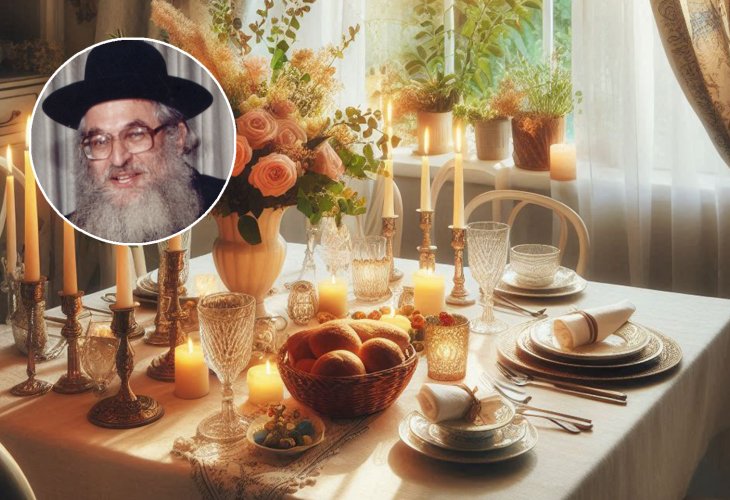
Rabbi Shimshon Dovid Pincus, in his book Shabbat Malchata, expands on the immense spiritual power that Shabbat brings into the world. According to him, Shabbat is not merely a day of rest but a time of Divine Presence, when every member of the household can reconnect with holiness and inner peace. Shabbat reveals God’s kingship in the world and brings harmony that renews and purifies the entire home.
Kingship as the Culmination of Prayer
“When arranging the praises of the Holy One, blessed be He, the attribute of kingship is always mentioned last. In Baruch She’amar: ‘We will praise You, glorify You, exalt You… and crown You as our King.’ In Yishtabach: ‘Song and praise… holiness and kingship.’ And in Nishmat Kol Chai: ‘They will thank, bless… sanctify and crown.’ Kingship is the seventh and final attribute that includes everything.”
In every Jewish prayer, God’s kingship appears at the end, symbolizing completion and unity — the moment when all blessings and praises are gathered into one.
Peace as the Final Blessing
“In the same way, peace is always listed last. In the Amidah, the blessing of peace concludes the prayer. The Priestly Blessing ends with peace. In many blessings, peace appears last because it completes them all… ‘I will grant peace in the land.’ Even if there is food and drink, without peace there is nothing.”
Just as kingship unifies all praise, peace unifies all blessings. It is the vessel that allows every blessing to endure.
The Root of Baseless Hatred
“The opposite of peace is baseless hatred… hatred born not from harm but from jealousy.”
Rabbi Pincus explains that baseless hatred arises when individuals see themselves as separate centers of reality. When Reuven sees himself only as Reuven and Shimon only as Shimon, jealousy becomes inevitable. But when both see themselves primarily as Jews — part of a greater Divine purpose — love and unity replace rivalry.
Unity Through Divine Kingship
“When Reuven is no longer just Reuven but a Jew, when all individuals unite under God’s kingship, then love and brotherhood prevail.”
Baseless hatred, he writes, undermines Divine kingship and causes the exile of the Divine Presence. When ego becomes central, holiness departs. But when God becomes the center, peace returns.
“There is no vessel that holds blessing like peace.”
When individuals define themselves only by personal identity, their capacity for blessing is limited. But when they unite under the shared name of God — as part of the Jewish people — Divine mercy flows without limit.
Sinai: One Heart, One Nation
True unity appeared at Mount Sinai, when Israel stood “as one person with one heart.” Their shared acceptance of God’s kingship transformed them into a single living nation.
The phrase “one heart” means that God Himself became their shared center. When Israel accepts the yoke of Heaven, the Divine Presence becomes the collective heart that unites all.
Kingship as the Heart of the Nation
“Kingship is the heart of the nation, just as the heart unites all the limbs of the body.”
Just as the heart gives life and unity to the body, Divine kingship gives life and unity to the Jewish people. Without it, the nation becomes fragmented; with it, they become one living being.
Because Shabbat reveals Divine kingship, it carries a unique blessing of peace. The sages teach that Shabbat brings healing and mercy, and the mitzvah of lighting Shabbat candles exists specifically to create peace in the home. Its importance is so great that it takes precedence even over other significant rituals.
Arguments arise when each person seeks personal honor. But when Shabbat arrives, personal ego fades before the presence of the Shechinah, and unity naturally emerges.
The Shechinah as the Source of Harmony
The sages taught: “If a husband and wife merit, the Divine Presence rests between them.” When the Shechinah enters the home, peace follows.
With the arrival of Shabbat, the family is no longer defined as separate individuals with competing needs, but as Jews united under God. In that sacred space, peace dwells naturally, bringing serenity, harmony, and spiritual renewal to the entire household.